
Xujiayao Finds Its Family: Ancient Proteins Confirm Denisovan Identity and Sketch a Shared Face for East Asia’s Archaic Humans
2026年11月4日
A Century Later, He Found Where His Great-Grandfather Set Out: A Malaysian School Principal’s Root-Seeking Journey in Quanzhou
2026年11月5日A Thread of Kinship Across a Thousand Miles: How Quanzhou Helps Overseas Chinese Find Their Way Home

On 27 October, the ancestral Dai house in Qianfeng Village, Honglai Town, Nan’an City was festooned with lanterns for a visitor from afar: Indonesian Chinese Dai Hongju. Ninety years earlier, his grandfather Dai Youjin had left home with his family to seek a living across the seas, never forgetting the land he came from. Now Dai Hongju, carrying a ‘homecoming dream’ that spanned three generations, finally stood on the road his grandfather once set out upon. In Quanzhou, such stories are not uncommon—and behind each one lies a ‘thread’ woven from volunteer networks and digital platforms.
Quanzhou is one of China’s most famous qiaoxiang, or overseas-Chinese hometowns. It counts 10.07 million overseas Chinese scattered across more than 170 countries and regions. To serve this vast diaspora, the city launched the ‘Qiao’ai Lianxin’ (Overseas Kinship through Volunteer Service) project, building 36 volunteer teams at the municipal, county, town and village levels into a service system that reaches ‘every edge and every level.’ The volunteers include active and retired overseas-Chinese-affairs workers, returned overseas Chinese and their families, and public-spirited citizens who spend their spare time searching on behalf of kin abroad, guided by the motto: ‘Answer every call; keep searching until they find home.’
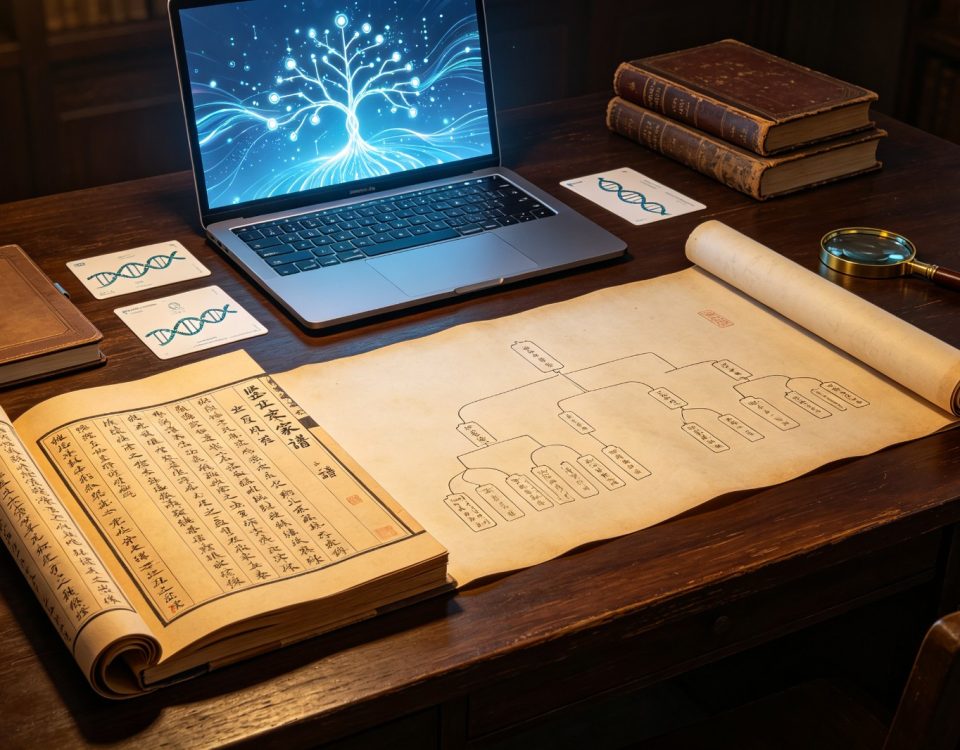
Offline volunteers meet the human need; online data does the heavy lifting. In 2021, Quanzhou launched the Nanyang Overseas Chinese Root-Seeking and Ancestor-Worship Comprehensive Service Platform, a provincial ‘Maritime Silk Road core zone’ project. The platform integrates databases of genealogies and local gazetteers, surname ancestral halls, clan associations, 3D panoramic imagery of key overseas-Chinese villages, and records of overseas Chinese communities. Drawing on cloud computing, artificial intelligence and big-data analytics, it enables ‘one-click root-seeking’ so that overseas Chinese can quickly locate their family origins. Platform head Liang Chunguang explains that applicants simply log in and upload text and images; staff assess the materials and contact applicants when more information is needed.
The platform’s value becomes tangible in individual cases. Malaysian Chinese Lin Kaiwen, a fifth-generation descendant of a great-great-grandfather who emigrated to Southeast Asia, knew only one clue: his ancestral home was Wubang Village, Penglai Town, Anxi County, Quanzhou. He filed his application on the platform’s third day online; staff traveled to Wubang, consulted the Anxi Wubang Lin genealogy of the Yinglong branch, and cross-checked the information against a tombstone inscription Lin provided. From application to confirmation took just four days. In 2024, Filipino Chinese Shi Yiwei submitted a request with a single clue—four characters, ‘Tumen Tian’an,’ carved on his father’s tombstone. Platform staff identified the site as today’s Dongtu community in Fengze District, and with help from the district overseas-Chinese-affairs federation, located Shi’s relatives. This October, the Jintao town federation needed only half a day to reunite Malaysian Chinese brothers Li Gongshun and Li Gongming with their kin in Dongxi Village—two town-level federations passing the baton until a wish three generations old, and an ocean away, came true.
Root-seeking in Quanzhou is shifting from ‘indexing documents’ to ‘digital matching.’ Genealogy digitization is the foundation: some clan registers are incomplete, some written in brush calligraphy too faint to read, and staff go village to village collecting and transcribing them, consulting elderly locals over doubtful characters. These painstaking efforts turn family memories scattered on paper into searchable digital resources. In just over five years, the platform has helped more than a hundred overseas kin rediscover their roots—settling lifelong aspirations for some, and completing unfinished journeys for ancestors.
For the overseas Chinese, the platform offers more than convenient search: it provides a tangible sense of belonging. Every name on a genealogy is a coordinate for ‘going home.’ The Quanzhou federation says the next steps include expanding genealogy and diaspora databases, extending overseas exhibition coverage, and refining online root-seeking services—so that, on the strength of this thread, more overseas kin can find the road that leads back to where their families began.
Image: A red-brick courtyard of the Cai family’s traditional Minnan houses in Nan’an, Quanzhou (Source: VCG)