
Ancient DNA of the Tang and Song Dynasties: From Chang’an Seated Burials to the Preserved Corpse of Jizhili
2026年10月6日
The Open-Source Wave in Genealogy Digitization: GRAMPS, GEDCOM and the Return of Data Sovereignty
2026年10月13日Open-Source Tools for Digitizing Genealogies: From GEDCOM to Collaborative Family Tree Platforms

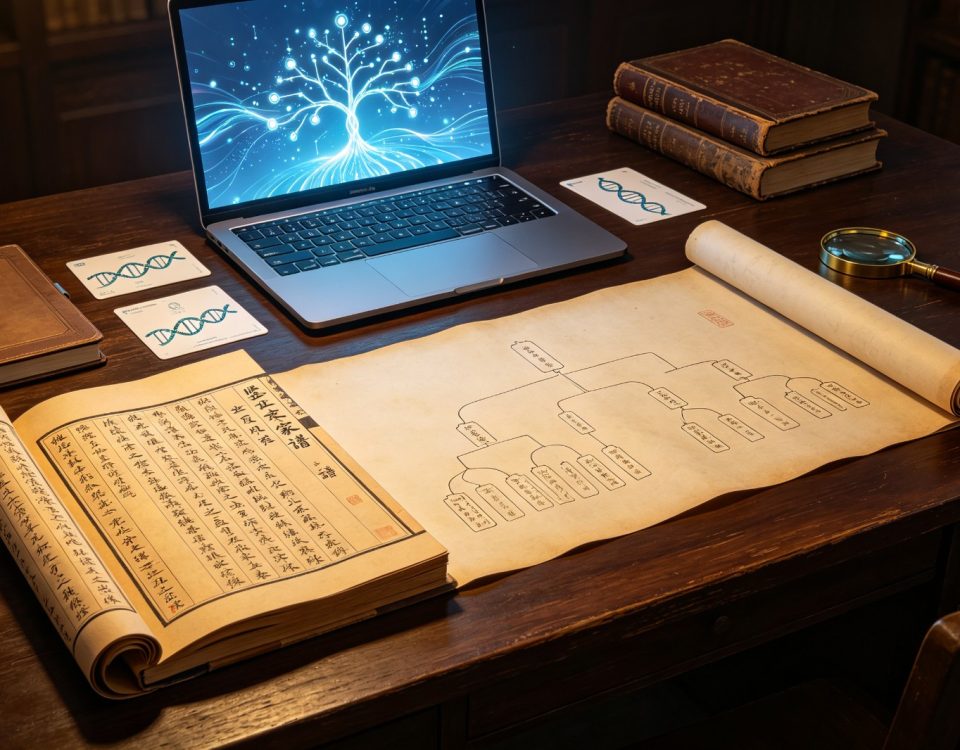
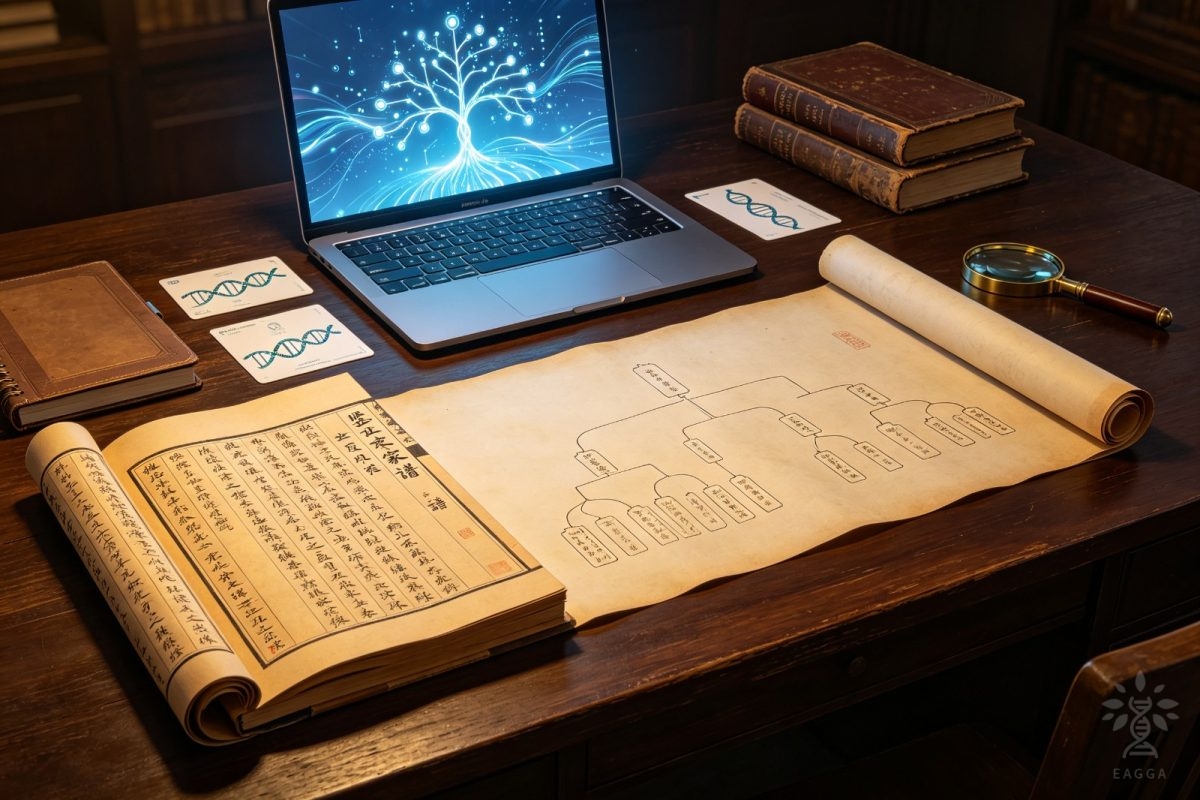
Digitizing a family tree is nothing new, yet most people still encounter it through paid commercial platforms. For family historians who value data autonomy and long-term preservation, open-source tools offer another path: free, transparent, and with data kept firmly in your own hands. This article surveys the leading international open-source genealogy tools, with attention to the Chinese context, to help readers choose what fits their needs.
Every open-source genealogy tool rests on one standard: GEDCOM. This data-exchange format for family trees was created in 1984 by The Church of Jesus Christ of Latter-day Saints to let different software programs share genealogical data. Despite successive revisions, GEDCOM 5.5.1 remains the most widely compatible version: virtually every mainstream genealogy program, commercial or open-source, can import and export it. Recent community efforts around GEDCOM 7.0 aim to bring this forty-year-old standard in line with modern data structures. Understanding GEDCOM means understanding the underlying logic of genealogy data migration.
The best-known desktop open-source tool is Gramps. Written in Python and first released in 2001, it runs on Windows, Linux and macOS and is famous for its rigorous evidence-centric data model: every person and event can be linked to sources and citations that travel with reports, making it a natural fit for serious family history research. Gramps supports GEDCOM 5.5.1 import and export, offers multiple views and reports (pedigree, fan chart, relationship graph), and provides fine-grained privacy controls. Its development community remains active, with new releases continuing through 2026.
For multi-user collaboration, webtrees is the first choice. This PHP and MySQL web application, descended from the classic PhpGedView, lets relatives edit the same family tree together, supports over 60 languages and offers flexible, tiered privacy controls. webtrees works from standard GEDCOM files and is therefore compatible with every major desktop application; modules, charts and reports are all configurable. In April 2026 the project released version 2.2.6, describing itself as the web’s leading online collaborative genealogy application — completely free and open-source.
Gramps Web deserves special attention — it bridges Gramps Desktop and the browser. It uses the same database model as the desktop application and supports bidirectional sync: edit offline on your computer, then share through the web interface. It offers interactive family tree charts, a timeline, maps and full revision history (any mistaken edit can be undone), with the interface available in over 50 languages. Particularly thoughtful for genetic genealogy enthusiasts: Gramps Web can analyze Y-chromosome SNP data on your own server to infer paternal haplogroups, so data never leaves the server. It also integrates research task management, a blog and media tagging into the same database.
Among other open-source tools, HuMo-gen deserves a mention: created by Dutch developer Huub Mons in 1999, this PHP/MySQL web genealogy program supports multiple languages and access-control groups and is still maintained today. Together with Gramps and webtrees, these form the backbone of the Western open-source genealogy ecosystem.
In the Chinese context, digitizing traditional genealogies has long depended on commercial scanning services and commercial platforms — until the summer of 2026, when the open-source genealogy project OpenZupu appeared at the OpenAI Build Week (covered in a dedicated article on this site). OpenZupu rebuilds Chinese genealogies through open collaboration, supports both Su-style vertical layouts and European-style family records, geographic migration timelines and Y-DNA/mtDNA analysis, and is compatible with common formats such as GEDCOM. It marks the formal arrival of the open-source idea in the Chinese genealogy world, and opens new possibilities for traditional family records to take control of their own data.
Choosing open-source tools is ultimately about data autonomy and privacy. Commercial platforms often trade convenience for cloud storage, with limited ownership and export options; open tools default to “the data belongs to you” — whether it is a local Gramps database or a self-hosted webtrees server, export, backup and migration are entirely under your control. Gramps Web is especially strong on privacy: DNA analysis runs on your own server, and no third party ever sees the raw data. For family records carrying large amounts of personal information and family privacy, this matters greatly.
How to choose? The principle is simple: for individual offline research that values chains of evidence, pick Gramps Desktop; for family collaboration on a self-hosted server, pick webtrees; for desktop editing plus web sharing and local Y-DNA analysis, pick Gramps Web; for a modern Chinese-genealogy digital initiative, keep an eye on OpenZupu. Whichever you choose, export GEDCOM backups regularly to keep your data portable.
Digitizing a genealogy is not a one-off scanning project but an ongoing exercise in data stewardship. The value of open-source tools lies not only in being free, but in returning the choice to the family historian: how data is stored, who may access it and how it passes down are all decided by the users themselves. In an age dominated by commercial platforms and cloud services, that autonomy is precious.