
The Genetic Code of a Tang Dynasty Frontier Clan: 38 Ancient Genomes Reveal Patrilineal Inheritance and Female Exogamy in the Chen Family
2026年10月31日
Ancient DNA from the Jinlingnan Cemetery: Trans-Eurasian Signals in the Agricultural Heartland of Eastern China
2026年11月6日A Century Later, He Found Where His Great-Grandfather Set Out: A Malaysian School Principal’s Root-Seeking Journey in Quanzhou
“This Hou Yejun—that is Hou Fujun—he is Chun Hing’s great-grandfather!” In the village of Gelin in Shilin, Jintao township, Nan’an, Fujian, 81-year-old Hou Bifeng pointed at a genealogy and declared the words loudly. Beside him, Hau Chun Hing, who had flown in from Malaysia, nodded again and again, visibly moved: “I never imagined that, more than 100 years later, I would find where I come from—and so quickly.”
Hau Chun Hing lives in Negeri Sembilan, Malaysia. From 2015 to 2022 he served as Education Counsellor at the Embassy of Malaysia in China; today he is the principal of a national primary school. For years the wish to trace his roots had grown stronger. He was educated in a Chinese vernacular school and speaks fluent Mandarin, but knew little of his family’s specific origins. This time, staff of Quanzhou University of Technology and the Nan’an Overseas Chinese Federation helped him fill in the missing pieces.
The journey began with an international youth exchange camp. On 18 October 2026, Quanzhou University of Technology opened its International Youth Exchange Camp, with Hau as one of its leaders. A year earlier he had mentioned to university officials that his great-grandfather came from Nan’an, Quanzhou, and that he hoped to visit his ancestral home, but with too few clues the trip had to wait. This year he returned with new information from his uncle: his great-grandfather was a native of “the 14th Du of Nan’an,” and the characters engraved on his grandfather’s tombstone read “Nan’an Gelin.”
On 21 October, Fu Zhixiong, Party Secretary of the university, learned of the story and immediately contacted Huang Yinmian, former chair of the Nan’an Overseas Chinese Federation. “The 14th Du of Nan’an” corresponds to present-day Jintao and surrounding areas; in the old days, many members of the Hou clan from Gelin in Shilin, Jintao, had left for Malaysia to make a living—matching the “Nan’an Gelin” on the tombstone. Huang contacted the Gelin Clan Association at once, and by that evening the ancestral village was essentially confirmed.
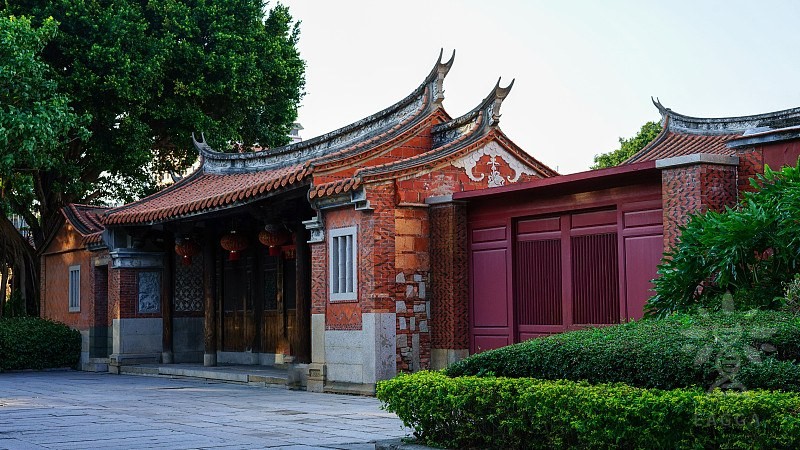
On the morning of 22 October, Hau arrived at the Hou ancestral hall in Gelin, where township officials and clan elders were already waiting at the gate. “Welcome home to Gelin!” As soon as the car door opened, everyone stepped forward to shake his hand. Inside the richly decorated hall, Hau spoke his great-grandfather’s name, “Hou Fujun.” Hou Bifeng responded immediately: “Hou Fujun is Hou Yejun—Fu is the generation marker of the Hou clan, and Ye is the corresponding generation name in the genealogy.” Opening the thick Genealogy of the Hou Family of An, Hou Bifeng quickly located “Hou Yejun” and, on closer comparison, realized he was Hau’s second cousin once removed. He also recalled that more than forty years ago, Hau’s grandmother had regularly written letters on behalf of the family members in Malaysia—until contact was eventually lost.
“This is the first time I have ever seen a genealogy. So many ancestors’ names recorded here—it is precious and rare.” Hau reached out and gently touched the names of his great-grandfather Hou Yejun and grandfather Hou Suhuai in the book. “I was told that my great-grandfather went to Malacca first, and my grandfather was later brought over by my great-grandmother. A hundred years passed in the blink of an eye.” Hou Bifeng then led him to an old courtyard house: “That is where our family used to live.” Hou Yejun had been born there in 1881; as an adult he left the old house with his family and sailed for Malacca. The house is now weather-beaten, but Hau walked slowly through the hall, studying the old photographs: “Standing here, I feel something special. So this is where my great-grandfather and grandfather set out for Malaysia.”
From first clue to family reunion took only days. Hau said he owed the search to the university and the federation: “The university has built a wonderful platform that helps more young Malaysians understand China. This time, it was through their help that I found where I come from.” During his eight years as education counsellor, his wife and three sons lived with him in Beijing; his sons later attended university there, and his daughter was born in Beijing. As he parted from the clan, he said: “I will come back often—and next time I will bring the whole family!” As a national primary school principal, he intends to do what he can to promote exchanges between young Malaysians and Chinese. A century-old search for roots is the perfect opening line for that conversation.