
Open-Source Tools for Digitizing Genealogies: From GEDCOM to Collaborative Family Tree Platforms
2026年10月13日
The “Time Code” of the Y Chromosome: Large-Scale Lineage Studies Reconstruct East Asian Paternal History
2026年10月24日The Open-Source Wave in Genealogy Digitization: GRAMPS, GEDCOM and the Return of Data Sovereignty
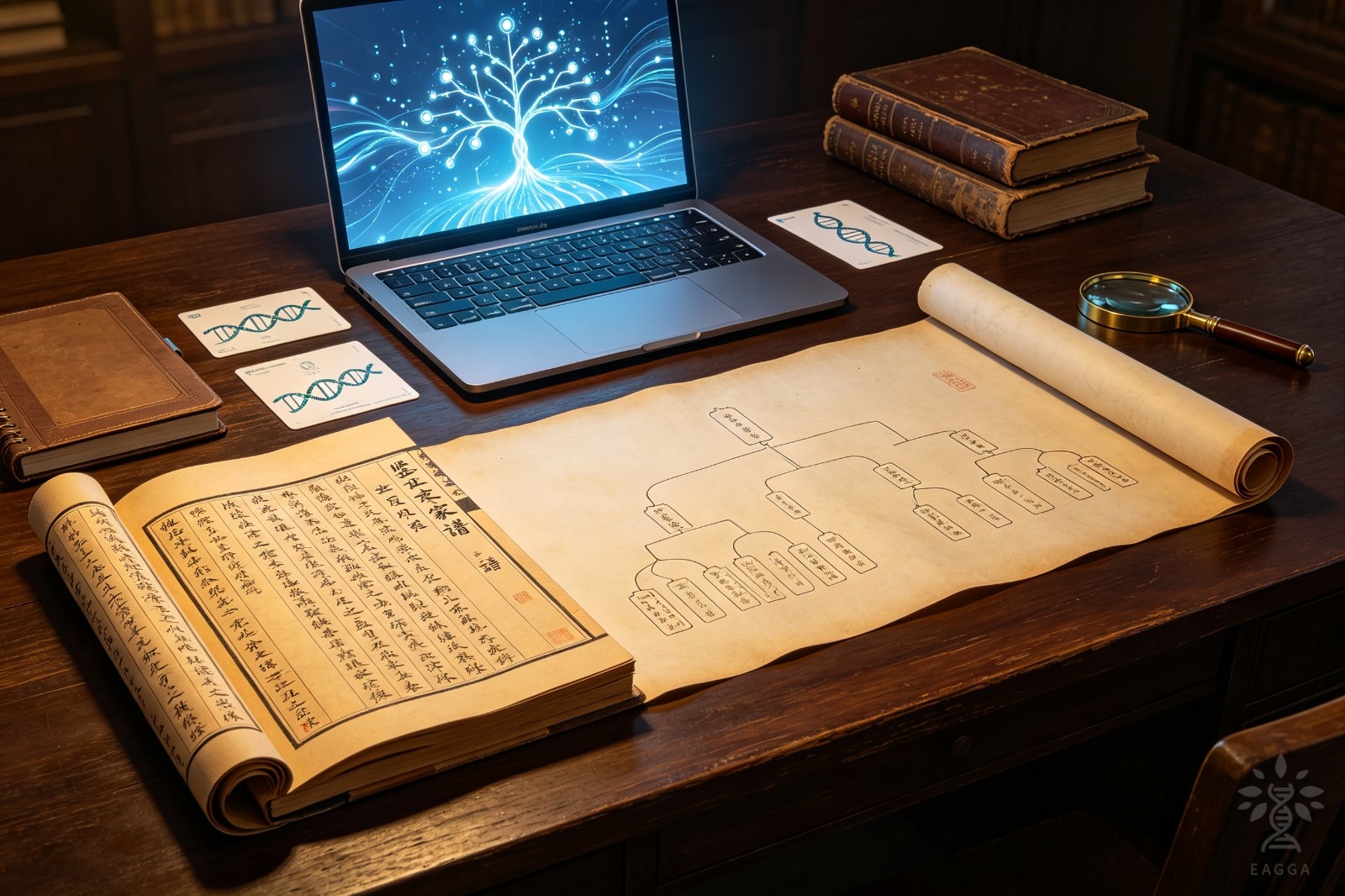
When people talk about digitizing family trees, they usually think first of commercial platforms like Ancestry, MyHeritage or 23mofang. But over the past year, an open-source wave has been quietly growing in genealogy software: free projects such as GRAMPS, Gramps Web and GEDKeeper keep evolving, returning the collection, storage and analysis of family data to users themselves.
The cornerstone of the open-source genealogy ecosystem is the GEDCOM standard. Born in the 1980s, this format defines the basic structure for exchanging genealogical data — individuals, families, events and sources are organized into unified text records so data can move freely between different programs. Though GEDCOM is often criticized as “lossy” and dated, it remains the de facto “Esperanto” of genealogy: nearly every genealogy program and online platform supports importing and exporting it.
On the desktop, the representative project is GRAMPS. One of the oldest and most active open-source genealogy programs in the world, GRAMPS is GPL-licensed, runs on Linux, Windows and macOS, supports GEDCOM 5.5.1, and offers pedigree charts, fan charts, relationship graphs and a rich set of reports. In March 2026, GRAMPS 6.0.7 was released, fixing issues in GEDCOM import/export such as occupation event tags and stillbirth handling, and adding a Bashkir translation — a project maintained by volunteers worldwide, evolving at a steady pace.
Even more imaginative is Gramps Web — an open-source project that brings the whole of GRAMPS into the browser. It supports collaborative editing by multiple users, with full revision history and undo; built-in OCR can extract text from scanned documents. Its biggest highlight is genetic genealogy integration: upload DNA match data and view shared segments in an interactive chromosome browser, or use raw Y-chromosome SNP data to estimate paternal haplogroups and place them on the human Y-chromosome tree — all analysis runs on your own server, and no data is sent to any third party.
The open-source ecosystem offers many more options: GEDKeeper is known for its minimalist interface and cross-platform support, including display of geographic migration on Google Maps; Ancestris is written in Java and equally free; HuMo-genealogy publishes family trees as multilingual websites. For users who want more than a single tool, GRAMPS can even import GeneWeb, Pro-Gen, CSV and vCard formats, and integrates with the FamilySearch portal — open-source software returns the power of choice to the user.
The core value of the open-source path is data sovereignty. Behind the convenience of commercial platforms, data often rests on third-party servers, and migration or deletion is not always free; open-source software keeps data on your own machine or server, letting you export everything (tree, media, accounts) at any time, with no vendor lock-in. This matters especially to East Asian users who value family privacy — sensitive genealogy information need not be uploaded to a cloud you cannot fully control.
For Chinese genealogy, open-source tools are adapting step by step. Traditional Chinese genealogies emphasize vertical-line descent charts, generation characters, junwang and tanghao, and prefaces — a structure that does not map naturally onto GEDCOM’s Western data model. In recent years, Chinese open-source projects such as OpenZupu have tried to honor both traditions with “Su-style vertical layout plus Western-style pedigree text,” and GRAMPS keeps improving the internationalization of surname-origin attributes. As more Chinese communities contribute, the open ecosystem will fit Chinese family record-keeping customs ever better.
The open-source wave in genealogy digitization is, at heart, the return of a simple idea: “my ancestors’ records, my decision.” When GEDCOM makes data portable, when GRAMPS and Gramps Web make analysis tools free and powerful, and when DNA data can be turned into haplogroup estimates on a local server, every family can become the true master of its own digitized genealogy — a new meaning that technology gives to the old virtue of honoring one’s ancestors.