
The “Time Code” of the Y Chromosome: Large-Scale Lineage Studies Reconstruct East Asian Paternal History
2026年10月24日Nostalgia Written in Hall Names: Junwang, Tanghao and the Root-Tracing Code of East Asian Surname Culture
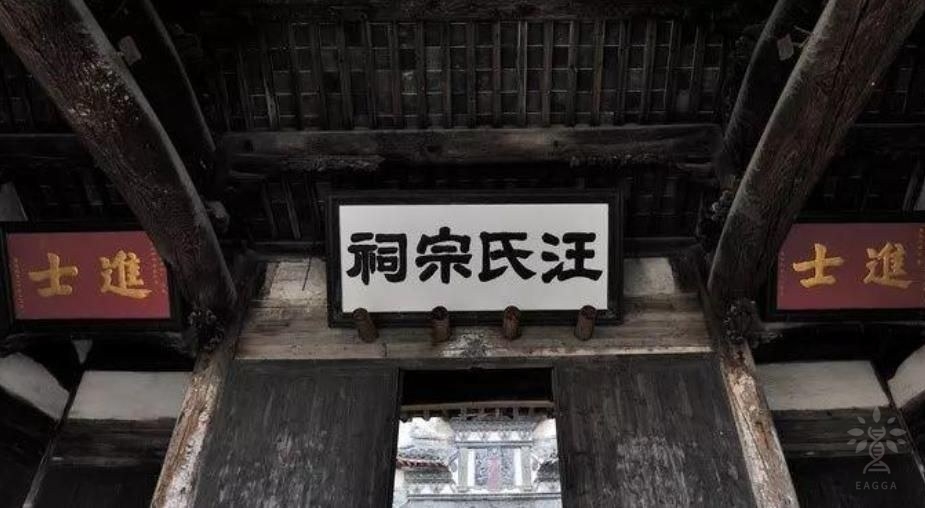
In traditional Chinese thought, a name is far more than a label — it is the starting point of identity. And the plaque bearing a “tanghao” (hall name) above an ancestral shrine gate is the deepest annotation behind a surname: often just four characters, it condenses a clan’s place of origin, migration history and moral character. Together, junwang (commandery prestige names) and tanghao form a unique “root-tracing code” within East Asian surname culture.
In early 2026, the historical drama Taiping Nian (The Peaceful Years) became a hit and unexpectedly sparked a nationwide “trivia craze”: audiences watched the drama while asking “what is your surname, and where does it come from?” Historical records show that the Hundred Family Surnames was compiled in the early Northern Song dynasty and was not ordered by population but by contemporary political standing — it opens with “Zhao, Qian, Sun, Li” because Zhao was the Song imperial surname, followed by Qian, the surname of the Wuyue royal house. A thousand years later, this primer still serves as many Chinese people’s first lesson about their own surnames.
The origins of surnames reach back to high antiquity. Murals at the Taihao Fuxi Mausoleum in Huaiyang, Henan, commemorate Fuxi’s legendary “establishment of surnames” — “Feng” is said to be the first surname in Chinese history. When King Wu of Zhou enfeoffed Guiman, a descendant of Emperor Shun, at Chen, his descendants took the state name as their surname, and the Chen surname has flourished ever since. The ruined city of the Huang state in Huangchuan, Xinyang, carries the blood memory of Huang descendants worldwide who “took the state as surname.” Surnames themselves form a condensed history of ancient China.
Junwang is the most geographic coordinate in surname culture. During the Wei, Jin, Sui and Tang dynasties, when great clans dominated society, aristocratic families used commandery names to mark their status: Li “Longxi,” Zhang “Qinghe,” Chen “Yingchuan,” Huang “Jiangxia,” Zheng “Xingyang” — these were originally just administrative regions in the Central Plains, but over time they became symbols of family identity. Research shows that of the 58 most famous junwang for the 100 largest surnames, their distribution centers on Henan — the Central Plains is the principal birthplace of Chinese surnames.
Tanghao further spiritualized junwang. They come in two kinds: one named directly after the commandery, such as the Fanyang Hall of the Lu clan and the Hongnong Hall of the Yang clan; the other named after ancestors’ deeds, the “allusion hall names.” Yang Zhen of the Eastern Han refused a disciple’s gift of gold, declaring “heaven knows, earth knows, I know and you know,” and his descendants adopted the “Sizhi (Four Knows) Hall” to honor his integrity. Wang Hu of the Northern Song planted three locust trees and predicted his descendants would rise to the highest offices; the Wang family took “Sanhuai (Three Locusts) Hall.” After Zhou Dunyi composed On the Love of the Lotus, Hakka Zhou families widely adopted the “Ailian (Love of Lotus) Hall.” Behind every allusion hall name lies a story of virtue and glory kept alive by generations.
Junwang and tanghao gained their most enduring vitality among the Hakka people. After the Yongjia upheaval, Central Plains aristocrats fled south en masse; the Hakka built ancestral halls, kept genealogies and wrote Central Plains commandery names into their hall names. Studies of Hakka culture in southern Jiangxi show that the vast majority of Hakka hall-name commandery locations lie in the Yellow River basin — names such as Yingchuan, Qinghe, Longxi, Hongnong and Runan became the only spiritual thread linking Hakka communities to their ancestral homeland. In a survey of 139 Hakka surnames, Central Plains commandery names dominated hall names overwhelmingly, a pattern taken as documentary evidence that “the Hakka originated in the Central Plains.” As one Hakka researcher put it, junwang and tanghao are “cultural coordinates” fixed through migration, allowing the Hakka to “drift ten thousand miles yet never forget their ancestors.”
Tanghao, genealogies and ancestral halls form a three-in-one system of family memory. Clan genealogies record each surname’s hall name, junwang, founding ancestor and migration route in detail — they are the core documents for confirming family identity. Ancestral halls compress junwang and family reputation into parallel couplets: “Jiangxia’s legacy, Yingchuan’s family name” and “Nanyang’s legacy, the Chu minister’s fame.” Today, the vast genealogy collections of the Shanghai Library, the National Library of China and FamilySearch allow researchers to systematically trace the migration routes behind hall names, while institutions such as the Jiangxi Hakka Museum, holding clan genealogies of more than 90 surnames, provide a platform for relatives at home and abroad to seek their roots.
The root-tracing function of tanghao is especially striking among overseas Chinese. Zheng descendants, however far they roamed, still called themselves “the Xingyang lineage” — hence the saying “all Zheng under heaven come from Xingyang.” The Shi clan founded the World Linpu Shi Clan Association overseas, using “Linpu’s fragrance spread far” to bind members together. From Southeast Asia to the Americas, the hall names on shrine plaques are the most direct evidence for overseas Chinese to identify fellow clansmen and trace their ancestral homeland in foreign lands.
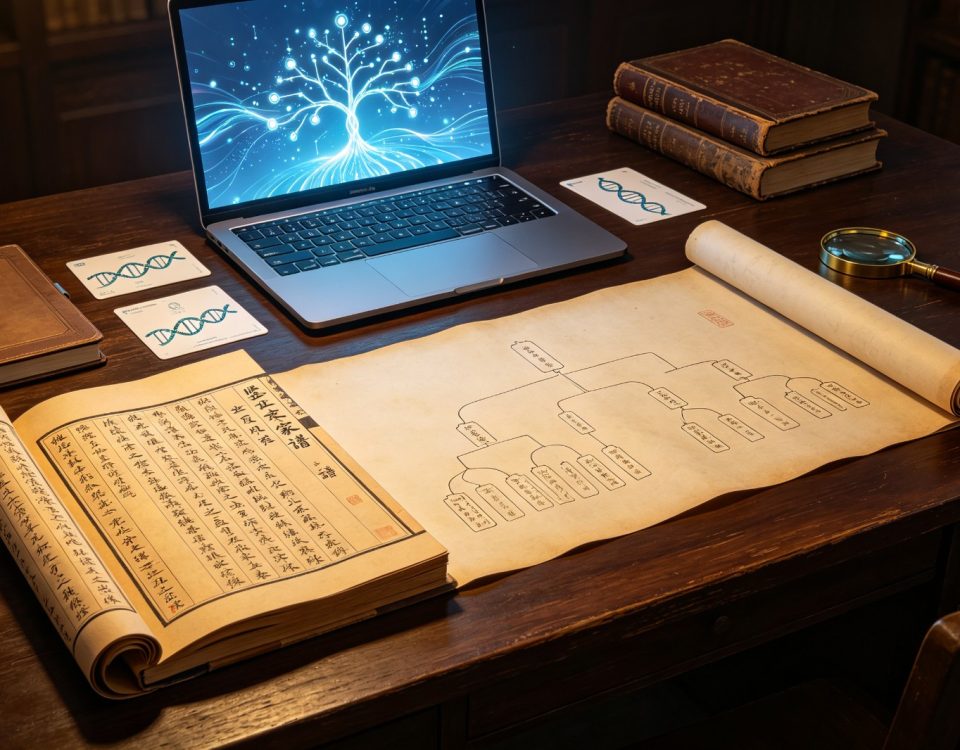
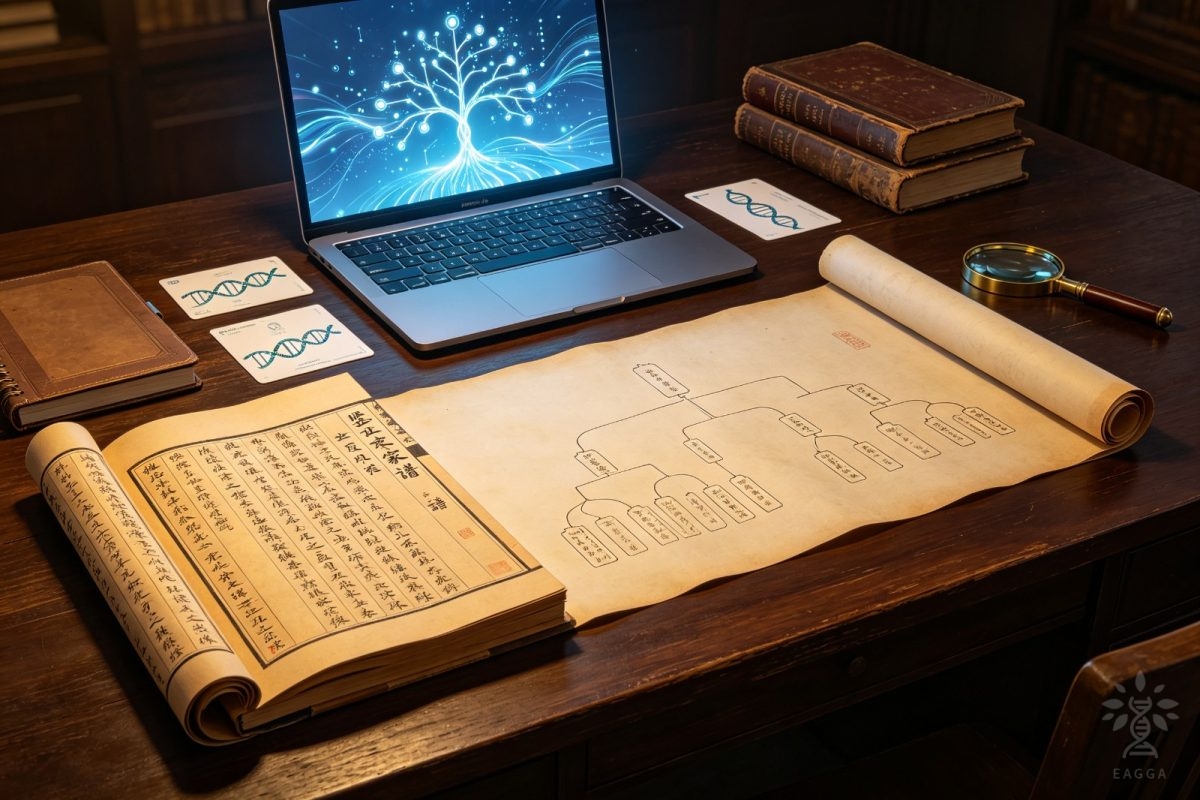
With the rise of genetic genealogy, a new link has formed between surnames, tanghao and genes. Chinese surnames traditionally pass down the paternal line, which naturally matches the transmission of Y-chromosome haplogroups. When genealogy records and Y-DNA test results corroborate each other, the chain of “tanghao — genealogy — genes” becomes a complete root-tracing route. By comparing a family’s Y-chromosome haplogroup with large-scale lineage resources, one can verify the ancestral branch claimed by its hall name, and even locate a more precise position on the paternal genetic tree.
A hall name carries only a handful of characters, yet it bears thousands of years of migration and memory. From Fuxi “establishing surnames,” to the primer of the Hundred Family Surnames, to the “Longxi,” “Jiangxia” and “Xingyang” plaques on shrine gates, surname culture has always been the spiritual thread by which Chinese people confirm “where I come from.” In an age of globalization and digitalization, this nostalgia written in hall names is being revived, transmitted and extended through genealogy databases and genetic genealogy technologies.