A Century Later, He Found Where His Great-Grandfather Set Out: A Malaysian School Principal’s Root-Seeking Journey in Quanzhou
2026年11月5日Ancient DNA from the Jinlingnan Cemetery: Trans-Eurasian Signals in the Agricultural Heartland of Eastern China
When historians and geneticists talk about ancient encounters across the Eurasian continent, the Silk Road dominates the story: the relay stations of the Hexi Corridor, the murals of Dunhuang, the caravans of Samarkand. The agricultural heartland of eastern China—the North China Plain, the hills of Shandong—seldom appears in that narrative. A study published in 2026 in the journal Human Genetics suggests the story is more complex. Working with human remains from an unremarkable cemetery in Zibo, Shandong, the team led by Fudan University’s Wang Chuanchao recovered genetic signals that point thousands of kilometers to the west.
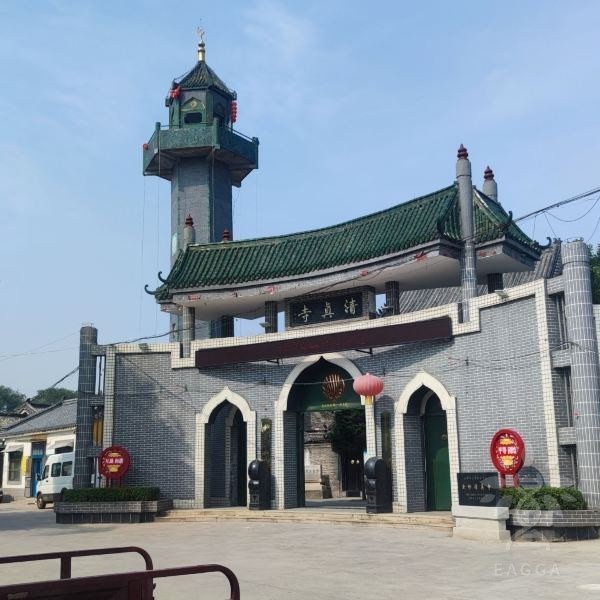
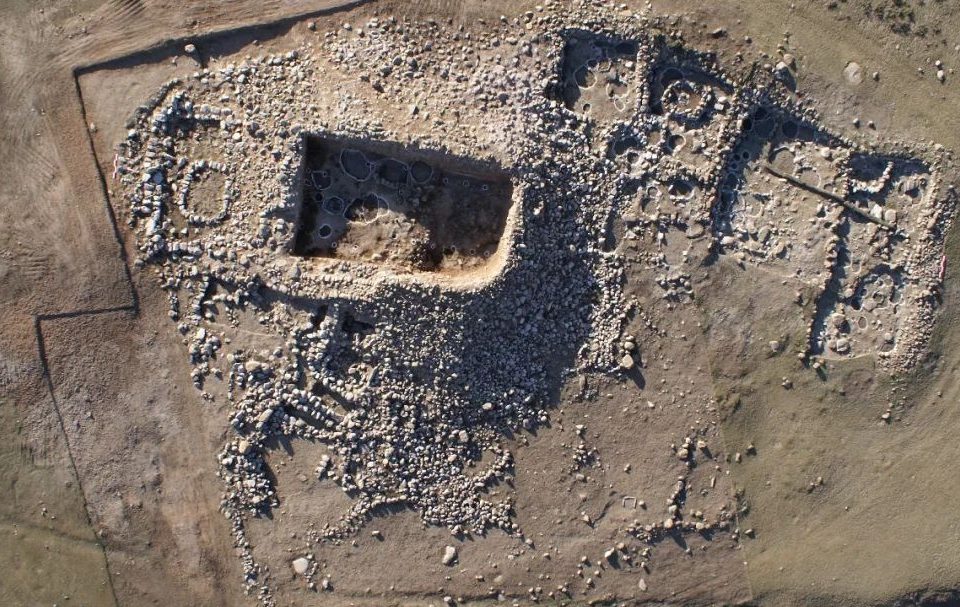
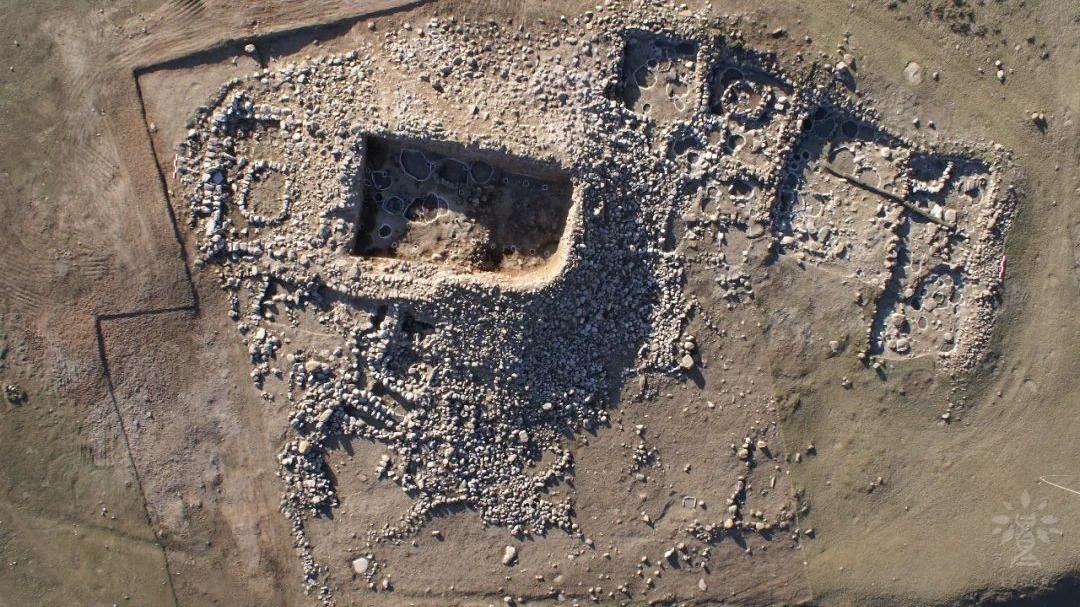
The Jinlingnan cemetery sits in the lower Yellow River farming belt. Though far from the Silk Road’s main routes, the area has long been a node in the east China transport network: a Tang-dynasty posting station named Jinling was established here in the early seventh century, the settlement grew into Jinling town during the Five Dynasties, and by the Yuan–Ming transition it had become Jinling Hui Township, a Muslim community that survives to this day. In 2023 the Shandong Provincial Institute of Cultural Relics and Archaeology carried out a rescue excavation, uncovering 18 tombs. Artifacts, epitaphs and radiocarbon dating place the burials between the Tang and Qing dynasties (AD 618–1912).
Wang’s group, working with Xiamen University, the Shandong institute and Fujian University of Technology, generated genome-wide data from 16 of these individuals. Kinship analysis (READ) showed that the sample actually represents 10 unrelated individuals. PCA, ADMIXTURE and f-statistics were then combined to reconstruct each person’s ancestral makeup.
The first finding is continuity. Every individual carries mitochondrial lineages common in East Asia (F1a, B4, D4, D5, M9a, R, A3) and Y-chromosome haplogroups O1 and O2a2, with an overall genetic profile closely matching late Neolithic populations of the middle Yellow River and historical-period Shandong groups. The region’s gene pool remained strikingly stable from the Neolithic to the Qing; external ancestry was injected into it, not substituted for it.
The second finding is more unexpected. Seven of the 10 unrelated individuals carry detectable West Eurasian or Central Asian ancestry, ranging from 1.5% to 12.1%. The highest proportions, around 11%, appear in two Qing-dynasty individuals (SD-1-20, SD-2-3); a Song–Yuan individual shows about 2%, and the remaining Qing individuals sit in between at roughly 5%. qpAdm modelling describes these seven individuals as two-way mixtures of a middle Yellow River component and a West/Central Eurasian component, while DATES estimates the admixture event in the Qing individuals at roughly 592 ± 101 years ago—that is, between the late Southern Song and the Yuan dynasty (AD 1124–1326). In other words, the western contribution arrived centuries before the Qing and continued to be absorbed, diluted and re-expressed over generations.
Archaeology and genetics corroborate each other. Song–Yuan burials are fully Sinicized: brick-vaulted chambers, south-facing doors and typical porcelain assemblages. Qing burials, by contrast, follow unmistakably Islamic mortuary practice—rectangular earth-cut pits, no grave goods, no coffin, and the deceased laid facing west. Two burial traditions and two ancestral streams layered in a single cemetery illustrate how an incoming group merged with the local farming society at different speeds and in different forms across time.
The study also connects the past to the present. Today’s Shandong Han can be modelled as roughly 95% Jinlingnan-related ancestry and about 5% ancestry related to southern Chinese groups: the historical-period Shandong gene pool is the dominant genetic foundation of the modern population, later refined by ongoing north–south interaction. Compared with previously reported sites—Xingfulindai, where 3 of 5 individuals carried 3–15% western ancestry, and Fudamen, where 2 of 17 carried about 5%—Jinlingnan shows both a higher carrier frequency and a larger overall contribution.
The authors summarize the region’s historical population dynamics as “basal Central Plains continuity, localized absorption of foreign components, and subsequent north–south interaction.” In the farming heartland far from the Silk Road, trans-Eurasian exchange did not simply pass by—it arrived slowly, locally, and left its trace in the genome. Li Shuyi (Fudan University), Wang Yuchun (Xiamen University) and Shen Qu (Fujian University of Technology) are co-first authors; Zan Jinguo (Shandong Provincial Institute of Cultural Relics and Archaeology) and Wang Chuanchao (Fudan University) are co-corresponding authors. The work was supported by the National Natural Science Foundation of China, the National Key Research and Development Program, and a major project of the National Social Science Fund.