
Not One People: 37 Ancient Genomes Show How Farmers, Herders and Southerners Assembled the Qin
2026年11月23日One 1985 Family Photo Reconnected a Line Broken for Decades: 34 Cousins Come Home to Nan’an
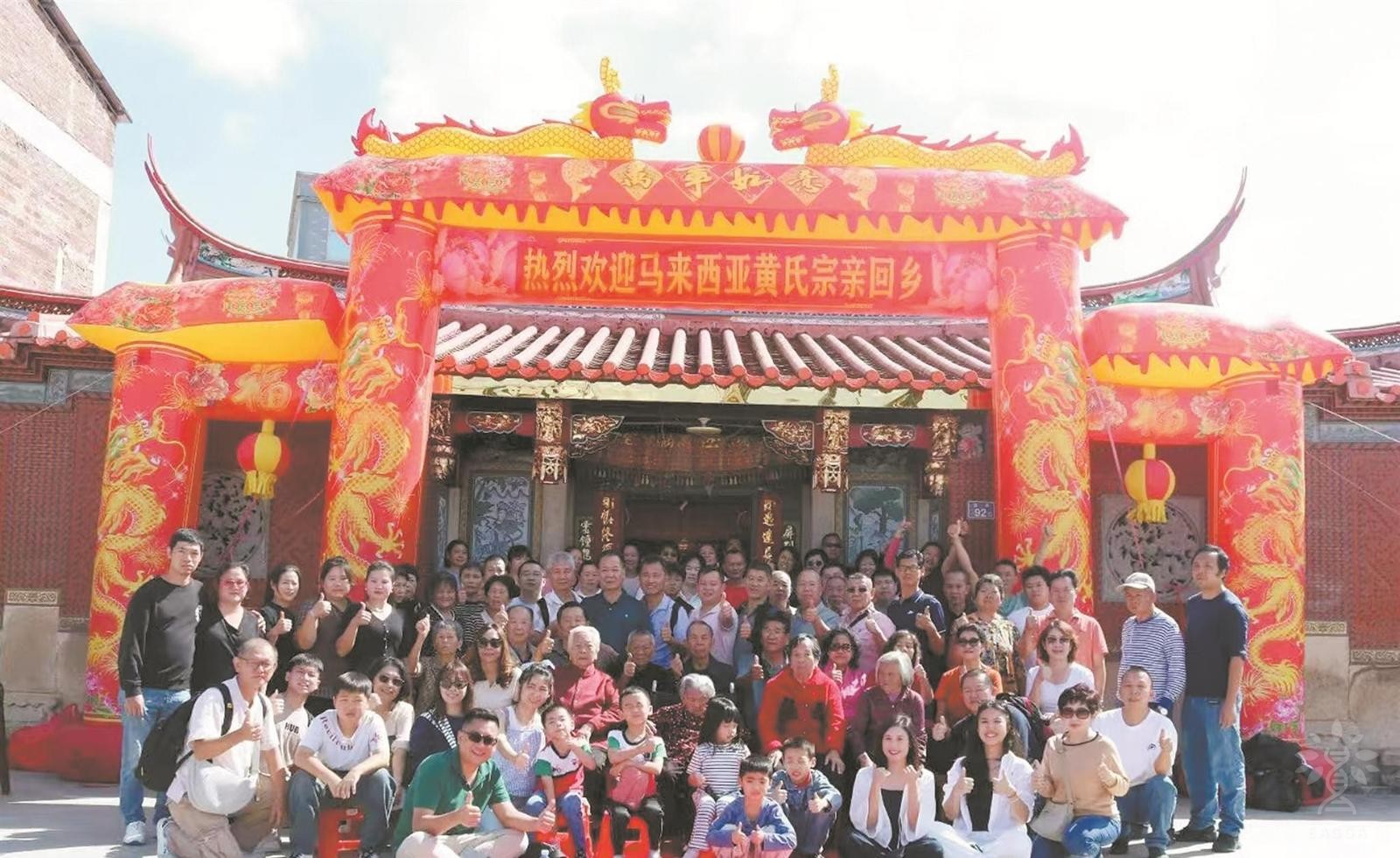
In late November, a red carpet ran to the door of the ancestral hall in Tanlin village, Xinsheng township, Nan\’an, and an inflatable arch carried a banner welcoming the Huang clan relatives home from Malaysia. Thirty-four descendants from Malaysia and Singapore crowded in front of the hall for a group photograph, some crouching in front, some standing behind, children held in arms. The previous photograph of that kind was taken in 1985.
The line had been broken. Huang Guoxing, who led the search, explains that his grandfather sailed to Southeast Asia a century ago to make a living, and for years letters kept the two sides in touch. In 1985 his aunt came back to visit and posed with relatives for a few photographs. Then the older generation died one by one, the letters stopped and contact lapsed.
The harder problem was the address. Family memory handed down a place called Nan\’an Shisandu, the thirteenth du. Huang Guoxing and his cousin\’s son Huang Wensheng returned to Nan\’an several times and each trip ended empty-handed. Spoken place names compress and drift over a century: the thirteenth du and the twenty-third du differ by a single character but point in opposite directions.
The turning point came from a gravestone. On the marker of an elder, Huang Guoxing found the address Nan\’an Ershisandu Tanba. The long-standing thirteenth du was corrected on the spot. He compiled a list of ancestral names and birth dates and, in June 2026, asked the Nan\’an federation of returned overseas Chinese for help.
The federation passed the lead to its Xinsheng township branch. On the strength of local historical records, official Huang Zhijun concluded that Nan\’an Ershisandu Tanba is present-day Tanlin village, formerly known as Chenba. The village committee then posted the search notice in the villagers\’ WeChat group.
In that group, clan member Huang Zhongpai saw the notice, went home and opened the genealogy, comparing names and generations page by page. As it happened, his household also kept photographs taken in 1985 when Huang Guoxing\’s aunt came back. Set side by side, the two copies matched on every name, generation and family detail. The line broken for decades was connected again.
When word reached Malaysia, more and more people asked to join, and the group grew to 34. On the day they arrived they burned incense at the ancestral hall and paid their respects. Afterwards they sat in a circle studying photographs from forty-one years earlier, trying to recognise faces, and the village laid on a banquet. The next day they walked the village, visiting old friends.
The method behind this reunion is worth recording. Root-tracing usually rests on four kinds of evidence: oral tradition, gravestones and spirit tablets, clan genealogies, and the records of overseas-Chinese federations and local gazetteers. Oral tradition is the least reliable, because place names warp, so it can only indicate direction. A gravestone or spirit tablet carries the hardest geographic detail and can settle a question with a single character. A genealogy supplies names and generations but means little until checked against physical objects. The federation and the gazetteer do the translation work, turning historical administrative units such as the du into today\’s villages.
One more source is often overlooked: old photographs. Faces, walls and clothing in a picture form the final confirmation, because text can be miscopied while an image rarely is. What made this identification possible was a 1985 group photo held on both sides of the sea: a genealogy on one side, a photograph on the other, and the two matching.
Huang Guoxing says he will come back often and hopes relatives from the home village will one day gather with them in Malaysia. A genealogy is not valuable because it is thickly printed, but because someone is willing to carry it across the sea and check it once.
Huang clan relatives from Malaysia and Singapore in front of the ancestral hall in Tanlin village, Nan\’an, in November 2026. Source: Quanzhou Web.