No Bones Needed: Cave Sediment from 22,000 Years Ago Rewrites Ice Age Population History
2026年11月9日One Old Genealogy, Two Branches: Yilan’s Zhang Clan Reconnects Its Lineage in Panchi, Pinghe
On the morning of 1 November 2026, a group arrived in Panchi, a village in Guoqiang township of Pinghe county, Zhangzhou, Fujian. The visitors were members of the Zhang clan from Yilan, Taiwan, accompanied by the Zhangzhou-Taiwan exchange association, the Pinghe county Taiwan affairs office and township officials. They followed the route such visits usually take: the ancestral halls first, then a table and the genealogy books.
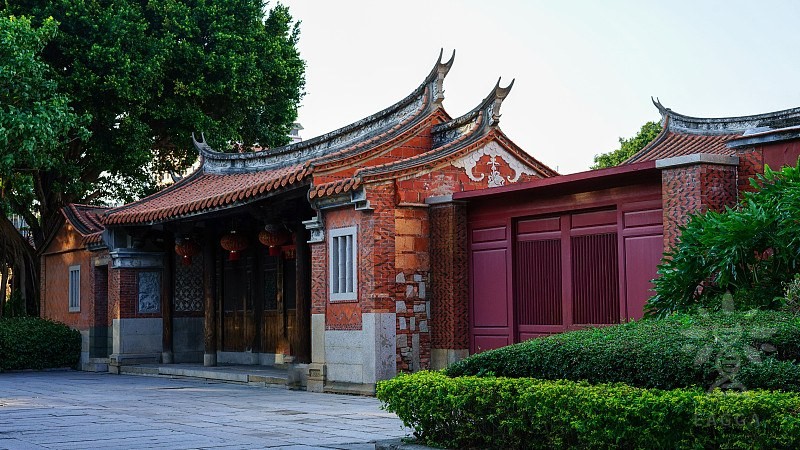
The first stop was the Panchi Zhang ancestral hall, the second a hall belonging to the clan’s second branch. Offerings were made at both, in memory of ancestors who opened the settlement and passed down the tradition of farming and study. For several members of the delegation this was the first time they had stood on the place-name written inside their own genealogy: Panchi had existed only as a few lines of ink.
After the rituals came the part that took longer. Old registers were laid out on the table, and the two sides worked through them line by line — comparing the origin and descent of each branch, checking the migration routes, and matching personal records. Names, branch affiliations and dates of departure recorded in the Yilan copy were set against the older registers kept in Panchi. The conversation also turned to the generations who crossed to Taiwan, broke new ground and settled in Yilan: which generation made the crossing, where they landed, how they made a living. Both sets of books carry traces of this, though they record it differently.
Panchi’s own history is well documented locally. The village was once known as Zhang Pandi. Its founding ancestor, Zhang Hongyu (courtesy name Zhongle, style Chubian), moved there around 1466 during the Chenghua era of the Ming dynasty from Shangendou in Nanjing county — more than 560 years ago. Hongyu had five sons, who established the clan’s five branches; the two old walled settlements in the village, Shangcheng and Xiacheng, along with its old lychee groves, are tied to that expansion. The Panchi genealogy of the Zhang clan’s Chubian line, preserved locally, is the textual basis on which this reconciliation rested.
Beyond the halls, the delegation visited Liucheng Lou, a Hakka tulou in Guoqiang township that is more than a century old. Its circular rammed-earth wall, stone door frame and inner courtyard still hold their original arrangement. The visitors walked the walls and heard about rural development and the protection of old buildings. For a family that moved from southern Fujian to Yilan, the tulou and the ancestral halls are the most concrete form of memory about the ancestral home.
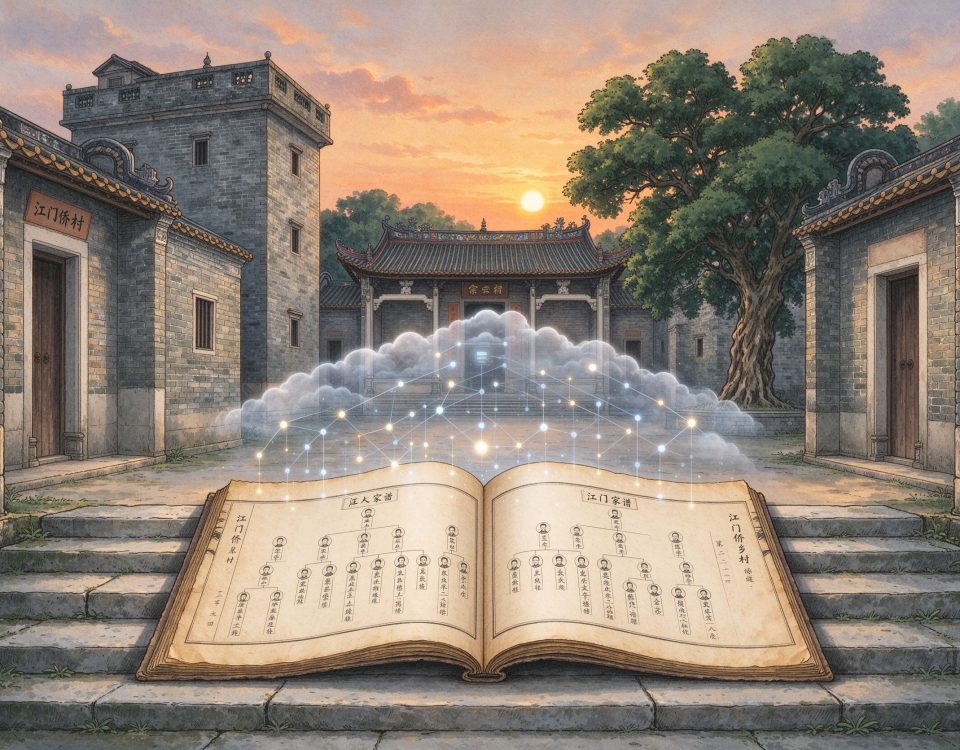
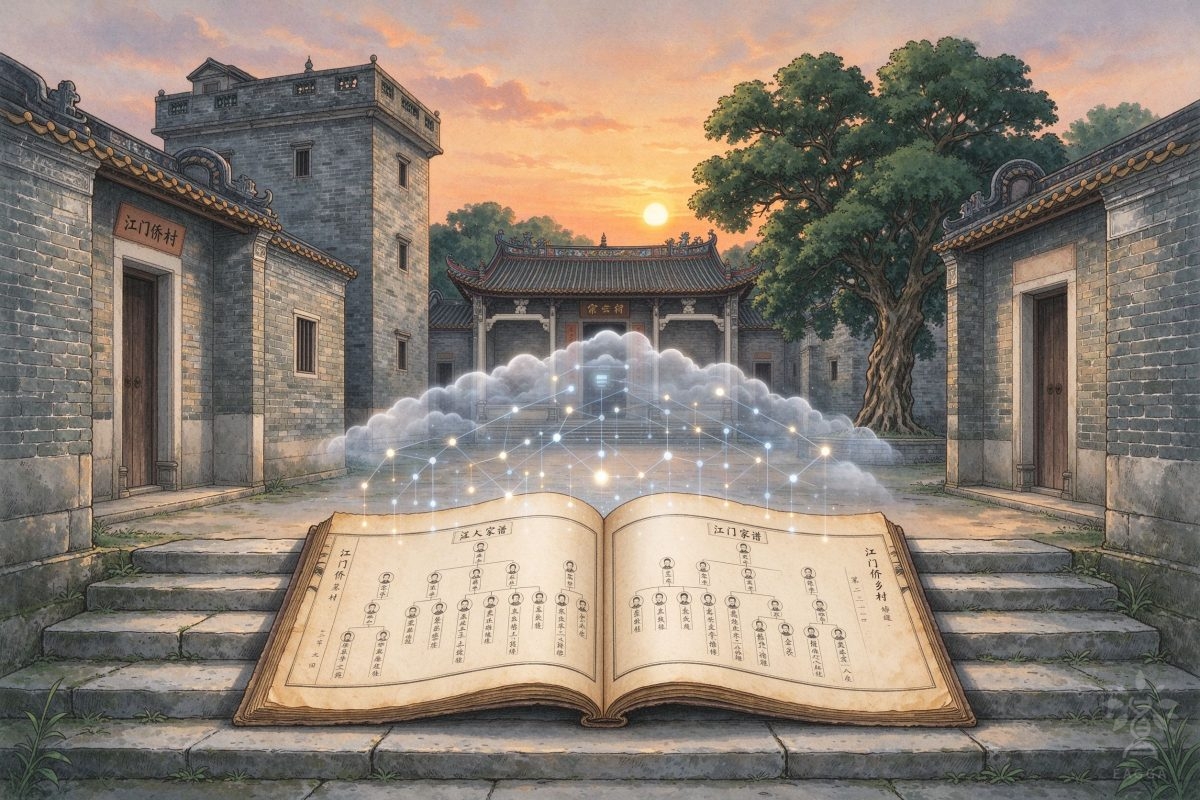
Genealogy reconciliation deserves to be taken seriously because it is, at bottom, a textual check on kinship. A register records names, branch membership, births and deaths, migrations and burial sites. If those entries can be matched against a parallel copy kept elsewhere, a verifiable chain is established between two transcriptions separated by centuries. It does not depend on oral tradition or on sentiment; it depends on the structure of the lineage itself lining up.
This is also where genealogies and genetic genealogy can complement each other. A register supplies social information — who belonged to which branch, which generation left — precise down to a person and a place. Y-chromosome and mitochondrial markers supply the biological link, and can test the parts of a genealogy that transcription errors or wishful attachment may have distorted. Set side by side, the two kinds of evidence often say more about a family’s actual origins than either can alone.
For Panchi the visit leaves a more complete lineage record. For the Yilan branch, a place-name in the genealogy now has a house number, a hall and people in it. At the close of the day both sides spoke about keeping the contact going and continuing to organise the lineage material and family memory.
The delegation in front of Liucheng Lou, the century-old Hakka tulou in Guoqiang township, Panchi village. (Image: Zhangzhou News, report of 3 November 2026)