Fudan team reveals 6,000 years of population history in the middle Yellow River: Yangshao ancestry endures for 6,200 years
2026年6月26日
Interview with Fu Qiaomei: Ancient human evolution research to extend toward “older” and “closer to prehistory” times
2026年7月10日Science Advances: Ancient DNA Shows Scythian Elite Power Was Inherited Through Family Bloodlines

On 3 July 2026, the international journal Science Advances published a landmark ancient DNA study, “Ancient DNA reveals elite dynastic rule among Iron Age Eurasian Steppe nomads”. Combining archaeology, anthropology and genomics, the team analyzed genome-wide data from 85 Iron Age individuals and obtained the first genome from Kazakhstan’s famous “Golden Man”, providing the strongest genetic evidence to date for how political power was maintained in Scythian society.
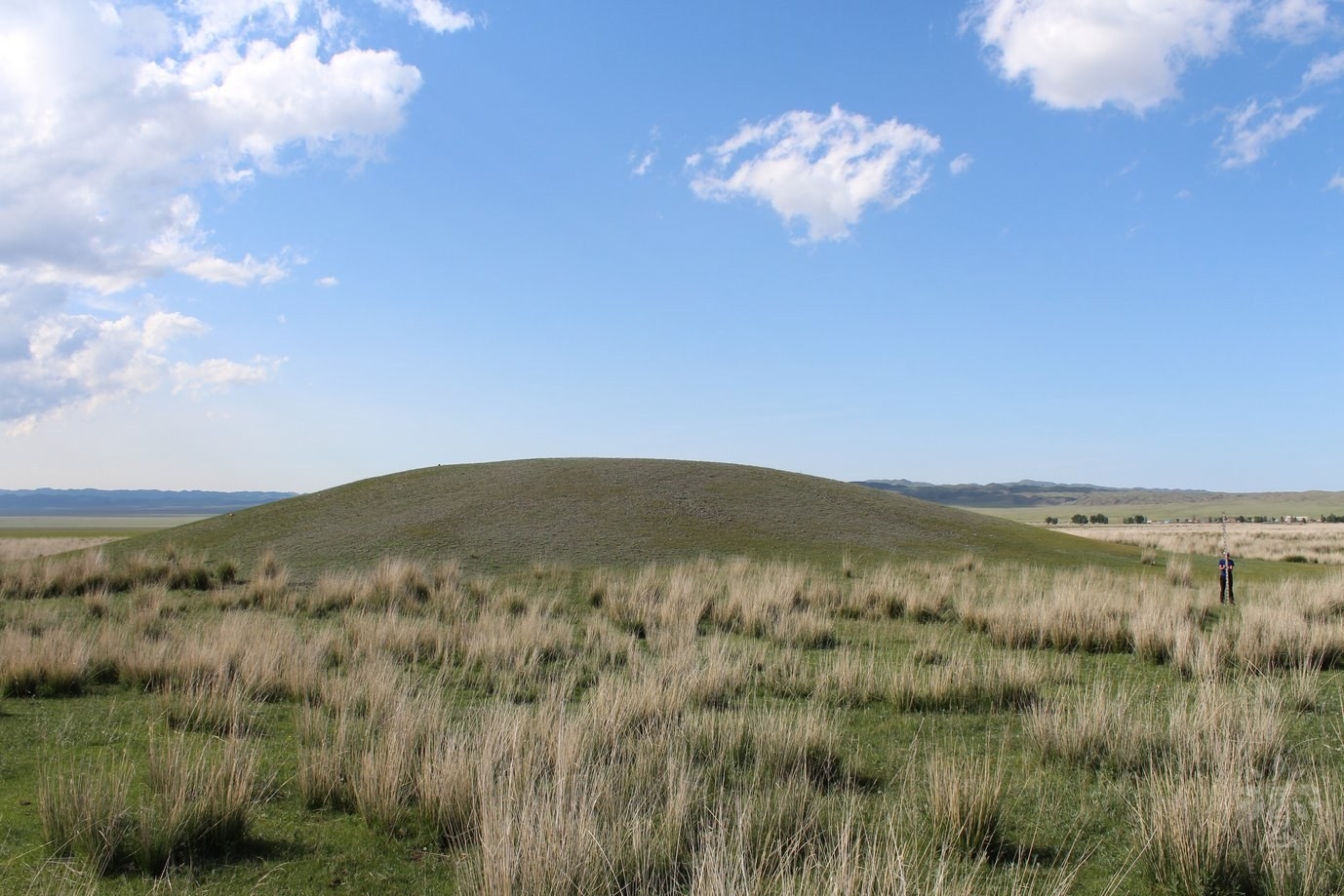
The Scytho-Siberian archaeological horizon emerged in the first millennium BCE and stretched from the Altai mountains to the Black Sea. During the Iron Age, the Eurasian steppe saw the appearance of large burial mounds (kurgans) built for high-status individuals — elaborate monumental graves often containing richly adorned men and women, gold ornaments, weapons and sacrificed animals. In contrast, other individuals were buried in much smaller, simpler mounds with few or no grave goods. Such striking differences have long been read as evidence of growing social inequality and the rise of powerful elites — yet one essential question remained: was elite status earned through individual achievement, or inherited?
To answer this, the team analyzed genome-wide DNA from 85 Iron Age individuals across Central Eurasia, including 38 elite and 47 non-elite burials. The dataset includes 45 newly sequenced genomes and, for the first time, the full genome of the famous Scythian Saka “Golden Man” from the Issyk archaeological site in Kazakhstan — one of the most outstanding archaeological discoveries of the Central Eurasian steppe.
The Issyk kurgans, located about 50 km east of Almaty, belong to a royal burial complex of the Iron Age Saka culture, dated to 400–300 BCE. The “Golden Man” was buried in a wooden chamber containing more than 4,000 gold ornaments, weapons, a gold-embroidered headdress, zoomorphic artifacts and a silver bowl bearing an unknown script. This study provides the first genetic insight into this iconic individual: the results place him within the genetic variation of Iron Age Saka individuals and resolve a long-standing question — he was almost certainly male, not female as some had speculated.
The most significant finding came from comparing elite and non-elite burials. The team identified evidence of close family relationships linking elite individuals across multiple cemeteries — in some cases more than 100 km apart — as well as signs of unions between relatives. This indicates that elite status was maintained within interconnected family lineages that shaped political authority and social organization across the Central Eurasian steppe. “We did not expect to find that social status was passed down from generation to generation, but it was clear that high-status individuals were more related to each other, even when buried at different sites, than to people of lower status who were buried at the same sites,” said co-author Ainash Childebayeva, assistant professor of anthropology at UT Austin.
The study also sheds new light on the role of elite women. “An important observation from our study was the noticeable presence of elite women,” said co-author Ayshin Ghalichi of the Max Planck Institute for Evolutionary Anthropology. “Nearly half of the elite individuals in our dataset were female, indicating that women held high social status within Iron Age Scythian society.” Richly furnished elite female graves, together with genomic links across burial sites, point to a social world in which status, authority and kinship were closely intertwined.
Notably, the researchers found no clear evidence that elite status was associated with either patrilocal or matrilocal residence patterns, suggesting that social organization among Scythian elites was complex and not based on simple gender differentiation. Another striking detail: the elite sample even includes a one-year-old infant given an elite burial — buried in a cemetery belonging to the elite family lineage despite its tender age.
Leyla Djansugurova of the Institute of Genetics and Physiology in Almaty explained the broader cultural significance: “Scythians and Sakas are collective names for nomadic tribes of the early Iron Age who inhabited the Central Eurasian region from the Danube to the Altai. The ancient Greeks called them ‘Scythians’ (Herodotus coined the term), while Persian and Indian sources called them ‘Sakas’. Historically, Scythians more often refers to the western tribes (Black Sea region), and Sakas to the eastern ones (Central Asia, Altai). All these tribes were united by the so-called Scythian-Saka animal style in art, a distinctive military skill, and nomadic herding. They did not have their own written language, but they left behind grand burial mounds, the study of which has shaped the global understanding of the culture of Eurasian nomadic peoples during this period.”
The study covered multiple landmark Saka elite remains, including the Issyk “Golden Man”, the Urzhar Princess and the Shilikty “Golden Man”. Its value lies not only in obtaining the first reliable DNA data on many emblematic Saka elite burials, but also in examining elite individuals alongside non-elite individuals from the same sites. This comparative approach allowed researchers to determine the specifics of elite marital relationships and identify related necropolises, significantly enriching our knowledge of Scythian-Saka culture.
From an East Asian perspective, this study once again demonstrates the enormous potential of ancient DNA in reconstructing ancient social structures: where burial archaeology can only offer material clues, genomic data can directly read kinship, marriage alliances and lineage transmission. For readers concerned with East Asian genetic genealogy, the Scythian elite story offers an important point of reference — at the other end of the Eurasian steppe, power, family and DNA were just as tightly bound across millennia.