
Cross-Strait Root-Seeking Service Center Opens in Xiamen: Big-Data Genealogy Makes “One-Click Ancestor Search” a Reality
2026年6月18日
Shanghai Library’s Genealogy Library: Bringing 380,000 Volumes of Family Registers to Life
2026年6月25日The DNA Detective Story That Identified a Forgotten Hungarian King

For centuries, historians knew that the remains of Hungarian kings lay somewhere beneath the ruins of the Royal Basilica of Székesfehérvár — but nobody knew exactly which bones belonged to which ruler. Wars, invasions, looting and the passage of time had transformed one of medieval Europe’s most important royal burial sites into a tangled archaeological puzzle. Generations of researchers dreamed of identifying the lost kings of Hungary. In 2026, genetics finally provided some answers: a landmark study by the Archaeogenetics Research Center of the Hungarian Research Institute and the Archaeogenetics Research Group of the Department of Genetics at the University of Szeged identified King Béla II “the Blind” among hundreds of skeletal remains recovered from the basilica — and uncovered additional members of the Árpád Dynasty, the family that founded and ruled the medieval Kingdom of Hungary.
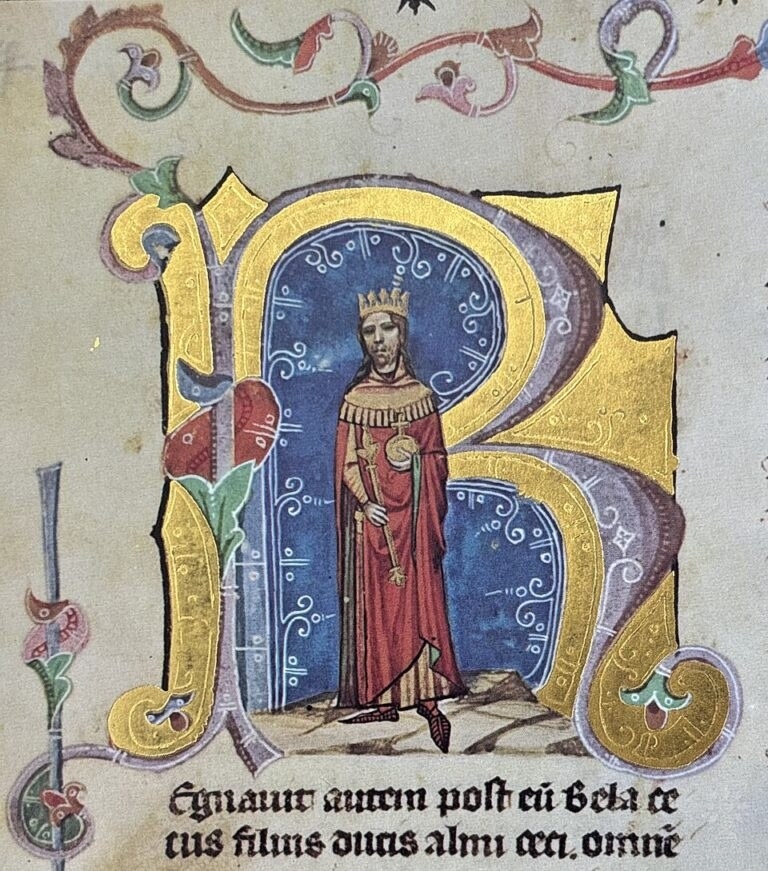
The Árpád Dynasty occupies a special place in Hungarian history. Its roots trace back to Prince Árpád, the leader associated with the Hungarian conquest of the Carpathian Basin at the end of the ninth century. The family’s most famous member was King Stephen I, later canonized as Saint Stephen, who established the Christian Kingdom of Hungary around the year 1000. Over the following centuries, Árpád kings shaped the political and cultural development of Central Europe, ruling Hungary until 1301, when King Andrew III died without a surviving male heir. For historians, genealogists and genetic researchers alike, the Árpáds represent one of Europe’s most important medieval dynasties.
The Royal Basilica of Székesfehérvár served as the coronation and burial place of Hungarian kings for centuries. At least fifteen Hungarian monarchs were buried there, including at least ten Árpád princes and kings. Following the Ottoman conquest of the city in 1543, the basilica gradually fell into ruin: tombs were damaged, graves were disturbed, and skeletal remains became mixed together over the centuries. By the time archaeologists began serious excavations, they faced an enormous challenge — hundreds of skeletons, very few of which could be confidently identified.
The breakthrough came through large-scale genetic testing. Researchers analyzed more than 400 genomes recovered from the basilica’s ossuary, focusing on a distinctive Y-chromosome lineage previously identified in King Béla III and other confirmed members of the Árpád family — the R-ARP lineage. The Y chromosome is particularly valuable in studies of royal dynasties because it passes largely unchanged from father to son, acting like a genetic surname that can survive for centuries. Searching hundreds of remains for this signature, they discovered three previously unknown men carrying the same paternal line.
One of the newly discovered skeletons produced an extraordinary result. By examining shared DNA segments between the individual and known Árpád family members, researchers determined that he was a second-degree relative of King Béla III and a third-degree relative of Saint Ladislaus — relationships that fit only one known person in the royal family tree: King Béla II. Known to history as Béla the Blind, he ruled Hungary from 1131 to 1141; his nickname came from a tragic childhood event, when he and his father were blinded during a dynastic struggle to make them unfit for ruling. Despite his disability, he later ruled with heavy reliance on his wife’s and brother’s assistance. For nearly 900 years his final resting place remained uncertain — now genetics has provided compelling evidence that one of the skeletons from the basilica truly belonged to him.
The study also identified another man closely related to Saint Ladislaus, likely an uncle or an otherwise undocumented half-brother of the famous king. Intriguingly, this individual remains unidentified despite the genetic evidence — one of the most exciting aspects of the study. Instead of answering every question, it opens new ones: Who was this man? Why was he buried in such a prominent location? Could forgotten historical records eventually reveal his identity? For genealogists, this uncertainty feels familiar: every family tree eventually contains a mysterious relative waiting to be discovered, and every discovery creates new mysteries.
The research did not stop with the Árpád kings. Scientists also examined the remains of Béla, Duke of Macsó, a thirteenth-century prince murdered by political rivals in 1272. Previous archaeological evidence strongly suggested the skeleton’s identity, but genetics provided independent confirmation — and the prince’s DNA matched what historians expected: a maternal connection to the Árpáds and a paternal connection to the Rurikid dynasty of Kievan Rus’. Forensic analysis revealed the circumstances of his death in remarkable detail: his skeleton bore twenty-six perimortem wounds, including nine to the skull, showing that he was the victim of a coordinated assassination rather than a duel or battlefield encounter. At least three attackers armed with swords struck him simultaneously from different directions, and he attempted to defend himself before being overwhelmed. The severity and concentration of blows to his head and face suggest both premeditation and intense personal animosity — rare physical evidence for the political violence described in medieval chronicles.
One of the study’s most surprising findings involved distant genetic links between Árpád family members and Viking-age individuals from Scandinavia and Estonia. The explanation is simpler than it sounds: medieval royal families constantly intermarried across Europe, and several queens who married into the Árpád Dynasty descended from the Viking-origin Rurikid rulers of Kievan Rus’. Over generations, those northern European ancestors left detectable traces in Hungarian royal DNA. The evidence also sheds light on the dynasty’s deeper ancestry: the Árpád paternal line belongs to a branch of the R1a Y-chromosome family associated with ancient Eurasian steppe populations, appearing most closely related to lineages found among certain Bashkir populations near the southern Ural Mountains — suggesting not that the Árpáds were Bashkirs, but that both groups share a distant common paternal ancestor.
For family historians, the study is a striking demonstration of method: historical records, family relationships, burial evidence, genetic matching and shared-DNA analysis combined — remarkably similar to everyday genealogical research, just on a grander scale, identifying a king who died nearly 900 years ago instead of a mystery great-grandfather from the nineteenth century. Despite these remarkable discoveries, many mysteries remain: historical records suggest eight Árpád kings were buried at Székesfehérvár, yet only two — Béla II and Béla III — have been conclusively identified through genetics. Ancient DNA can now accomplish what written records alone cannot: names are being restored to anonymous skeletons, family relationships are being reconstructed across centuries, and historical mysteries once thought unsolvable are finally yielding answers. Even after centuries of war, ruin and forgotten graves, the family story remained hidden within the DNA, waiting for someone to read it.