
The DNA Detective Story That Identified a Forgotten Hungarian King
2026年6月23日
Fudan team reveals 6,000 years of population history in the middle Yellow River: Yangshao ancestry endures for 6,200 years
2026年6月26日Shanghai Library’s Genealogy Library: Bringing 380,000 Volumes of Family Registers to Life
On 29 December 2025, the Shanghai Library’s Genealogy Library (Jiapu Guan) officially opened to the public at 746 Changle Road, Shanghai — China’s first research library devoted entirely to genealogies, integrating collections, research, services and exchange. The new institution occupies the former site of the private Hezhong (Cooperative) Library, a building restored after years of weathering. The opening ceremony was attended by Liao Yanling (deputy director of the Shanghai Municipal Administration of Culture and Tourism), Xiao Yeying (head of publicity for Jing’an District), Yang Chunhua (Party secretary of the Shanghai Library) and Chen Chao (its director).
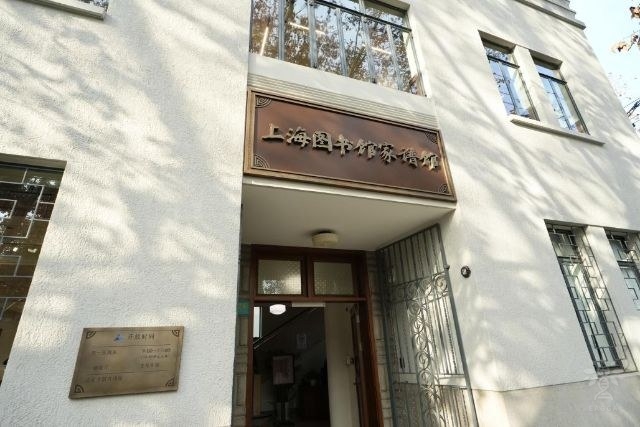
The Genealogy Library’s very existence is a story of cultural continuity. In 1939, amid the wartime chaos of Shanghai’s “isolated island”, patriotic cultural figures including Ye Jingkui, Zhang Yuanji and Chen Taoyi founded the private Hezhong Library, inviting bibliographer Gu Tinglong south to run it, sheltering Chinese classics through the war. From the rare genealogies acquired in the Hezhong era, to those rescued and purchased during the Shanghai Historical Documents Library and Shanghai Library periods, to today’s published research results, generations of librarians have sustained a century-long commitment to “rescuing, preserving and using” cultural heritage.
In scale, the Genealogy Library holds the world’s largest public collection of original Chinese family registers: nearly 40,000 titles and 380,000 volumes, spanning 567 surnames. The new institution aims to be a three-in-one cultural platform — “document preservation, public reading and academic sharing” — serving both as the essential archive on researchers’ desks and as a public space where ordinary citizens can approach family culture.
The ground-floor exhibition hall links the library’s history with the origins of genealogy through rare documents, creating a “readable cultural space”. Visitors can explore the building immersively via the “Wandering Hezhong” architectural guide, listen to the AI librarian “Xiaohe” explain genealogy in the “Fun Talk on Family Registers”, or scan their own surname in the “Explore Your Surname” interactive zone to retrieve a digital knowledge graph covering family rules, notable ancestors and migration patterns — turning “root-seeking” into a tangible digital experience.
The second floor provides seamless services for researchers and the public alike: reservation-based reading of paper genealogies, digital retrieval and multimedia interaction, bridging online and offline resources. A particularly noteworthy item on display is the Chinese Genealogy Bibliography (Zhongguo Jiapu Zongmu) — the landmark work compiled over eight years that brings together, for the first time, 52,401 Chinese genealogies held around the world, serving as the foundational bibliography for global research on Chinese family records.
The third floor houses seminar rooms, meeting rooms and expert research studios, precisely serving in-depth genealogy research and academic exchange. Since opening, the library has hosted university research teams, local history institutions and overseas root-seekers, hosting exchanges on genealogy digitization, family migration and surname culture.
The inaugural exhibition, “Many Hands, One Effort: The Past and Present of the Hezhong Library”, follows the theme of “cultural relay” in three parts. “The Lonely Island Keeps Its Vow” traces the founding and evolution of the Hezhong Library — from Ye Jingkui’s personal letter inviting Gu Tinglong south to architect Chen Zhi’s building designs. “The Virtue of the Founders” recalls how Ye Jingkui, Zhang Yuanji, Chen Taoyi and Gu Tinglong safeguarded the library and its classics through the war. “A Gathering of Family Treasures” showcases the growth of the Shanghai Library’s genealogy collection, bearing witness to a hundred-year tradition of rescue, preservation and use.
The Genealogy Library aims to revive the vitality of traditional culture in every form — bringing documents “to life” and making history “touchable”. For genetic genealogy and family history research, genealogies are a path to ancestors beyond DNA: they record surname migrations, marriage networks and family memory, mutually corroborating molecular evidence. As family registers move from storage shelves to display cases, from paper to the cloud, Chinese genealogy culture is no longer dusty archive material but a living heritage connecting past and future, individual and history.