
The Goths Were Not a Myth: Ancient Genomes Trace a Migration from Scandinavia to Iberia
2026年11月11日What a Clan Source-History Is Worth: A New Genealogy Volume Launched in Hubei
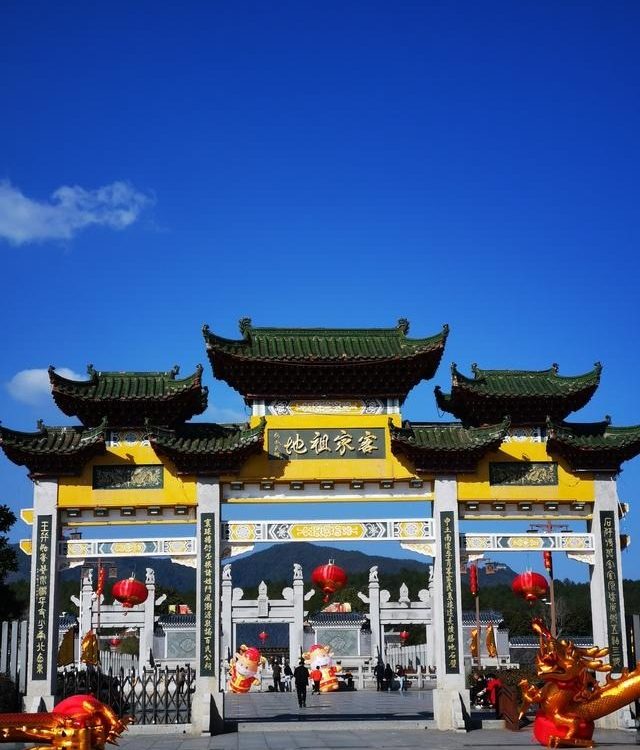
On the morning of 7 November 2026, the Xiang clan ancestral hall in Hubei held a publication ceremony for Xiang Hong Gong Yuan Liu Shi. Nearly fifty clan representatives attended, travelling from Wuxue, Macheng, Xiaogan, Daye, Ruichang and Huangshi. According to the record published by the Xiang Cultural Research Centre, the ceremony opened at ten in the morning. Those present first paid respects to the ancestors, followed by firecrackers and the burning of paper offerings; the compiler, Xiang Shoudao, then welcomed the guests and described how the book came together.
His titles were read out at the ceremony: adviser to the national Xiang Cultural Research Centre, vice-chair of its Hubei council, and chair of its Huangshi council. Xiang Hong Gong Yuan Liu Shi is his second book on family history, following Xiang Shi Ji Lue. The point is worth noting: this was not the completion of a single compilation, but the second volume in a research sequence that has run for years.
The genre matters. A source-history (yuanliu shi) is not a general genealogy and not a branch genealogy. A general genealogy consolidates the branches of one surname across many regions, and its bulk is given over to listing generations. A branch genealogy covers one lineage only, running down from the ancestor who first settled the place. A source-history concentrates on the two words in its title: origin and flow. Where did this lineage come from, when and by which route did it move, where did it stop along the way, which branches share an origin and where did they diverge. It reads closer to a research monograph than to a family tree.
The launch itself performs a function. The presence of clansmen from six counties and cities shows that this is not the business of a single village but the working of a cross-regional network. At such a gathering the book is the topic and the people are the substance: who came, who spoke, who presented the compilation all publicly confirm the standing of each branch within that network. The ceremony of distributing the printed volumes is elaborate because it accomplishes two things at once. It places the text in each branch’s hands, and it reconnects each branch to a single narrative.
As a piece of textual production, a source-history is hard work. The first stage is fieldwork in the archives of the branches themselves: finding old editions, handwritten copies and single-sheet lineage lists in the villages where each branch settled. The second is transcription and collation. The same ancestor may appear under different names, courtesy names, dates and burial places in different branch books, and each discrepancy has to be recorded rather than quietly smoothed over. The third is historical geography: Ming and Qing administrative units do not map onto today’s boundaries, and a place of departure often survives only as a village that has long since been renamed. Only then comes compilation, printing and distribution. Any shortcut taken at one stage is inherited as error by the next generation of compilers.
Digitisation changes the medium, not the sequence. Old books can be scanned, machine-read and turned into searchable databases; correspondence between branches has moved from letters to shared files; DNA testing has opened a wholly new channel of verification. Each of the three has its own weakness. A scan does not correct a wrongly transcribed year. A database does not decide whether two men of the same name are the same man. And DNA will not tell you what the founding ancestor recorded in a genealogy was called.
Hence a warning that bears repeating: the same surname does not mean the same descent. A single surname often contains several unrelated origins — enfeeffment, imperial bestowal of a surname, name changes to avoid a ruler’s taboo character, name changes to escape persecution, and branches that adopted a shared founding ancestor in order to ally. What a genealogy records is, at bottom, socially recognised kinship: who is held to be whose descendant, and who has the right to stand in which position in the ancestral hall. That relationship has real social force, but it need not coincide with biological transmission.
A genealogy therefore belongs in the chain of textual evidence; it is not the conclusion itself. It has to be read against local gazetteers, contracts and deeds, grave inscriptions, land records and archaeological finds. Any single document has a fair chance of being wrong, and confidence rises only when independent sources converge. Y-chromosome and mitochondrial DNA can verify the path of a single line: they measure the relationship between one sample and another, not the truth of a whole book. Placing the textual chain and the genetic chain side by side so that each corrects the other is the more defensible way to write family history today.
Image: the publication ceremony for Xiang Hong Gong Yuan Liu Shi at the Xiang clan ancestral hall in Hubei, 7 November 2026. Credit: Xiang Cultural Research Centre.