From a “Molecular Ghost” to a Recognizable Ancestor: How Paleoproteomics Identified the Xujiayao Hominins as Denisovans
2026年10月21日
Twelve Thousand Years of Population Turnover: Guizhou Ancient Genomes Rewrite the Prehistory of Southwestern East Asia
2026年10月22日Ancient Genomes from the Eastern Tianshan: Where East Asian and North Asian People Met in the Bronze Age
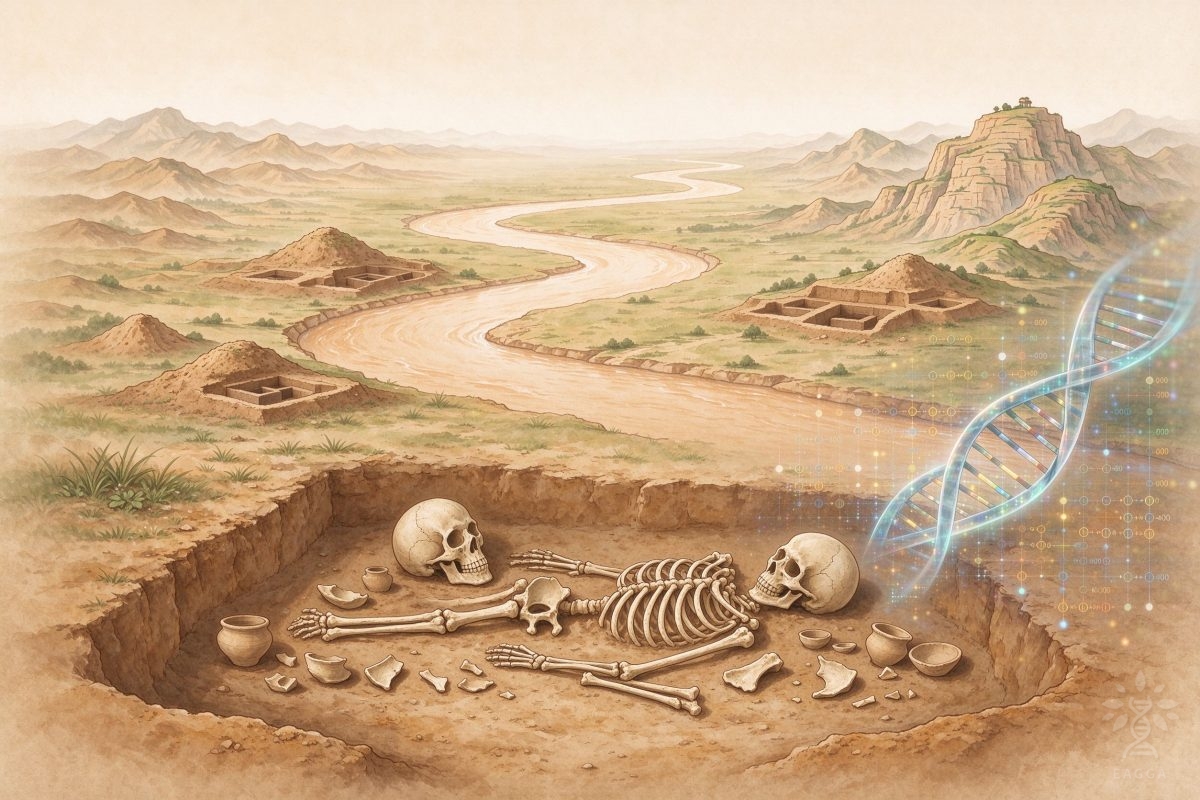
On any map of northwestern China, the Eastern Tianshan range occupies a remarkable position: squeezed between the Hexi Corridor and the Inner Asian mountain corridor, it opens north toward the Mongolian Plateau and the Eurasian steppe, west toward Central Asia, and south toward the heartland of the Yellow River civilization. The mountains are not merely a geographic crossroads—they may have been one of the most important corridors for prehistoric people and culture.
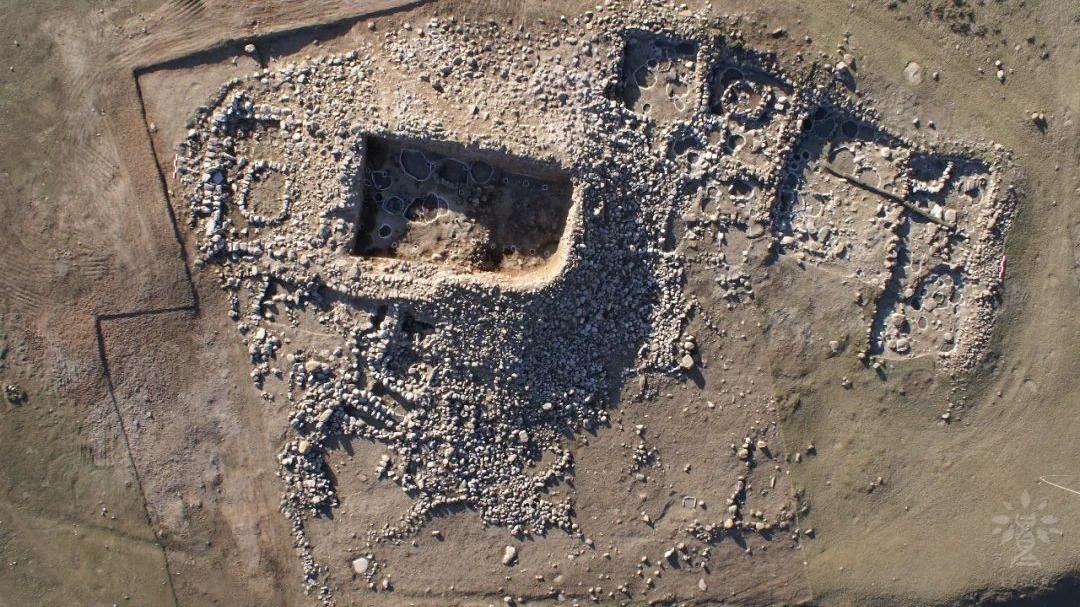
A new study published in the journal Science has now reconstructed the region\’s prehistoric population history with robust genetic evidence. A team led by the Research Center for Archaeology of Northwest University, in collaboration with the Institute of Vertebrate Paleontology and Paleoanthropology (IVPP) of the Chinese Academy of Sciences, Jilin University, Peking University, Fudan University, the Xinjiang Institute of Cultural Relics and Archaeology, and the Xinjiang Museum, generated whole-genome data from 135 ancient individuals across 11 archaeological sites in the Eastern Tianshan, spanning roughly 3,580 to 1,546 years before present—a genomic time series covering the Bronze Age through the early Iron Age.
The central finding concerns the \’mixed origins\’ of the region\’s Bronze Age population. The core population, represented by the Tianshanbeilu cemetery, carried a genetic composition never before identified in this area: approximately half of their ancestry came from East Asian groups related to the millet-farming populations of the middle-late Neolithic Yellow River basin, and the other half from groups linked to the Chemurchek culture of the Altai–Junggar region in North Asia.
This is the earliest genetic evidence of such admixture ever found in Xinjiang, and the first to show at the genomic level that the core Bronze Age population of the Eastern Tianshan was, in essence, a combination of East Asian and North Asian people. In other words, by at least four thousand years ago, lineages from Yellow River farmers and from steppe groups beneath the Altai had already merged deeply along this corridor.
The picture, however, was not homogeneous. The study also identified a small number of \’outlier\’ individuals in the Bronze Age carrying ancestry related to southern Central Asia, the Mongolian Plateau, and eastern Kazakhstan. These individuals suggest that the Eastern Tianshan was not simply connected to two directions; it was already a hub where people from multiple regions converged and genetically mixed.
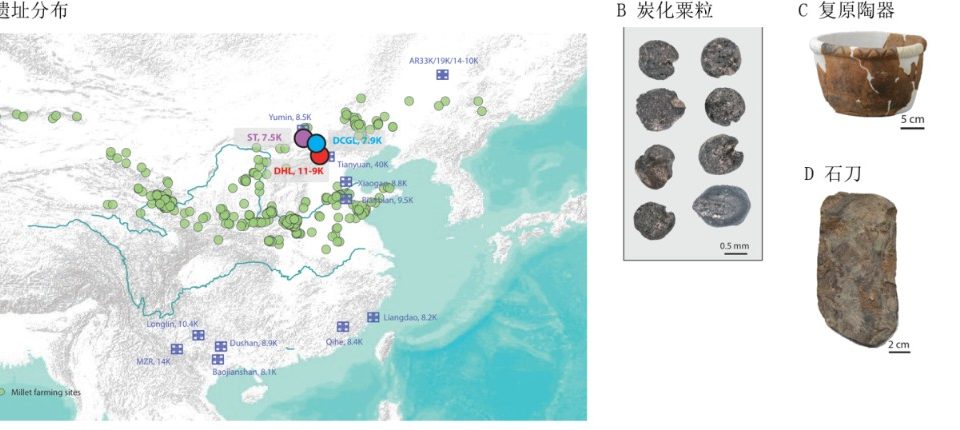
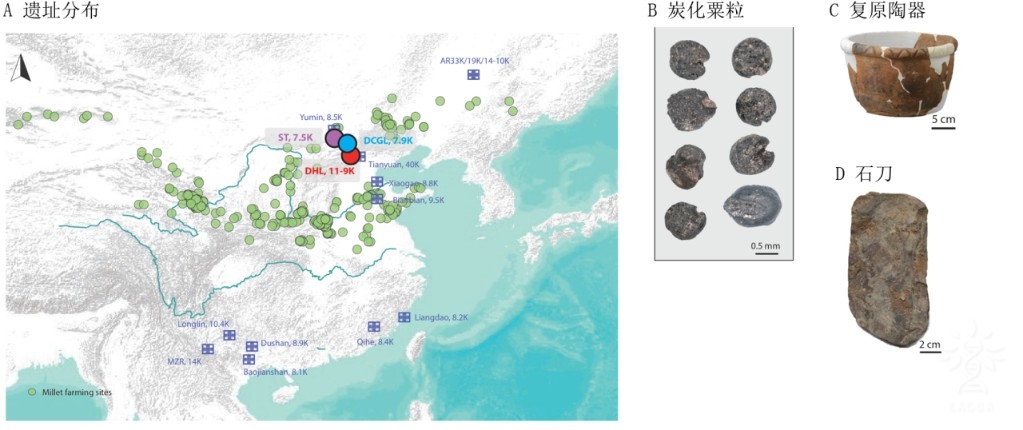
The results also shed new light on the spread of millet agriculture. Combined with archaeological evidence, the study suggests that when millet farming and related cultural elements spread into the Eastern Tianshan, they involved not only the transfer of crops and technologies but also the migration of people and gene flow—agricultural expansion was never just a journey of seeds.
By the Iron Age, interaction with surrounding regions intensified, yet the East Asian–North Asian genetic foundation formed in the Bronze Age persisted at high proportions, indicating striking genetic continuity. Meanwhile, populations at different sites absorbed additional ancestry from the Yellow River basin, the Mongolian Plateau, the Eurasian steppe, and southern Central Asia, further increasing regional genetic diversity.
The temporal dimension of the study is especially telling: multi-regional human contact in the Eastern Tianshan long predates the Silk Road. The evidence pushes sustained population interaction back to about 1,800 years before the Silk Road\’s formation, demonstrating that the corridor linking the Yellow River basin, the Hexi Corridor, Xinjiang, and the Eurasian heartland existed far earlier than once thought.
From a broader perspective, the study provides key genetic evidence for understanding the \’unity in diversity\’ (duoyuan yiti) of Chinese civilization: its formation and development were never an isolated process, but the product of multi-regional interaction, mutual learning, and integration. The story of the Eastern Tianshan is a vivid chapter in that larger picture.
Of course, 135 ancient genomes are only a beginning. As data from more sites accumulate, the population history of the Eastern Tianshan—and of Xinjiang as a whole—will be written in even finer and more complete detail.