
Guangxi Cave-Burial Genomes: Genetic Formation and North–South Disparities Among Kra–Dai and Hmong–Mien Speakers
2026年3月23日
Largest-Ever Ancient-Modern Y-Chromosome Resource Reconstructs the Complex Paternal Peopling of East Asia
2026年3月30日[Explainer] The Cave-Burial Ancestors: How Ancient DNA Links Guangxi to Today’s Kra–Dai and Hmong–Mien Peoples
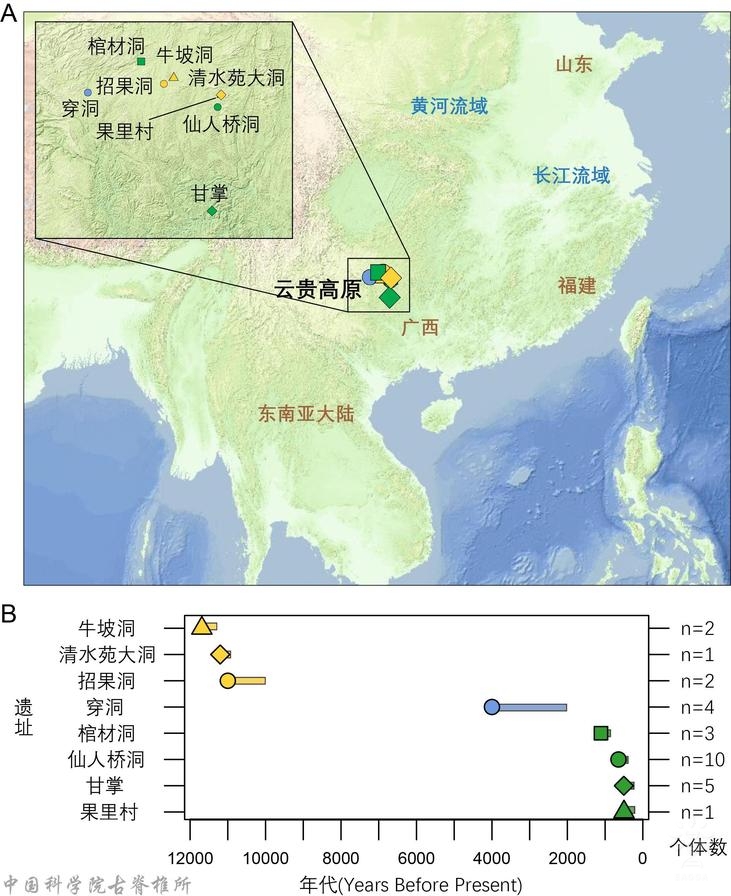
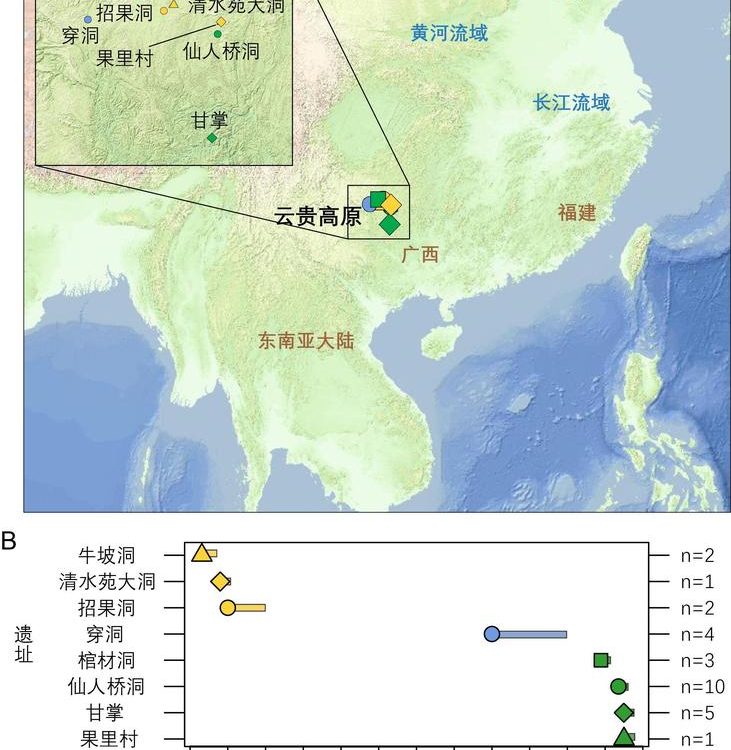
For thousands of years, a distinctive burial practice prevailed along the Youjiang and Zuojiang rivers and around Nandan in Guangxi: placing the deceased in karst caves. Archaeologists long suspected that these cave-burial people were the ancestors of today’s Kra–Dai and Hmong–Mien speakers — but the hypothesis lacked direct genetic evidence.
A new study sequenced the genomes of 14 such cave-burial individuals. The answer is yes: Southeast Asian Hmong–Mien populations derive 74.8%–100% of their ancestry from these people, and most Kra–Dai groups cluster tightly with their Guangxi ancestors (28.5%–100% ancestry contribution). For the first time, an archaeological burial custom lines up directly with a genetic lineage.
The more surprising finding is a counterintuitive split. Although they speak Hmong–Mien languages, the Southeast Asian groups retained far more of the ancient southern ancestry. Their relatives inside China, shaped by centuries of interaction with populations moving south from the north, kept only 11.1%–37.2% cave-burial ancestry while absorbing 14.7%–52.1% Yellow River-related components — genetically “more northern.”
Note that the paper first appeared online in early February 2026 and was indexed only in mid-March, a slightly early, borderline result. It carries a broader lesson: people who share a language need not share the same genetic history — migration and contact leave marks of different depth.
Source: Tao L. et al. Molecular Biology and Evolution (PMC), 2026-02-03.
![[Explainer] The Cave-Burial Ancestors: How Ancient DNA Links Guangxi to Today’s Kra–Dai and Hmong–Mien Peoples](https://www.eagga.org/wp-content/themes/betheme/images/cookies.png)