Ancient genomes reveal that the Bronze Age main population of the Eastern Tianshan combined East Asian and North Asian ancestry
2026年9月26日
The Genetic Landscape of the Tang and Song Eras: New Ancient DNA Discoveries from Chang’an to Frontier Clans
2026年10月6日“Roots of Jingchu, Family Records for a Thousand Years”: Hubei’s 17th Genealogy Display Opens with Digitization and AI Root-Seeking
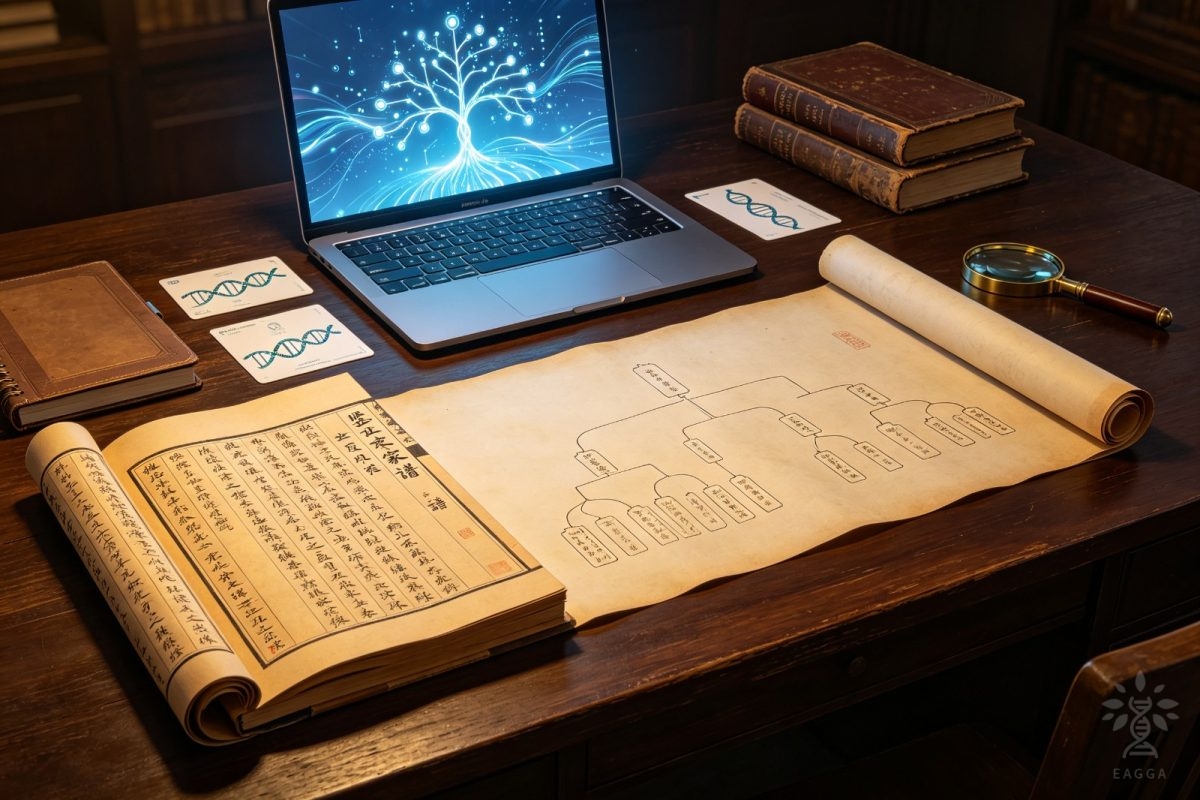
“A family without a genealogy is like a tree without roots.” On 28 September 2026, Hubei’s 17th genealogy display (shaipu) opened at the Hubei Provincial Library. Guided by the Hubei Provincial Department of Culture and Tourism, this year’s event ran under the theme “Family Records for a Thousand Years, Roots of Jingchu — Renewing the Collection of Genealogical Records and Family Histories.” Alongside rare genealogical treasures from the library’s collections, visitors encountered AI applications, interactive installations, limited-edition cultural products and new “root-seeking” experiences — turning a traditional display into a cultural festival with both scholarly depth and broad public participation.
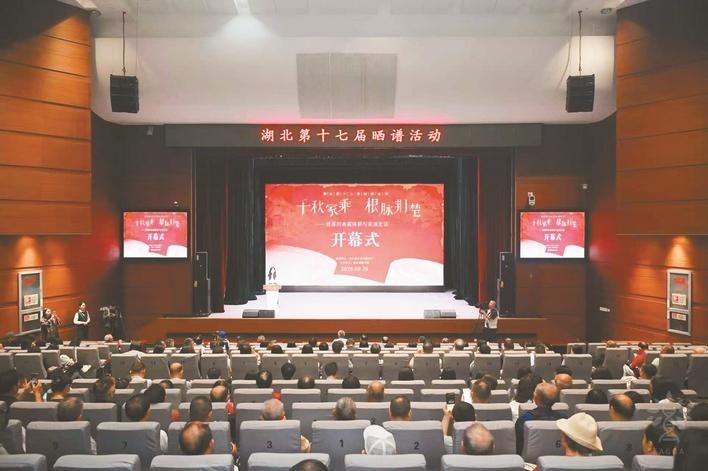
The Hubei shaipu event has now run for seventeen consecutive years, growing from a local exhibition into a cultural bridge reaching across the country and connecting Chinese communities worldwide — bringing secret genealogical records to the public, sheltering homesickness, and keeping the Chinese gene of family-and-state continuity alive on the land of Jingchu. In his keynote at the opening, Xiong Zhaozheng, a member of the National Committee of the Chinese People’s Political Consultative Conference and honorary chairman of the China Culture Promotion Society, observed that tracing the evolution of surnames through genealogies reveals how names have kept changing as cultural exchange and ethnic integration deepen. Sharing a surname does not necessarily mean sharing a lineage, he said — but whatever one’s surname, and whatever ancient tribe one’s ancestors came from, in the end we all belong to the Chinese nation.
This year’s genealogy culture exhibition, themed “Ancient Rhymes, New Voices — The Inheritance, Preservation and Renewal of Genealogies,” was organized into five sections — tracing origins, exemplars, treasures, transformation and continued lineage — systematically mapping the thousand-year evolution of genealogical carriers: from oral family memory, to oracle bones, bamboo and silk manuscripts, woodblock and movable type, and on to today’s digital genealogies, databases and cloud storage. Rare original genealogies and related ancient books, seldom seen by the public, were also on display.
“Renewing the collection” was the hallmark of this year’s event. The Hubei Provincial Library has been advancing genealogy digitization in recent years, building a dual-track preservation and utilization system of print and digital: it now holds 3,223 genealogies in 33,463 volumes, of which 2,976 sets have been digitized and more than 300 sets converted through digital processes. The library has built the Hubei Genealogy Database to systematically collect, organize and index digital resources, offering readers full-text online reading of genealogy images, item search and family-origin tracing — connecting these records to the public and to researchers.
AI was a major highlight. The “Luojia Totem Genealogy Digitization Platform” showcased how AI recognizes ancient genealogical texts, assists online compilation and enables intelligent kinship searching. For genetic genealogy and archival researchers, such platforms transform old genealogies from “paper sitting in storage” into “computable, searchable, linkable data,” offering new infrastructure for interdisciplinary root-seeking that combines genealogy and DNA.
The venue also featured a “Where Did You Come From?” interactive installation: visitors locate their ancestral home on a map of China, find where they or their family now live, and draw a thread from the ancestral home through key points of family migration to their present home — every migration is seen, every road leads to a home. Another installation, “Flip Through the Family-Genealogy Practice Manual,” walked visitors through the steps of compiling a genealogy: reading the old records, surveying household members, organizing materials, drawing the pedigree, recording generations, writing the new genealogy and printing and distributing it — showing, from scratch, how a genealogy is born.
The display also sketched the historical trajectory of genealogy itself. Before the Song dynasty, genealogies were chiefly compiled by officials, serving as references for official selection and the marriage ranking of great clans. From the Song onward, private compilation flourished; in the Ming dynasty, genealogy format matured and set the basic pattern for later generations; and in the Qing and Republican eras, Chinese genealogy reached its peak in quantity, quality and richness. After reform and opening up, a wave of new genealogies was compiled, largely in the 1990s. Today, digital technology empowers the ancient tradition: cloud-based compilation and genealogy databases break the limits of time and space, making universal participation in genealogy work and the passing down of family roots a reality.
Alongside social progress, the spread of the rule of law and the reshaping of family-and-nation culture, traditional genealogies have completed a deep transformation from “clan-law lineage documents” to “carriers of a new-era family ethos.” While preserving the traditional functions of recording lineages, clarifying origins, honoring ancestors and transmitting family values, the new genealogy has been systematically renewed in compilation concepts, inclusion standards, spiritual core and value orientation. Genealogy culture has also moved from private to public custody: in traditional society genealogies were strictly kept within the clan and shown to no outsiders, but today their cultural and historical value is increasingly recognized, and many private collectors have donated their family genealogies to libraries, making “turning private custody into public guardianship” a growing social practice.
From the chieftain genealogies reflecting multi-ethnic integration to the stories of ordinary strivers honored in new-era genealogies, the display presents the most vivid “continuation of lineage” in contemporary genealogy culture. Genealogies may be a niche genre, yet they carry the “root gene” of Chinese culture. Through this event, Hubei is renewing the ancient records — letting family memories flow into the public cultural river and helping more people, following the clues of their genealogies, find where they come from.