Current Biology: 38 Ancient Genomes Reveal Female Exogamy and Ethnic Interaction in a Tang Dynasty Frontier Clan
2026年8月4日
Jomon Genomes Reveal Cold Adaptation in Ice Age Hunter-Gatherers of Eastern Eurasia
2026年8月12日From Private Scrolls to Shared Heritage: A Peking University Core Journal Article Proposes “Text–Gene–Image” Multimodal Genealogy Development
Issue 3, 2026 of Shanxi Archives, a Peking University core journal in archival science, published a paper that drew attention from both the archival community and genetic genealogy researchers: “Development and Utilization of Genealogical Archives in Root-Seeking and Social Services.” The author, Li Xiao’ang, is a master’s student in the Faculty of Arts at the University of Melbourne, researching international communication. The paper’s central argument is clear: amid growing demands for cultural heritage and social services, the development of genealogical archives must break out of the traditional text-only model and move toward deep multimodal integration of “text, gene and image.”
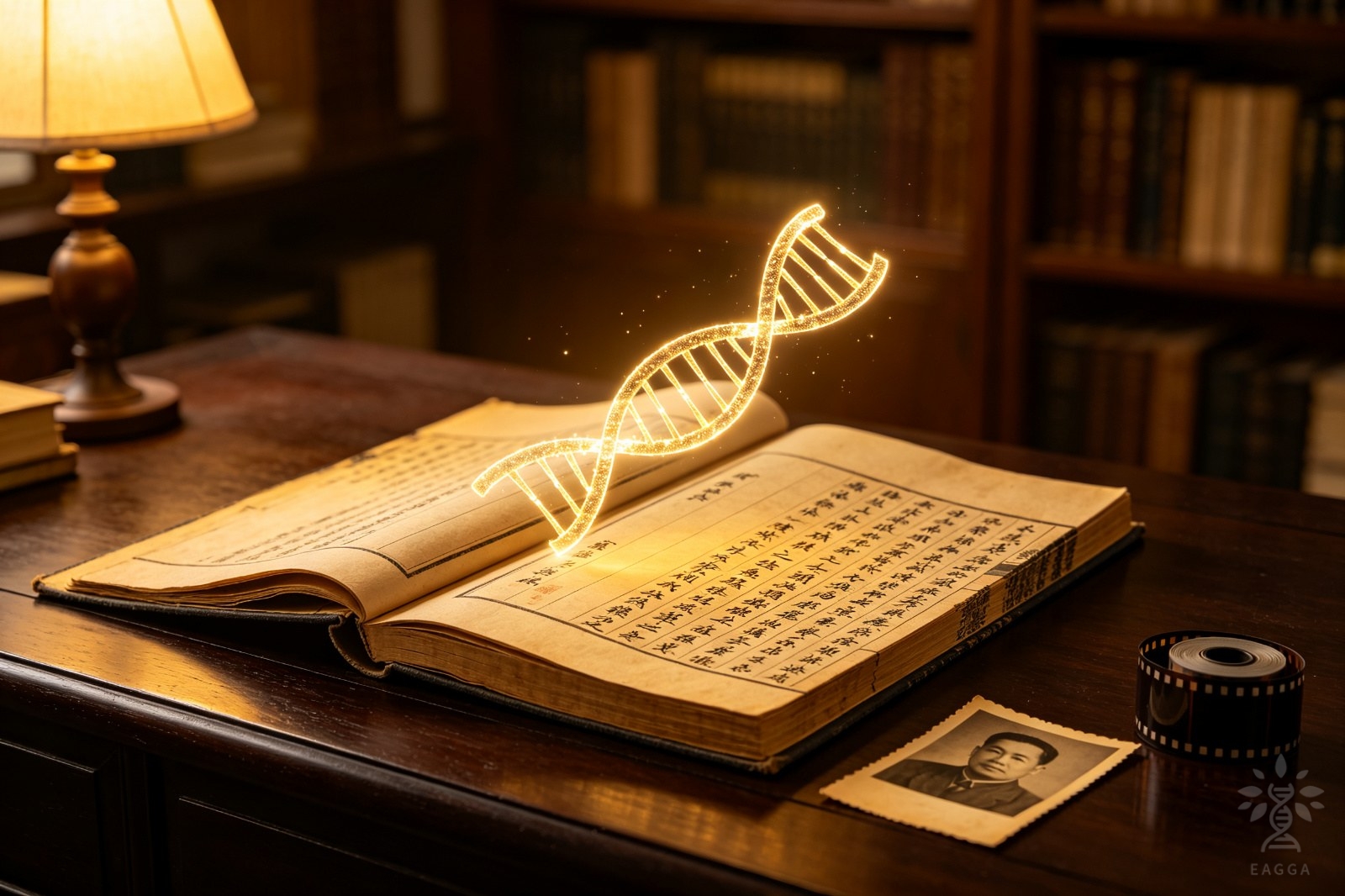
For a long time, the development of genealogical archives has relied mainly on textual organization and facsimile publication. Whether through cataloguing, digitized scanning or full-text retrieval of collected genealogies, the focus of use has remained at the documentary level of “readable and searchable.” The paper points out that this model has an inherent shortcoming when serving root-seeking needs that touch personal identity: text can record “lineage and names,” but it cannot answer the fundamental question of whether the bloodline truly continues.
The paper identifies genetic genealogy and image archives as the two core pillars for breaking through the traditional model. Genetic genealogy — the emerging method of reconstructing family lineages from DNA test data — has already reconnected countless families with broken genealogy lines at the molecular level through Y-chromosome paternal tracing, mitochondrial maternal tracing and autosomal kinship comparison. Image archives, in turn, carry details that text cannot express: the faces in old photographs, the former homes along migration routes, the accents in oral histories — together forming the emotional dimension of family memory.
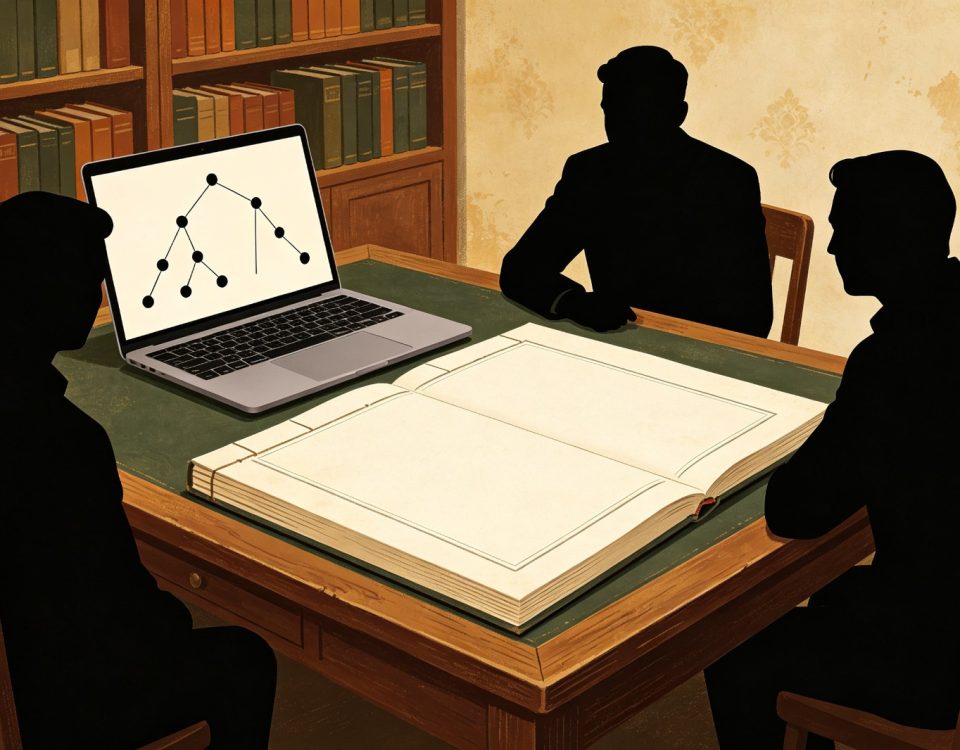
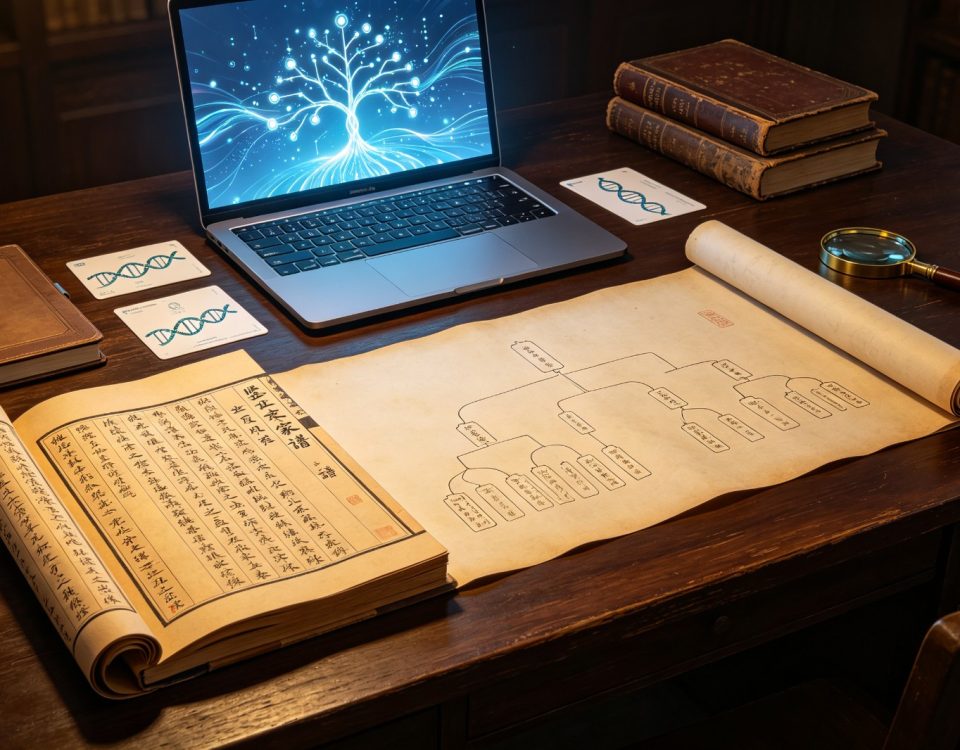
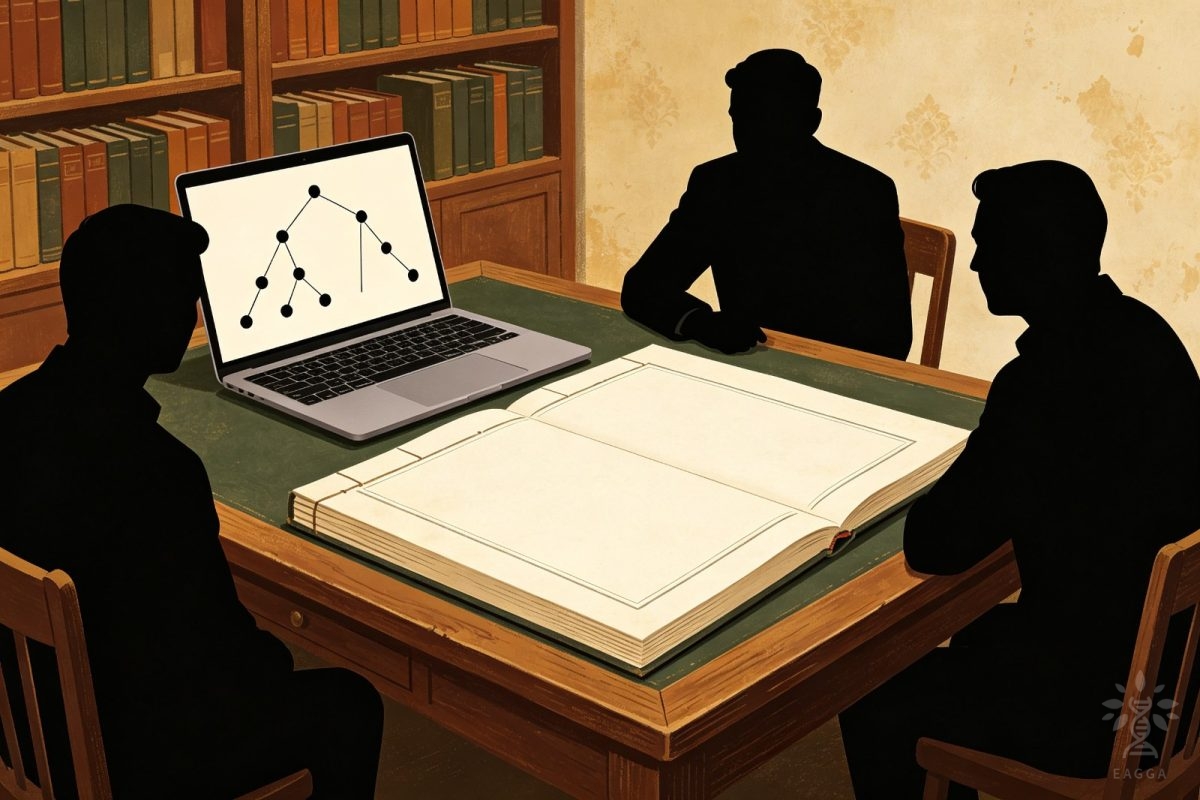
Drawing on digital humanities methods, the paper proposes a resource system integrating “text, gene and image.” In this system, textual genealogies provide the skeletal lineage and historical coordinates; genetic data supply kinship evidence and tracing paths; image archives offer emotional warmth and embodied memory. The three verify and complement one another. For example, when a branch of a clan lost its genealogy records due to war or migration, DNA testing can re-anchor its paternal origin, while image archives can restore the full picture of its ancestors’ migration.
At the service level, the paper analyzes the value of this integrated system in three scenarios. First, precise root-seeking: combining genealogical text retrieval with DNA comparison offers Taiwanese, overseas Chinese and dispersed families a far more reliable path than mere “searching by map.” Second, cultural tourism development: using family histories as threads to connect local landscapes, ancestral homes and ancestral halls gives tourism products genuine human and kinship depth. Third, grassroots governance: multimodal genealogies can serve as the database foundation for village histories, community memory and clan governance, supporting grassroots cultural development.
The paper particularly stresses the dual enhancement of credibility and communication power that multimodal development brings to genealogical archives. Text, genetic and image evidence are mutually independent yet mutually confirming, elevating genealogy records from “one family’s account” to “multiply verifiable” archival resources. At the same time, the intuitiveness of images and genes suits new media communication naturally, allowing younger generations to reconnect with family history in a tangible way — addressing the predicament in which genealogies “grow thinner with each transmission and more distant with each reading.”
From an archival science perspective, this study echoes the academic turn of recent years: genealogies are gradually moving from family-private documents to shared public cultural resources. The paper notes that multimodal development helps drive this transformation — once clan genealogies can be retrieved and genes compared, genealogical archives cease to be merely the memory carriers of a clan and become foundational data for studying population migration, regional social history and the Chinese national community.
For researchers in genetic genealogy, this article offers a valuable interdisciplinary footnote: genetic genealogy is not merely a technique for “reading history with DNA,” but should actively embed itself in the institutional frameworks of archival science, digital humanities and social services. The long-term preservation of genetic data, privacy boundaries and the cross-referenced cataloguing of genealogical literature are all issues worth joint discussion by academia and industry.
From the smart services of the Shanghai Library Genealogy Museum, to the lineage charts of Xiamen’s KFA “One-Click Ancestor Search” platform, to the theoretical exploration of multimodal genealogical archives, China’s genealogy enterprise is rapidly advancing along the path of “document digitization — data platformization — multimodal integration.” The significance of this paper lies in providing archival-theoretical grounding for that advance: when text, genes and images truly converge in one genealogy, family history gains evidence, warmth and communication power at once.