Members Column: Yunnan-Guizhou Paleogenomics Reveals 12,000 Years of Population History in Southwestern East Asia
2026年9月22日
Ancient genomes reveal that the Bronze Age main population of the Eastern Tianshan combined East Asian and North Asian ancestry
2026年9月26日From Individuals to Families: A Review of Family-Scale Ancient DNA Research in China in 2026
2026 is the year Chinese ancient DNA research concentrated its efforts at the “family scale.” Unlike earlier macro-level studies focused on population migration and ancestral components, family-scale research takes cemeteries, tombs or family pedigrees as its unit: by reconstructing biological relatedness among individuals, it turns the “family” of archaeology into an object that genetics can verify. From May to September this year, a series of studies were published, spanning periods from the Tang frontier to prehistoric northwest China.
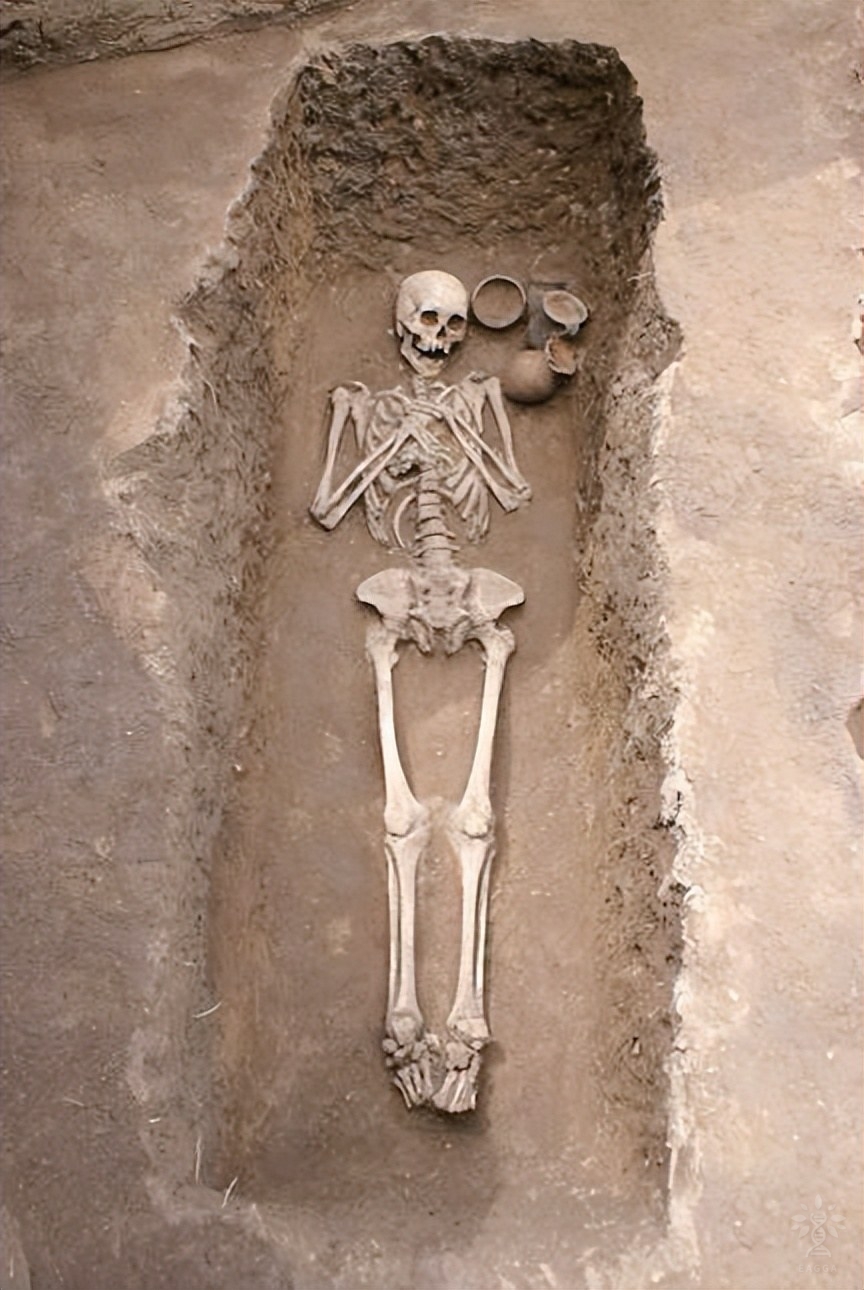
The earliest highlight was individual identification. In May 2026, Fudan University and the Dai County Museum in Shanxi published a genomic analysis of the tomb of Li Keyong, the Tang dynasty Hedong military governor: a male skeleton aged 40–50, radiocarbon-dated to 680–877 CE, was identified as Li Keyong himself. His paternal lineage belongs to the downstream branches of R1a-Z93, closely linked to the expansion of the Sintashta/Andronovo populations of the Middle and Late Bronze Age; his maternal haplotype is C4a1a+195, connecting closely with northern nomadic populations and the Han. His overall genetic makeup is a mix of approximately 53.4% ancient Northeast Asian and 46.6% West Eurasian steppe ancestry — a typical “East–West admixed” profile for a Shatuo elite. The study provided the first direct genetic evidence for the origins of the Shatuo.
Next came the systematic reconstruction of a family cemetery. In July, the study by Wang Chuanchao’s group at Fudan University and collaborators, published in Current Biology, analyzed 38 genomes from the Tang dynasty Chen clan cemetery at Naobaowan in Ordos, Inner Mongolia, reconstructing an extended family pedigree with three main paternal branches and five family units: the vast majority of males shared the same Y-chromosome haplogroup O2a2b1a1a1a2a, while maternal haplogroups were highly diverse, and females carrying substantial West Eurasian steppe ancestry were buried within the core family cemetery — a vivid demonstration of the “patrilineal core plus female exogamy” pattern of frontier ethnic interaction (covered in a dedicated article on this site).
Around the same time, the long-running research at the Shimao site drew wide attention. The 13-year study generated genome-wide data from 169 ancient human samples, with 144 unrelated individuals used for the core population analysis. Kinship analysis stitched together family pedigrees spanning up to four generations, revealing a hierarchy built on patrilineal descent: Y-chromosome haplogroups were far more uniform among male tomb owners than the diverse maternal lineages of the women buried beside them. The study also overturned earlier sex identifications: nine of ten sacrificial victims examined at the East Gate were biologically male, while at the elite cemeteries of Hanjiagedan and Huangchengtai the sacrificed individuals were predominantly female — suggesting that ritual roles were not assigned by sex alone.
Large-scale mitochondrial research also broke new ground. In July, researchers led by Jilin University published a study of 207 complete mitochondrial genomes from the Western Zhou “Ba state” cemetery at Dahekou in Shanxi; 163 high-quality genomes showed that this population maintained close genetic ties with late Neolithic groups of the middle Yellow River basin (such as Taosi and Shimao), with regional genetic continuity spanning more than two millennia, and shared a higher proportion of haplotypes with modern northern Han. It is the largest mitochondrial study of a Western Zhou population to date, providing direct evidence for a pattern of “stable population, changing politics” in the Yellow River basin.
Northeast China provided direct evidence of a patrilineal family cemetery. The study focused on 11 individuals from two co-burial graves (M6 and M7) at the Late Bronze Age Dongshantou site in Jilin: multiple relatedness estimators identified first-, second- and third-degree relationships, all males shared the same Y-chromosome lineage C2b, mitochondrial haplotypes varied across graves, and no close-kin unions were detected. The researchers proposed that Dongshantou was a patrilineal family cemetery organized around nuclear-family co-burials — a pattern in sharp contrast with the matrilineal organization reported at the Neolithic Fujia site in Shandong.
On 3 September, the landmark study by Fu Qiaomei’s team at the Institute of Vertebrate Paleontology and Paleoanthropology, Chinese Academy of Sciences, published in Cell, pushed family-scale research to a still larger scale. Over 12 years, the team obtained 149 ancient genomes from 11 Gansu sites dating to about 4700–3000 years ago, including 95 from the Mogou cemetery, which has yielded more than 1,700 burials. The results show that although the Gansu populations had widely adopted wheat agriculture, cattle and sheep, and bronze, no Western genetic component could be detected — confirming that wheat agriculture arrived through the spread of technology rather than population migration. Even more striking was the social structure at Mogou: individuals were linked by extensive biological relatedness, yet internal marriage was limited, there was no clear sex bias, and neither kinship ties nor burial timing determined co-burial — a social pattern unlike the male- or female-dominated societies documented in Europe and other Chinese sites.
Together, these studies outline the maturation of China’s family-scale ancient DNA methodology: kinship estimation (READ, KIN, ancIBD and others) combined with haplogroup, ROH and IBD analyses can reconstruct precise pedigree networks from low-coverage ancient genomes; paternal Y-chromosomes and maternal mitochondria track the two directions of descent separately; and the cross-validation of burial space, grave goods and epitaphs with genetic networks turns “family” from a concept into a computable conclusion.
For genetic genealogy researchers, these results carry direct methodological value: they show how to reconstruct multi-generation family trees from small amounts of degraded DNA, how to determine paternal and maternal affiliation through haplogroups, and how to validate textual genealogies with genetic evidence in the complex reality that “sharing a surname does not necessarily mean sharing a lineage.” Family-scale research is also providing historical references for the dual-track approach of “genealogy plus DNA”: today’s family-tree building methods share the same logic as the biological networks hidden in ancient cemeteries.
Looking ahead, as national projects such as the study of cemetery population structure and kinship organization in the capitals of the Three Dynasties advance, and as genomes from more sites are published, China’s family-scale ancient DNA research will move from case studies to systems, and from prehistory into the historical period — providing an increasingly clear genetic picture of the deep structure of “family and state as one” in Chinese civilization.