
Genetic Genealogy Solves a 250-Year Cold Case: DNA Identifies an Unknown Teenage Soldier of the American Revolution
2026年7月21日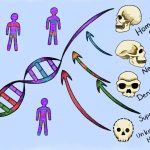
Two mysterious ancestors revealed in modern human DNA: Science technique pinpoints a “ghost ancestor” and a “super-archaic ancestor”
2026年7月30日Cross-Strait Genealogy Big-Data Project Launches in Xiamen: Root-Seeking Shifts from “Ten Years of Asking” to “Instant Access”
On 18 July 2026, a cross-strait genealogy cultural exchange event under the theme “Continuing the Lineage Heritage, Sharing Kinship Across the Strait” was held at the Zhuzi Academy in Tong’an, Xiamen. Scholars, clan representatives, archivists and cultural figures from both sides of the Strait gathered to discuss surnames, trace shared origins, and witness multiple achievements in cross-strait genealogy research.

The event opened with the launch ceremony of the Cross-Strait Genealogy Big-Data Cultural Project — the first cross-strait genealogical big-data project in China, proposed by the Xiamen Municipal Committee of the Jiusan Society. The project aims to build an interconnected genealogical platform across the Strait through digital means, making the root-seeking journey of Taiwanese compatriots faster and easier. The transition of genealogies from paper to data, from fragmentation to interconnection, marks a new phase of collaborative construction for cross-strait genealogical literature.
At the event, the Cross-Strait Genealogy Culture Alliance was signed into existence, uniting genealogy research institutions, surname research groups and professional enterprises in a collaborative system. Hong Wenwei, chairman of the Hong clan committee of the Fujian Provincial Association for Research on the Origins of Surnames, said the alliance provides an excellent platform for mutual learning between the two sides, with important significance for consolidating cross-strait consensus and advancing the genealogy cause.
The centerpiece of the event was the release of the newly compiled genealogies for 2025 (5 surnames, 9 editions, 44 volumes), compiled under the guidance of the Cross-Strait Family Traditions and Genealogy Center. They include the Yinglin Hong Clan Genealogy, covering nearly 170,000 people in Jinjiang and Nan’an, and the Yongding Jiang Clan Genealogy, documenting the ancestral home of more than half of Taiwan’s Jiang families. In a salon reviewing key new genealogies, experts analyzed six notable volumes and shared experience in large-scale compilation and cross-strait joint compilation. Lin Ruidian, deputy director of the Taiwan exchange center for same-surname and same-named villages, remarked: “We are very glad that clans on both sides joined hands to compile this genealogy, merging all of Taiwan’s lineages into the Tong’an Putou Jinzi Lin Clan Genealogy to form the most complete family record.”
A donation ceremony followed, in which families and organizations from both sides of the Strait donated treasured genealogies and surname records free of charge. These documents will become valuable resources for studying cross-strait relations, migration history and family history. For genetic genealogy researchers, voluntarily donated genealogies often contain the most authentic grassroots records of migration and lineage.
Tong’an district established the Cross-Strait Family Traditions and Genealogy Center in 2022, providing a grassroots practical model for deepening cross-strait integration. According to Jiang Yiping, head of the center, Taiwanese compatriots returning to the mainland to seek their ancestors and consult genealogies has become increasingly frequent in recent years. The center coordinates physical collection with digital empowerment, shifting root-seeking from “ten years of asking” to “instant access”, greatly lowering the threshold for Taiwanese families to return home.
To date, the center has collected more than 2,000 paper genealogies from both sides of the Strait, including rare unique copies donated by Taiwanese compatriots, and has aggregated more than 50,000 electronic genealogical volumes. It operates the KFA “One-Click Ancestor Search” system — the earliest developed in China and certified by the National Copyright Administration — building a digital platform covering more than 300 surnames and over five million records, with the unique “Lineage Bloodline Chart” visually presenting family migration trajectories, achieving the leap of genealogy preservation from piles of old paper to cloud data.
From the root-seeking service center opened in Xiamen in June to the launch of this big-data project, cross-strait genealogical digitization is gathering momentum: KFA’s “One-Click Ancestor Search” provides surname retrieval and lineage visualization, the Cross-Strait Genealogy Culture Alliance promotes institutional collaboration, and newly compiled genealogies supply continuously updated textual foundations. For genetic genealogy research, these platforms and DNA testing form a dual-verification path of “documents plus molecules”: genealogies tell us the names and migrations of ancestors, while DNA tells us the flow and verification of kinship. When cross-strait genealogies are truly interconnected and shared, “root-seeking” will no longer depend on chance oral tradition, but become a homeward road paved with data.