
The Y Chromosome and Genetic Genealogy
2024年8月8日
Ancient Genomics Pinpoint Northern China as the Domestication Origin of East Asian Pigs
2025年9月2日Origins of the Korean Population: Insights from Mitochondrial DNA and Y-Chromosome Markers
The origin of the Korean population has long been an important question in human genetics. In a recent study, a research team from Dankook University (South Korea) and the Wellcome Trust Sanger Institute (UK) analyzed mitochondrial DNA (mtDNA) and Y-chromosome markers to reveal the complex genetic background of the Korean population. Published in PLoS ONE, the study offers valuable insights into the origins of the Korean people and illustrates the diversity of early human migrations in East Asia.
\n\n\n\nThe genetic background of the Korean population
\n\n\n\nLocated in the northeast of East Asia, Korea has traditionally been considered part of the Northeast Asian populations. In recent years, however, Y-chromosome studies have shown that the Korean population contains not only northern genetic components but also a substantial southern contribution. This pattern of north–south admixture has opened a new debate about the origins of the Korean people.
\n\n\n\nThis study analyzed sequence variation in the hypervariable regions I and II (HVS-I and HVS-II) of mitochondrial DNA, as well as coding-region haplogroup-specific mutations, in 445 individuals from seven East Asian populations (Koreans, Korean-Chinese, Mongols, Manchu, Beijing Han, Vietnamese and Thais). In addition, the study integrated published data from 3,307 mtDNA haplogroups, 2,313 mtDNA HVS-I sequences, 1,697 Y-chromosome haplogroups and 2,713 Y-chromosome short tandem repeat (STR) records to comprehensively dissect the genetic structure of East Asian populations.
\n\n\n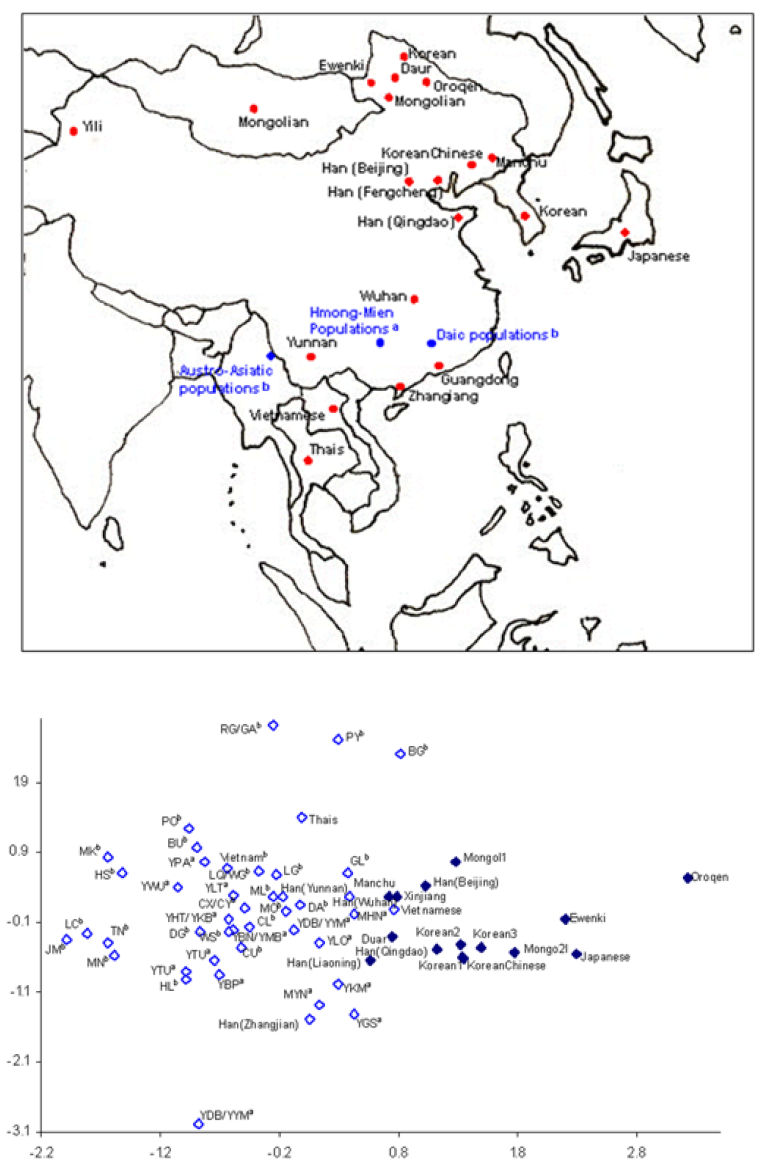
Maternal inheritance revealed by mitochondrial DNA
\n\n\n\nThe mtDNA analysis shows that the mitochondrial DNA of Koreans belongs mainly to haplogroups common in East Asia and, on the whole, resembles that of other Northeast Asian populations. Notably, however, a small southern genetic component is also present among Koreans, indicating that the maternal gene pool of Korea may have been partially influenced by Southeast Asia.
\n\n\n\nAmong the mtDNA haplogroup distributions, the most frequent haplogroup in Koreans is D4, at 23.8%. This haplogroup is widespread in Northeast Asia, occurring at especially high frequencies in Korean-Chinese (21.6%) and Manchu (20.0%). Overall, haplogroup D and its subtypes (such as D4a, D4b, D5 and D5a) account for 32.4% of Korean mtDNA. Koreans also carry appreciable frequencies of haplogroup A (8.1%) and haplogroup G (10.3%), which prevail in Northeast Asia and the southeastern regions of Siberia.
\n\n\n\nThe presence of southern genetic components is reflected mainly in haplogroups B (14.6%), M7 (10.3%) and F (9.7%). These haplogroups are relatively common in Southeast Asian populations, indicating a southern contribution to the Korean maternal gene pool. The study also found that the M7a1 haplogroup occurs only among Koreans, consistent with earlier findings that the M7a haplogroup has limited distribution in Japan and Korea. These results suggest that the formation of the Korean population involved multiple sources of migration and admixture.
\n\n\n\nPaternal inheritance revealed by the Y chromosome
\n\n\n\nUnlike the mtDNA results, the Y-chromosome analysis reveals a more pronounced southern paternal contribution to the Korean population. The distribution of Y-chromosome haplogroups shows that Koreans are closely related to other Northeast Asian populations but also carry a substantial Southeast Asian paternal genetic component.
\n\n\n\nAmong Y-chromosome haplogroups, the highest proportion in Koreans is O-M122, at 42.2%. O-M122 is widely distributed across East Asia, with especially high frequencies in Southeast Asian and southern Chinese populations. The study suggests that the spread of this haplogroup may be linked to the diffusion of rice agriculture, reflecting male-dominated migration during early agricultural expansion. Another important haplogroup, O-SRY465, accounts for 20.1% and is also widespread in Southeast Asian populations.
\n\n\n\nIn addition, C* and O3 haplogroups occur at relatively high frequencies in Koreans, and these haplogroups are mainly distributed in Northeast Asia and Siberia. Y-STR analysis further explored the geographic structure of these haplogroups, showing that in Koreans, C* and O3 are genetically closer to southern haplogroups—a finding that is particularly striking with respect to the geographic distribution of the C* haplogroup.
\n\n\n\nSex-biased gene flow
\n\n\n\nThe results indicate a marked sex-biased pattern of gene flow in the Korean population: paternal gene flow from Southeast Asia exceeded maternal gene flow. This was further confirmed by admixture proportion estimates: the study estimated that the southern contribution to the Korean mtDNA (maternal) gene pool is 35%, whereas the southern contribution to the Y-chromosome (paternal) gene pool reaches as high as 83%.
\n\n\n\nSex-biased admixture of this kind is also observed in other human expansions, such as the expansion of Bantu-speaking farmers in Africa, the expansion of the Han Chinese, and post-Columbian population movements in the Americas. In Korea, although the effect is more subtle, a clear southern paternal genetic component remains, possibly closely tied to the spread of rice agriculture.
\n\n\n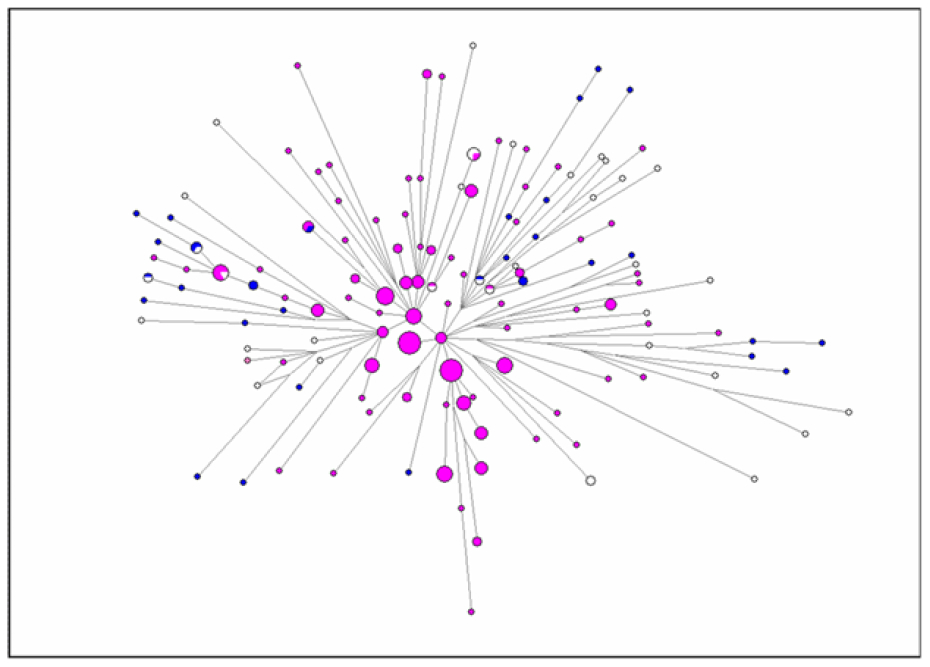
Support from historical and archaeological evidence
\n\n\n\nThe genetic background of Koreans is consistent with other lines of evidence. According to a study by Xue and colleagues, Northeast Asian populations began to expand before the Last Glacial Maximum (about 21,000–18,000 years ago), whereas southern populations expanded after the glacial maximum but at a faster rate. The authors suggest that northern populations may have exploited the rich resources of the “mammoth steppe” during this period, while southern population growth benefited from the abundant plant resources brought by a warming climate. By this criterion, the expansion time of the Korean population is approximately 30,000 years ago, similar to other northern populations.
\n\n\n\nHistorical evidence also supports a northern origin for Koreans. For example, the establishment of Old Joseon—the first state-level society on the Korean Peninsula—is thought to have taken place in the southern Manchurian region, with a later migration to the Pyongyang area in the northwest of the peninsula. Archaeological and anthropological data indicate that early Korean populations may have originated from the Altai-Sayan region and the Lake Baikal area of southeastern Siberia.
\n\n\n\nAgricultural expansion and the Y-chromosome haplogroup O-M122
\n\n\n\nThe high frequency of the O-M122 haplogroup may be closely related to the spread of rice agriculture. The diffusion of rice agriculture is usually accompanied by male-dominated migration, a process described by demographic diffusion theory. According to this theory, Y-chromosome haplogroups may have spread through population diffusion during early agricultural expansion. If this interpretation is further confirmed, the spatial distribution pattern of O-M122 in Korea would imply a genetic contribution to the Korean population during the agricultural spread.
\n\n\n\nDirections for future research
\n\n\n\nThis study reveals the complexity of Korean population formation, showing genetic signatures of multiple migrations and admixture events. Future research will further explore the origins and migration history of the Korean population through genotyping and sequencing of individual autosomal loci or whole genomes.
\n\n\n\nThrough this study, scientists have gained a deeper understanding of the genetic composition of Koreans and provided an important reference for the population history of East Asia. The study not only reveals the northern origins of the Korean people but also highlights the impact of southern migrations on the paternal gene pool—offering a new perspective for research on prehistoric migration routes and population expansions in East Asia.
\n\n