

China’s Donghulin “Unknown Ancient Human Lineage” Study Draws International Archaeology Coverage
2026年4月6日Xinhua Review: How Chinese Ancient-DNA Research Moved From “Reading Bones” to “Reading Genes”
2026年4月13日[Explainer] mtDNA Haplogroup D4h: The Maternal “Molecular Clock” in Donghulin’s 11,000-Year-Old Woman
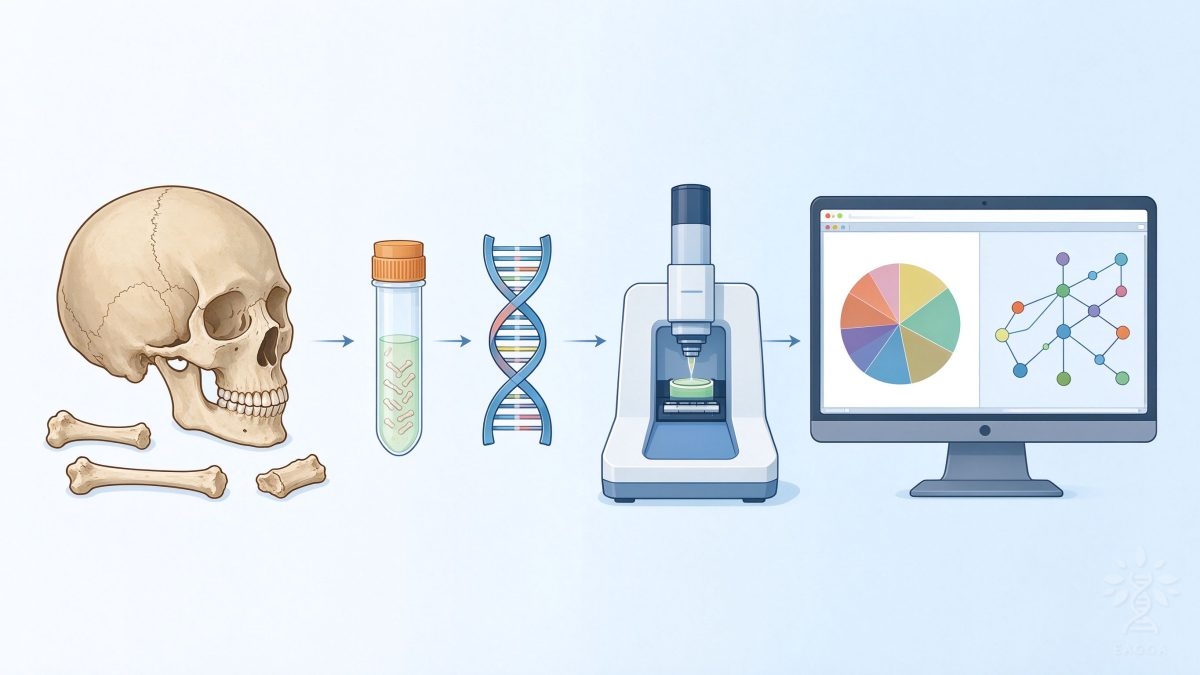
In the Donghulin story, what is usually read first out of 11,000-year-old bone powder is not the huge, fragile nuclear genome, but mitochondrial DNA — a small genome passed only down the maternal line, present in hundreds of copies per cell.
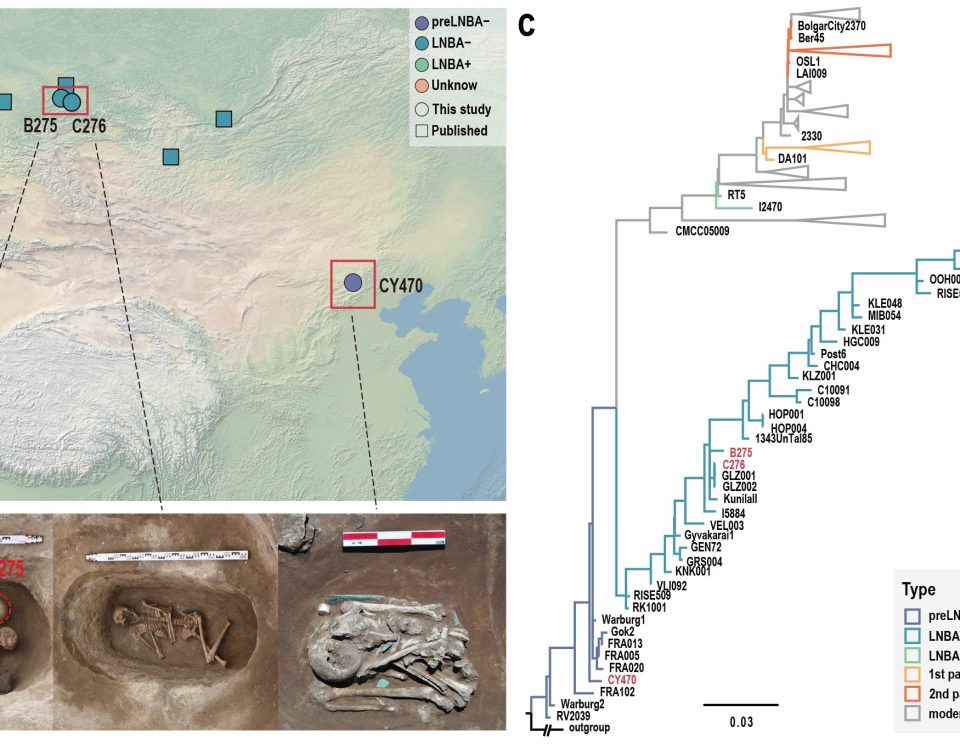
Two individuals matter here: M1, a woman from the lower layer around 11,000 years ago, and M02, a surface-collected individual. Separated in time and context, their mitogenomes nonetheless both fall under D4h, a common northern East Asian haplogroup — but on different branches. The molecular clock places the split of these sub-branches at roughly 14,000 and 13,000 years ago.
Why is mtDNA easier to rescue from ancient bone than nuclear DNA? Every cell contains hundreds of mitochondria but only two copies of the nuclear genome, so surviving mitochondrial fragments vastly outnumber nuclear ones. Even heavily degraded bone often yields a complete mitogenome — which is why ancient-DNA labs standardly read mtDNA first and only then attempt the nuclear genome.
D4h itself is a common maternal lineage of late Pleistocene northern East Asia. That two Donghulin individuals from different periods sit on different D4h sub-branches records two waves of expansion of this maternal line around the end of the last Ice Age — a lineage traceable from mother to daughter across millennia.
Source: IVPP Donghulin study / La Brújula Verde coverage. mtDNA D4h in Donghulin, 2026-04.

![[Explainer] mtDNA Haplogroup D4h: The Maternal “Molecular Clock” in Donghulin’s 11,000-Year-Old Woman](https://www.eagga.org/wp-content/themes/betheme/images/cookies.png)