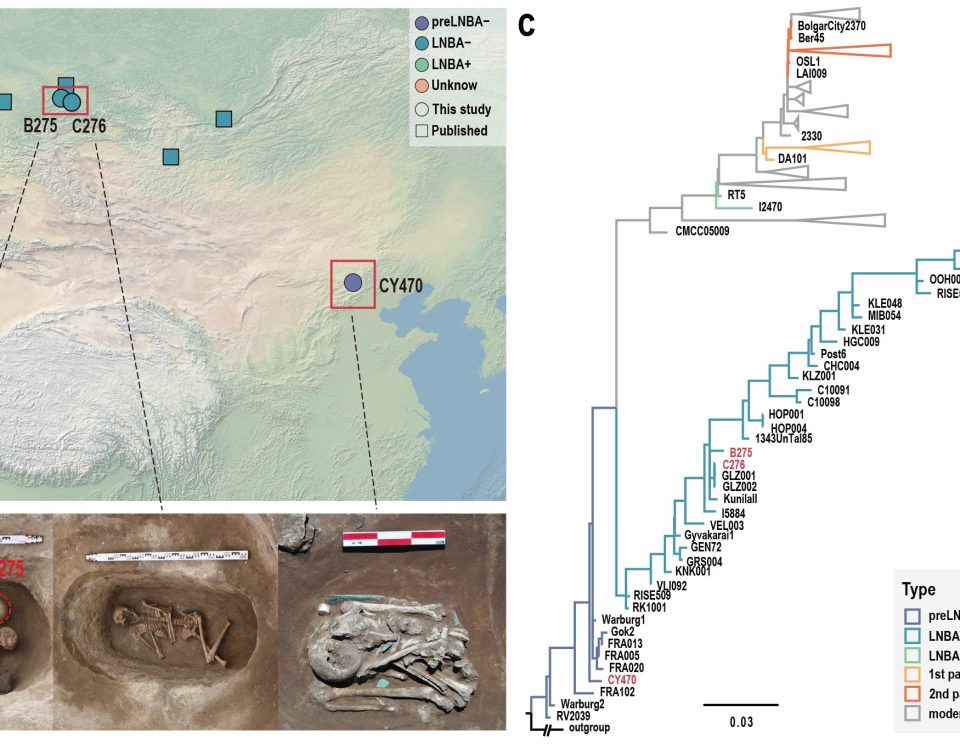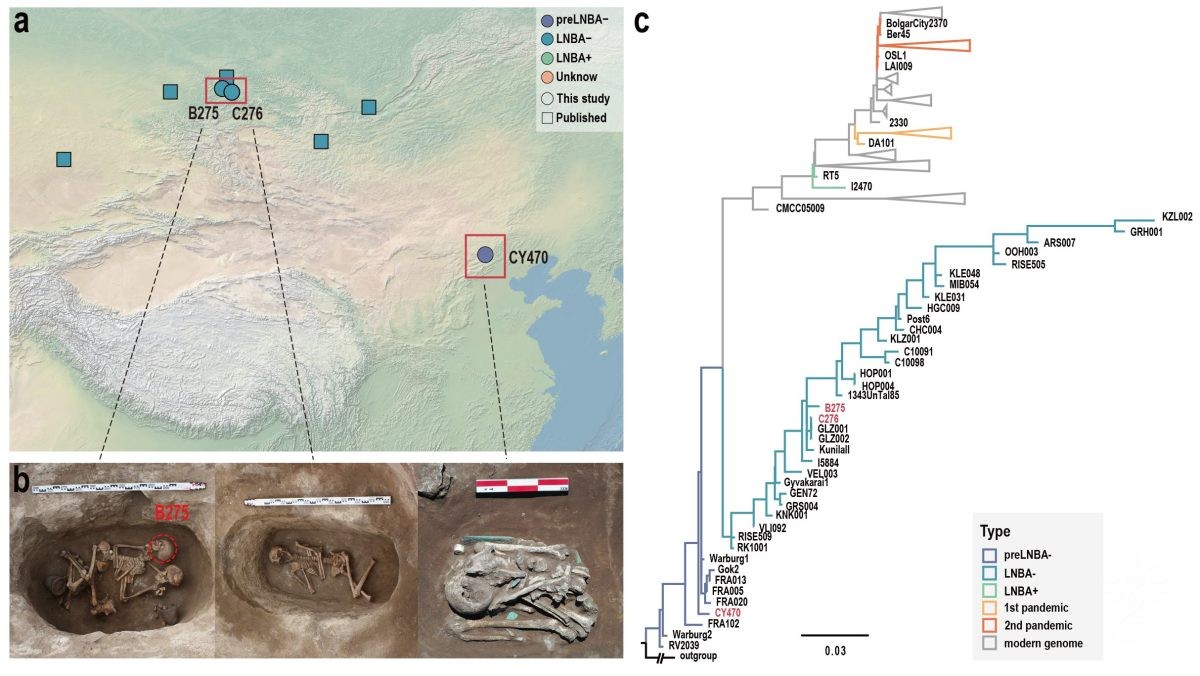

First prehistoric East-Asian plague genome reveals rapid trans-Eurasian spread ~5,300 years ago
2026年7月31日
Industry News: Ancient DNA and Isotopes Reveal a “Third Pathway” of Millet Farming in Northern China
2026年8月22日Popular Science: High-Coverage Genomes of an 8,300-Year-Old Jomon Woman and a 2,300-Year-Old Yayoi Man Reshape East Asian Ancestry
On 23 July 2026, a landmark study was published online in the Proceedings of the National Academy of Sciences (PNAS): researchers from Kanazawa University, Toho University, SOKENDAI (the Graduate University for Advanced Studies), and partner institutions successfully generated two high-coverage Jomon and Yayoi genomes – among the highest-quality ancient genomes from Japan and East Asia to date.
Rescuing high-quality genomes from acidic soils
Warm, humid conditions and acidic soils on the Japanese archipelago degrade DNA in ancient human bones easily; previously, most ancient genomes from mainland Japan had less than 1x coverage, too low for fine-grained analyses. This study overcame that challenge: an Early Jomon female (ca. 8,300-8,200 years ago) from the Iyaji rockshelter site (Nagano, Gunma Prefecture) yielded a ~67-fold coverage genome, and a Middle Yayoi male (ca. 2,300-2,240 years ago) from the Doigahama site (Yamaguchi Prefecture) yielded a ~46-fold coverage genome – both at world-class quality.
The Jomon: one of the earliest diverging East Asian lineages
Principal component and ancestry component analyses show that the Jomon female clusters closely with previously published Jomon individuals and carries Jomon-specific ancestry rarely seen in other East Asian groups. The study confirms that the Jomon are an early-diverging East Asian lineage with a direct genetic contribution to modern Japanese. The Yayoi male, by contrast, is closer to modern Japanese and northeastern Asian components; models of admixture support Neolithic populations from Shandong, Inner Mongolia, and the Amur River basin as sources for the continental migrants – suggesting that multiple continental groups shaped the Yayoi migrant population.
After the ice age: two divergent demographic trajectories
Effective population size estimates show that the ancestors of both Jomon and Yayoi contracted during the Last Glacial Maximum. Afterward, the Jomon ancestral population remained relatively stable at a small size, while the Yayoi ancestral population grew in stages – growth that likely occurred on the Eurasian continent before the migration to the Japanese archipelago.
Salivary amylase: “starch adaptation” before farming

The high coverage allowed researchers to estimate copy numbers of the salivary amylase gene AMY1 precisely. The Yayoi individual carries a high AMY1 copy number, plausibly linked to a starch-rich diet with rice farming; surprisingly, however, the Jomon individual – more than 8,000 years before farming spread – also carried a relatively high copy number. The Iyaji site yielded abundant plant remains including walnuts, chestnuts, and acorns. This suggests that genetic diversity related to plant use already existed in the Japanese archipelago before the formal spread of agriculture, an important challenge to the traditional hypothesis that AMY1 copy number expansion accompanied the spread of farming.
Implications for East Asian genetic genealogy
This study provides a high-resolution reference for understanding deep divergences among East Asian populations, post-glacial demographic dynamics, and genetic adaptation during agricultural transitions. For research on East Asian genetic genealogy, it shows that the Japanese archipelago is not of single origin: the admixture of Jomon and continental ancestors, together with adaptive genetic variation present before farming, jointly shaped the complex genealogical landscape of modern East Asians.
(Compiled from the official releases of Kanazawa University and Toho University and the PNAS publication, for academic and popular-science purposes.)