
Unraveling the Piast Dynasty: How Polish Scientists Rebuilt the Genetic Family Tree of a Millennium-Old Royal House
2026年5月26日
The Naotegai Site in Inner Mongolia: A New Super-Large Hongshan Settlement Discovery
2026年5月29日A Beacon of Surnames Across the Strait: Inside the Museum Helping Families Reconnect with Their Roots
As the Qingming Festival approaches, Quanzhou welcomes its peak season of Taiwanese descendants returning to sweep ancestral graves. Identical ancestral halls, identical hall names — surname culture acts as a resilient bond linking the migration and settlement history of Fujian and Taiwan, allowing people on both sides of the Strait to feel the warmth of blood kinship through yellowed genealogies and family letters. The Xiao family of Taiwan found their roots in Dehua, Quanzhou, through genealogical records; the Xie family of Quanzhou, after more than a century of searching, finally reconnected with relatives in Taiwan through family-tree clues. Surname culture is both a “beacon” for Taiwanese root-seeking and a call of kinship across the Strait.
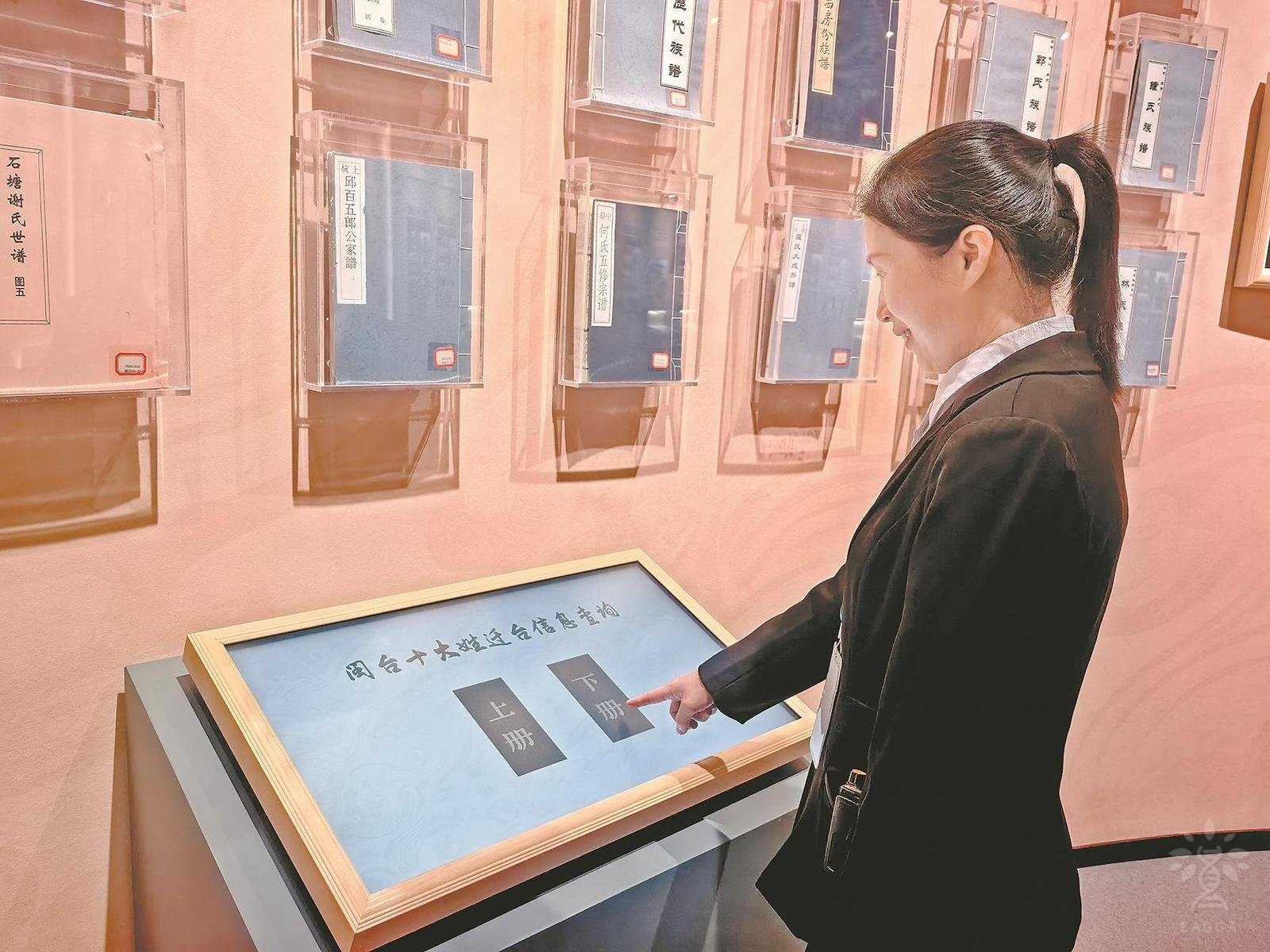
The China Museum for Fujian-Taiwan Kinship, located by West Lake in Quanzhou, houses 21,000 artifacts, with an exceptionally rich collection related to cross-strait surnames and clan culture: genealogies, family letters, migration contracts, ancestral tablets and clan-hall relics. To date, the museum holds 2,852 volumes (11,021 fascicles) of Fujian-Taiwan genealogies spanning 21 provinces/cities and 174 surnames, plus 4,180 family letters between the two sides. These documents faithfully record the migration, settlement and kinship exchanges of Fujian-Taiwan people — an authoritative foundation for Taiwanese root-seeking.
This March, a reunion nearly eight decades in the making reached its conclusion in Quanzhou. On 16 March, 65-year-old Chen Fengsheng, a Taiwanese descendant originally from Quanzhou, posted a request for help finding his family — his father Chen Yuxing had visited Taiwan in 1948 at a friend’s invitation and, caught up in shifting circumstances, remained there, working and living in Kaohsiung until the end of his life, his homeland’s family and mountains forever on his mind. Chen knew only that the family home was “Xiaojiao Village, Sanchuan Fort, Meidong Township, Hui’an County” — yet the township no longer exists. After Lin Ying (curator of the Quanzhou Overseas Chinese History Museum), Zhuang Xiaofang (director of the museum’s Document Information Center) and staff member Huang Sangen combed through extensive materials, on 18 March they pinpointed the old home: Houlong Town, Quangang District. “Separated for decades, root found in two days.” Chen had fulfilled his father’s dying wish, and planned to return to Houlong in June.
Some root-seeking stories carry the accumulated hopes of entire families. On 12 December last year, Xiao Hanjun (chairman of the Taiwan Farmers’ Association) and Xiao Fumian (chairman of the Kaohsiung Farmers’ Association) finally located their ancestral home: Xiakeng Village, Gaide Township, Dehua. The museum’s vast collection of cross-strait genealogies played a decisive role. Zhuang Xiaofang explained: “The Taiwan Xiao genealogies are well preserved and record that the family came from Dexia in Dehua. We quickly found their common ancestor and the record of their migration to Taiwan in the museum’s Huashan Xiao genealogy, contacted the local Taiwan affairs office, and made the precise connection.” It was confirmed that the Xiao ancestors migrated from Dexia, Dehua (today’s Xiakeng Village, Gaide Township) during the Qianlong reign of the Qing dynasty.
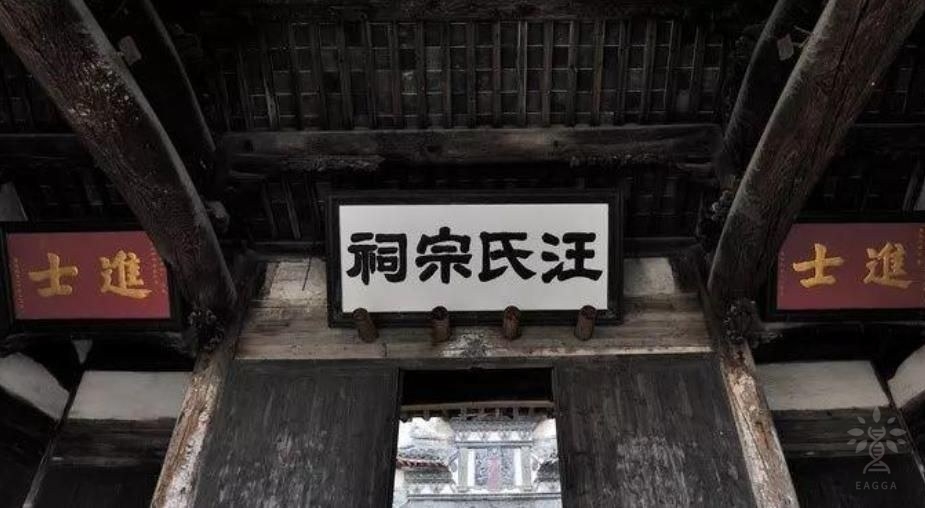
The Liang family of Fuxing Township, Changhua County, Taiwan, knew only that their ancestors had migrated from “Xiangyun Township, 28th Du, Nan’an County, Quanzhou Prefecture” — the specific village and lineage were lost, and the wish to trace their roots had passed down for generations. In 2022, Shi Mingfa, former curator of the National Taiwan Museum, stumbled upon a mainland family letter sealed for 30 years, in which the Xiangshan Liang clan begged their Taiwanese kin to return home. Museum specialists compared the genealogies: the “Yuyang Gong” in the Taiwanese records and the “Yuyong Gong” of the Xiangshan Liang clan in Meizhuang Village, Xiangyun Town, Nan’an, were the same man — the names are homophones in Hokkien. A separation of 240 years came to an end the moment the genealogies were matched. In 2023, Liang Mingsong led his relatives back to the Xiangshan Liang ancestral hall in Meizhuang Village for a worship ceremony. Seeing the hall name and incense identical to those in their Taiwan home, 70-year-old Liang Xiangxian said with tears: “The same ancestral hall, the same hall name — we have finally come home.”
Clan-based reunions also bridge the Strait in the other direction. “Sister, I will never forget that I am a member of the He family. I miss my relatives in Quanzhou every day. Every festival I worship my ancestors, hoping one day to return home.” These words come from a letter written 30 years ago by He Chaolin, who remained in Taoyuan, Taiwan, to his sister He Xi in Chengdong Subdistrict, Fengze District, Quanzhou. He had gone to Taiwan amid the chaos of war and only reconnected with his family through letters in the late 1980s; both siblings have since passed, but He Xi’s son Wei Jixiang said: “I have kept their letters so that every generation continues the bond across the Strait.” The story of Xie Qingyuan, a folk collector in Jinjiang, is equally moving: his great-grandfather returned from Taiwan in 1874 to repair the ancestral house and restore the genealogy, remaining in Jinjiang; after the Sino-Japanese War of 1894 broke out, the family lost touch with their Taiwanese kin. At a genealogy exhibition in Kinmen in 2009, Xie learned that the National Palace Museum in Taipei held a Beidou Xie clan genealogy — pursuing that lead, he finally found his Taiwanese cousins in 2010, fulfilling the wish of four generations.
The common roots of Fujian-Taiwan surnames are reflected not only in identical surnames but in the complete transmission of clan culture. When Quanzhou pioneers crossed the sea to Taiwan, they carried genealogies and ancestral tablets, built ancestral halls, established clan rules and continued the genealogies after settling — strictly following the clan rituals of their homeland. Taiwan’s ancestral-hall architecture, sacrificial rites and generation-name order all mirror Quanzhou’s. On 4–5 April this year, the Luo ancestral hall in Dongyuan and the Guo family temple in Baiqi, Quanzhou, invited Taiwanese kinsmen to joint ancestor-worship ceremonies. The museum’s permanent exhibition “Looking Back at Home: Fujian-Taiwan Root-Seeking Culture” uses more than 160 artifacts and vivid case studies to trace the full journey of Taiwanese ancestors — from the Central Plains through Fujian to Taiwan, and back to the mainland in search of their roots.
Digital technology is opening a new paradigm for root-seeking. The museum has established a dedicated Root-Seeking Service and Exchange Center spanning over 700 square meters, with five functional zones — exhibition, collection, inquiry, exchange and operation — offering one-stop services for Taiwanese visitors. The inquiry zone features the “KFA mobile genealogy search system”, covering more than 300 surnames, 44,765 branch genealogies and over five million records, allowing quick searches for family information; professional staff provide genealogical interpretation, consultation and leads. For those without complete genealogies, the museum works with local surname associations and folk genealogists to conduct field visits and archival research, helping piece together lineage connections. To date, the museum has helped more than 360 pairs of cross-strait relatives successfully trace their roots. Sharing the same origin, language and culture, Taiwanese compatriots reaffirm their blood ties through ancestral worship — and come to see, more deeply than ever, that Taiwan’s culture has always been an integral part of Chinese culture.