
Why Do Many East Asians Turn Red When They Drink? The Evolution and Health Code of Alcohol-Metabolism Genes
2026年10月29日
The Genetic Code of a Tang Dynasty Frontier Clan: 38 Ancient Genomes Reveal Patrilineal Inheritance and Female Exogamy in the Chen Family
2026年10月31日Behind Tens of Millions of Genealogy Records: The Digital Road of a Cross-Strait Root-Tracing Platform
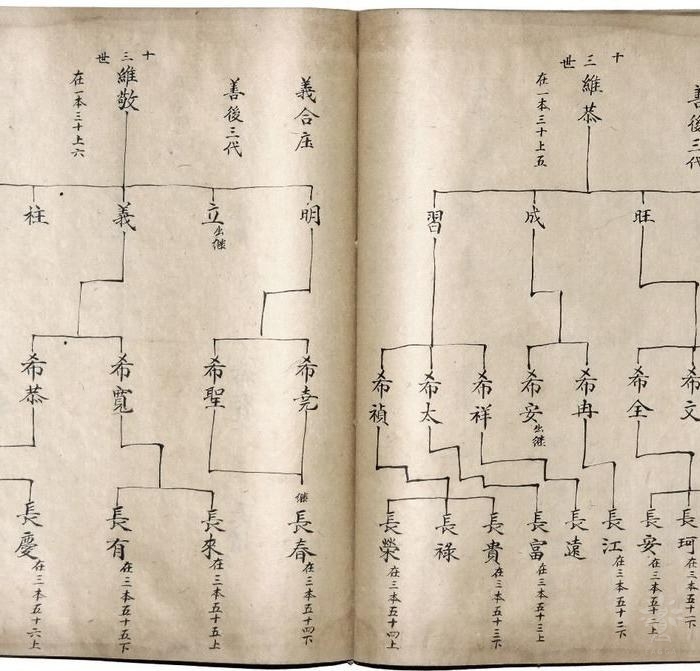
A yellowed, thread-bound genealogy book with a few columns of brush-written characters often carries a family\’s memories across the sea. But for many root-seekers, between vague oral tradition and solid ancestral evidence lie generations of missing information. In October 2026, with the release of the Xiamen Root-Tracing Guide (Xiamen Xungen Yinlan) and the continuing operation of the Cross-Strait (Xiamen) Ancestry Service Centre\’s \’root-tracing platform\’, a data-paved road is turning vague recollections such as \’somewhere around Zhangzhou\’ into genealogy entries precise to county, person and era.
The platform\’s data foundation is considerable: tens of millions of genealogy records, over 700,000 digitised genealogies, plus Fujian–Taiwan local gazetteers, contracts and place-name dictionaries. Together these form an intelligent root-tracing system covering cross-strait migration records, historical and modern geography, and surname lineages. A Taiwan compatriot needs only to provide a surname, a Taiwanese ancestral origin, or the name of the first migrant ancestor — the system automatically matches the genealogy data, locates the ancestral origin and generates a migration path. Cross-strait ancestry services are undergoing a systematic shift from \’document indexing\’ to \’digital matching\’.
The hardest part of digitisation is turning pages into data. Jiang Yiping, director of the Tong\’an Cross-Strait Family Culture and Genealogy Research Centre, explains that turning page after page of paper documents into searchable digital resources requires a full pipeline: character recognition, structured processing and the construction of tree-like knowledge graphs. \’The data demand is enormous and the processing cost is far higher than outsiders imagine.\’ To improve efficiency, his team worked with a software engineer to build the KFA genealogy-compiling platform: when fieldworkers collect data door-to-door, the \’household genealogy\’ module on a mobile phone handles entry and AI validation, catching conflicts in lineage and inconsistencies in dates at the source, raising data-checking accuracy to 99.8%. After more than two decades of work, the platform now holds over 300 surnames, more than 20,000 genealogy books and over 5 million records.
Where the data comes from is another challenge. For years, Jiang has collected genealogies from compatriots on both sides of the strait. In July 2026 he organised the first Cross-Strait (Xiamen) Family-Genealogy Cultural Exchange, at which scholars and clan representatives solemnly handed over several precious genealogies. The Jinzi Lin Clan Genealogy of Putou, Tong\’an was completed only after Mr Lin Ruidian of Taiwan\’s Fengshan repeatedly brought back physical materials and photographs for comparison; the Yin-Tong Gu Clan Zhanghua Branch Genealogy, recovered by Mr Gu Jiujiu of Changhua after more than 20 years of searching, finally reconnected a family line that had drifted across the strait to its Fujian roots. Every genealogy becomes a \’navigation map\’ for compatriots seeking their ancestors.
From a methodological viewpoint, this digitisation pipeline has become a model for genealogy research and family-history reconstruction: character recognition solves \’can we read it\’, structured parsing solves \’can we find it\’, knowledge graphs solve \’can we connect it\’, AI validation solves \’can we trust it\’, and multi-source data aggregation (genealogies, gazetteers, contracts, place-name dictionaries) solves the problem of source corroboration that a single family record cannot provide. These methods apply equally to family-database construction, surname-origin research and migration-history reconstruction.
The KFA platform has now been formally connected to the Fujian–Taiwan Root-Seeking Service and Exchange Centre of the China Museum for Fujian–Taiwan Kinship, and more than ten cross-strait contact points have been established — a service network across the strait is taking shape. For researchers and root-seekers alike, tens of millions of records are only the beginning: the road of digital root-tracing will run smoothly only when information from more ancestral places is sorted out. This is exactly why genealogy digitisation and genetic genealogy complement each other: documentary records point to \’where we came from\’, while genetic data can independently verify \’whether it is so\’.