
Three Hundred Pages of an Ancestral Scroll, Now in the Cloud: How One Overseas-Chinese Village Digitized Its Genealogy for Root-Seekers Worldwide
2026年10月16日
The “Time Code” of the Y Chromosome: Large-Scale Lineage Studies Reconstruct East Asian Paternal History
2026年10月24日Know What Your Grandfather and Grandmother Each Passed to You—Without Testing Them? Inside Ancestry’s New Regions-by-Grandparent Feature
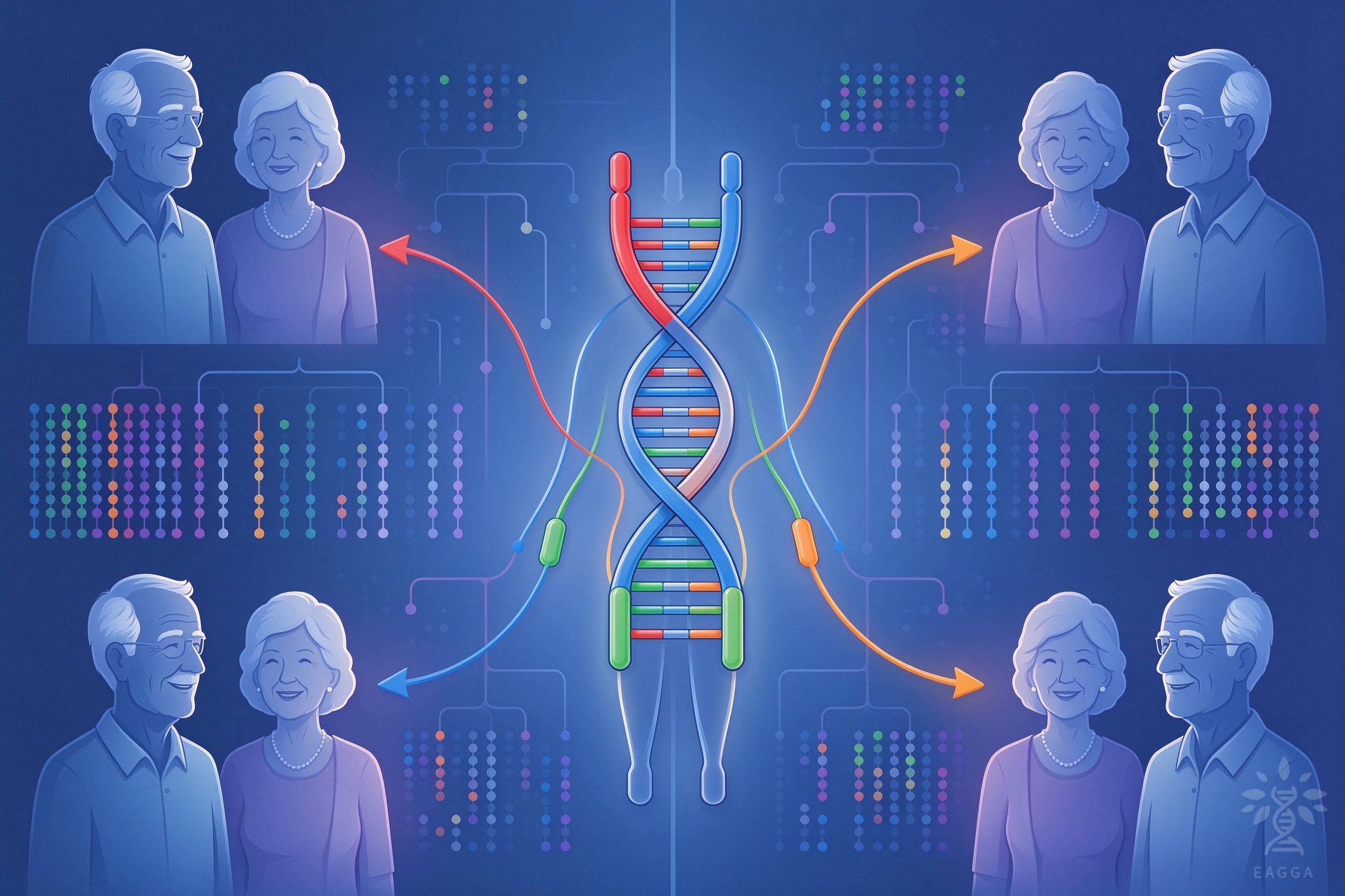
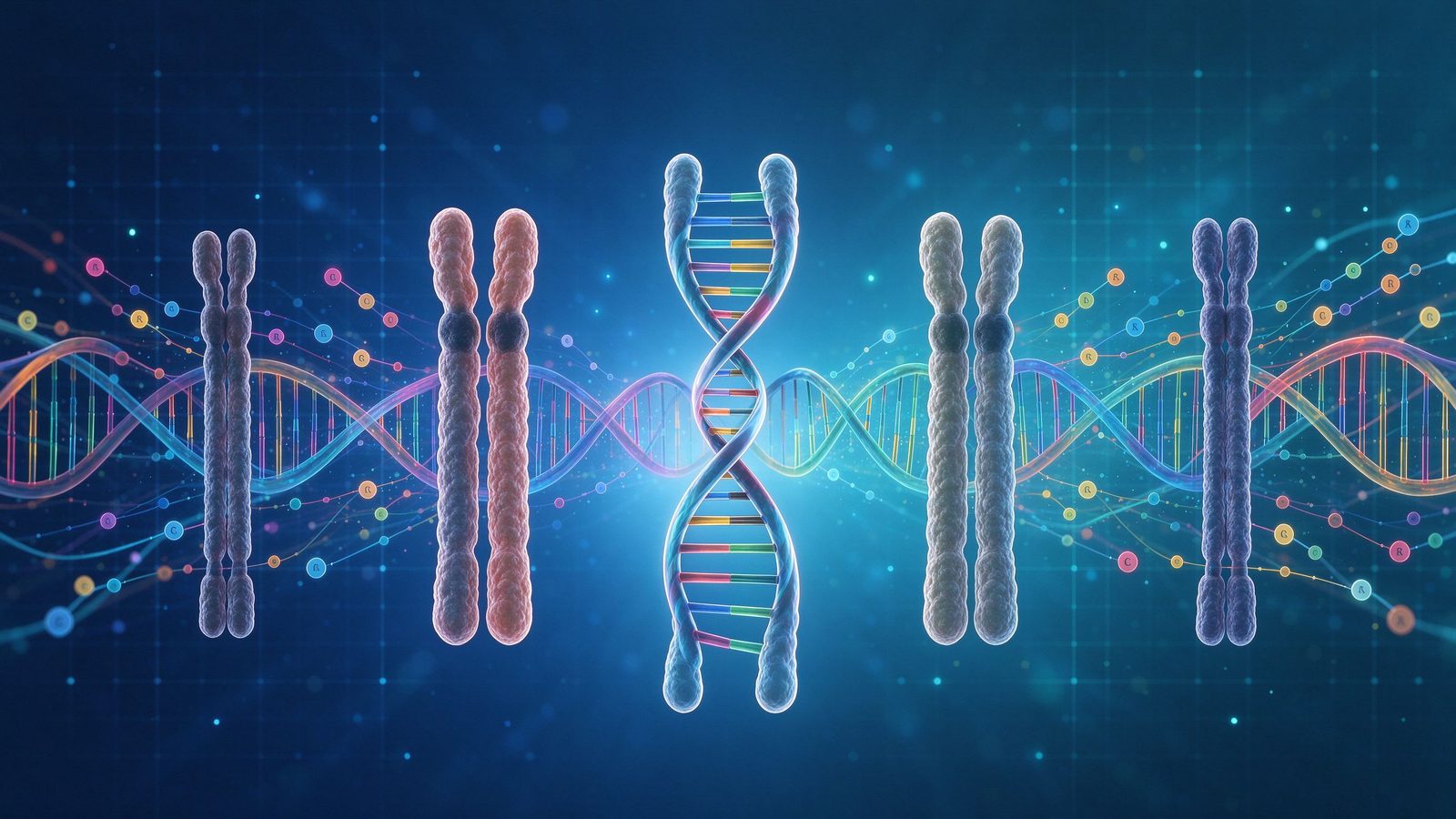
On 29 September 2026, genealogy and DNA-testing platform Ancestry held its annual \’An Inside Look\’ event—coinciding with its 30th anniversary. Beyond the celebration, the event unveiled the platform\’s \’biggest DNA update yet\’: AncestryDNA now shows twice as many ancestral regions, covering more of Africa, Asia, the Indigenous Americas and beyond. Even more striking was a new feature called \’Regions by Grandparent,\’ which claims to show which DNA regions you inherited from each of your four grandparents—without requiring your parents or grandparents to take a DNA test.
Why does this excite family-history enthusiasts? The conventional wisdom is that to learn \’how much of me comes from a given grandparent,\’ the surest route is to test that grandparent, or at least a parent. Many families cannot: grandparents are elderly or gone, or parents decline to participate. \’Regions by Grandparent\’ tries to bypass that obstacle—using only your own DNA to split your ancestry information across four grandparents.
How does it work? In short, it relies on tracking shared chromosomal segments. Your genome is a half-and-half combination of your parents\’ genomes, and each parent\’s genome in turn comes from their parents. When you have only your own DNA, you cannot directly know which segment came from which grandparent; but an algorithm can group chromosome segments by family side through matches with relatives on your father\’s or mother\’s side (cousins, uncles and so on), then combine that grouping with population ancestry reference data to infer which ancestral regions each segment corresponds to—and thereby estimate what each grandparent may have contributed. Strictly speaking, this is not a direct measurement of your grandparents\’ genomes but a probabilistic reconstruction built from your DNA and population reference data. That is exactly why it deserves a cautious reading.
What does it mean for users of East Asian descent? Among many East Asian users, testing rates for even one parent are modest, and grandparent data are rarer still. Features like \’Regions by Grandparent\’ add informational value: one test on your own DNA can sketch the ancestral contours of both your paternal and maternal sides. This echoes the \’infer the past from the present\’ approach in genetic genealogy—a modern individual\’s genome is a compressed archive of ancestral lineages.
Other updates announced alongside it are worth noting: \’Census Compare\’ lines up information from multiple census years (US federal, UK and Canadian collections) side by side so you can watch how a family changed over time; \’Tree Compare\’ compares your family tree with another member\’s public tree, highlighting where your information matches and differs; and on the military side, new Korean War-era draft registration cards join the collection, with \’Photo Insights\’ helping identify clues such as rank and era within military photographs.
Limits and caveats: probability, not certainty. It should be clear that the estimates in \’Regions by Grandparent\’ are statistical inference at heart. Precision depends on the representativeness of the reference database, the coverage of your own genome and the density of family matching. For East Asian populations with highly homogeneous ancestry, if all four grandparents come from the same region, the distinguishing power may be limited. Non-biological kinship events—adoption, or undisclosed biological relationships—can bias such inference. Treating the result as \’a lead worth verifying\’ rather than a definitive answer is the safer attitude.
From an industry perspective, the direction of Ancestry\’s update is telling: as consumer genetic testing growth slows, platforms are shifting from \’who you are\’ toward \’how your family story unfolds\’—using algorithms to fill in ancestry information for missing generations, so a single test can serve more members of a family. This aligns with the dual-track \’genes + genealogy\’ research that genetic genealogy societies advocate: when technology makes ancestral information more accessible, everyone can become the writer of their own family history.
Whether or not you plan to try it, one trend is clear: DNA testing is evolving from a \’personal report\’ into a \’family storytelling tool.\’ And every such evolution brings ordinary people one step closer to the ancient question, \’Where do I come from?\’