

Why the Chuandong Cave Site Reshapes Our Picture of Prehistoric Human Interaction
2026年9月4日
Chinese scientists reveal for the first time the survival landscape of Denisovans in South China: major discovery at Yunnan Bianfu Cave published in Nature
2026年9月10日STRs and a Century-Old Mystery: How DNA Profiling Confirmed the Identity of the Last Romanovs

In 2026, the science outlet The Scientist published a long-form feature, “DNA Profiling: Tracing Killers and Solving Mysteries Using Genetic Clues,” systematically reviewing the journey of DNA profiling from birth to the frontier. Among its milestones, the resolution of the century-old Romanov identity mystery stands as one of the most significant applications of short tandem repeat (STR) technology — a story spanning 1918 to 2009 that threads through several core techniques of modern genetic genealogy.
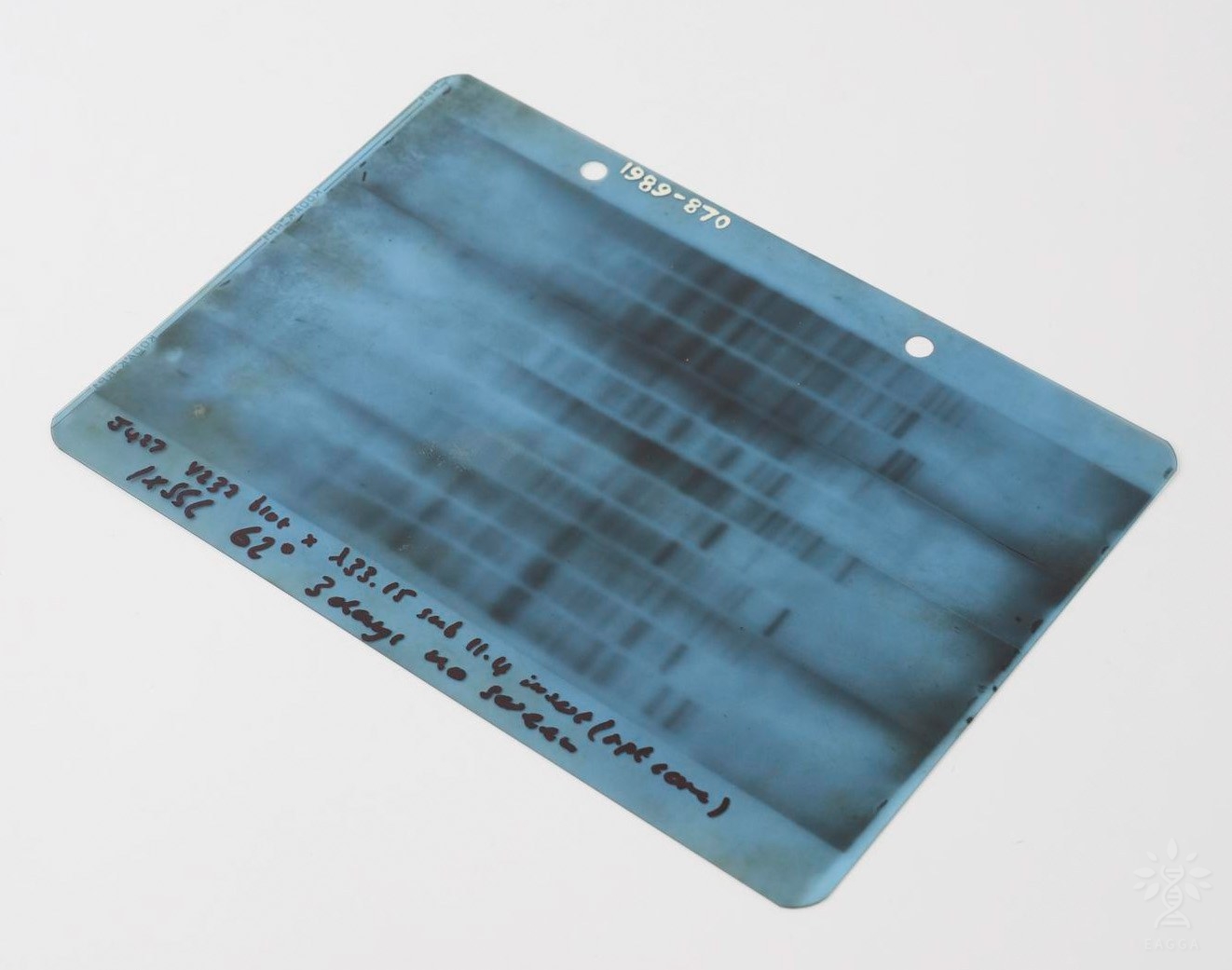
The story begins with the birth of DNA fingerprinting. In 1984, Sir Alec Jeffreys of the University of Leicester, studying DNA variation between individuals, discovered short tandem repeat sequences known as minisatellite regions scattered throughout the genome. Within these segments, highly variable tandem repeats could be targeted by probes to produce a barcode-like image unique to each individual — the world’s first DNA fingerprint. Together with Peter Gill of the UK Forensic Science Services (FSS), who developed methods to extract DNA from blood and semen stains, they opened the era of forensic DNA analysis.
DNA profiling first proved itself in criminal justice. In 1986, two teenage girls in Leicestershire were raped and murdered three years apart, and police suspected 17-year-old Richard Buckland. Jeffreys’ test, however, exonerated him. In early 1987, the authorities conducted the UK’s first mass DNA screening: 5,000 men aged 16–34 volunteered blood samples, 4,000 passed ABO blood typing, and 1,000 underwent DNA fingerprinting — yet none matched the crime-scene samples. A year later, someone overheard a pub conversation in which a man admitted he had been paid to submit a fake sample. The real culprit, Colin Pitchfork, was tested and matched, becoming the first person convicted through DNA evidence — a landmark that shaped the concept of the national DNA database and inspired Joseph Wambaugh’s book The Blooding.
Then came the Romanov case. In 1918, Tsar Nicholas II, Tsarina Alexandra and their five children — Olga, Tatiana, Maria, Anastasia and Alexei — were executed, yet the location of their final resting place remained a secret for nearly a century. In 1991, nine skeletal remains were excavated from a mass grave near Yekaterinburg, widely believed to belong to the Romanov family. Russian geneticist Pavel Ivanov of the Engelhardt Institute of Molecular Biology brought the bones to British expert Peter Gill — as Gill recalled, Ivanov “came over to the UK clutching these bones in a sort of supermarket bag,” and the analysis took about a year.
These were 70-year-old bones that had been in the ground, severely degraded, with DNA from only about half a dozen cells. Gill’s team made a pivotal decision: for the first time in this case, they used short tandem repeats, moving away from the RFLP method. “It demonstrated that we could use these fragments to analyze very degraded samples,” Gill said. Autosomal STR analysis showed that five of the nine skeletons formed one family — a father, a mother and three daughters — consistent with the composition of the imperial family.
Confirming that the remains truly belonged to the Romanovs required external references. The researchers turned to mitochondrial DNA (mtDNA), which passes nearly unchanged from mother to child. They obtained blood samples from Prince Philip, Duke of Edinburgh, a direct descendant of the Tsarina Alexandra, and it was a match, confirming the Tsarina. Two daughters were then identified as Olga and Tatiana, while the third could have been either Maria or Anastasia. To confirm the Tsar, they found two distant maternal relatives who matched at every position except one: a heteroplasmy — a tiny mismatch that fueled controversy.
To verify the heteroplasmy, the team at the Armed Forces DNA Identification Laboratory (AFDIL), led by Mitchell Holland, examined the exhumed remains of Grand Duke Georgij Romanov, the brother of Tsar Nicholas II. “There had been testing that had already been done, but our testing kind of gave the last pieces of information that allowed them to move forward with an identification,” Holland said. Their mtDNA matched down to the heteroplasmy at the same position, proving the relationship and confirming the authenticity of the last Tsar’s remains.
One mystery remained: did the two “missing” children — Alexei and Maria or Anastasia — actually die with the family? The famous claimant Anna Anderson insisted for decades, until her death in 1984, that she was Anastasia; but postmortem mtDNA tests on her hair and a paraffin-wax-preserved tissue sample showed no match with the Romanovs or their living relatives, ending the legend. In 2007, researchers discovered additional remains — bone fragments and teeth — near the 1991 grave. Using mtDNA comparison, autosomal STR testing to confirm parentage with Nicholas II and Alexandra, and Y-chromosome STR testing from a living Romanov cousin, all three analyses confirmed the identities and accounted for the entire Romanov family (formally published in 2009).
The significance of the Romanov case extends far beyond the identification of one family. As Gill remarked, the case — together with mass-disaster samples like those from Waco, Texas — “led to the universal acceptance of short tandem repeats.” STR fragments are short, suited to PCR amplification, and can recover signal from highly degraded old bones, making them a universal tool for forensics and ancient DNA research. Subsequently, the UK launched the world’s first national DNA database in 1995, and the US built CODIS in 1998 (initially 13 core STR loci, expanded to 20 in 2017 to align with Europe); the 2001 World Trade Center victim identification drove the combined use of miniSTRs, SNPs and mtDNA; and in 2018, SNP-based family database comparison gave rise to forensic investigative genetic genealogy (FIGG), which cracked the Golden State Killer case.
For genetic genealogy researchers, the Romanov case is a textbook: it demonstrates how three types of markers — autosomal STRs (parentage), mtDNA (maternal lineage) and Y-chromosome STRs (paternal lineage) — corroborate one another, and how heteroplasmy, reference samples and living-relative comparisons play critical roles in identification. From forensic conviction to ancient DNA identity reconstruction, STRs and their descendants prove the same thing: genetic markers can cross a century of time and give nameless remains their names again.