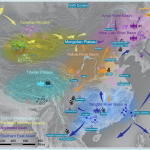
Ancient genomes give insight into 160,000 years of East Asian population dynamics and biological adaptation
2026年5月11日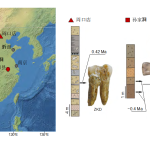
Chinese scientists retrieve lineage-specific genetic information from 400,000-year-old Homo erectus for the first time
2026年5月14日The Leonardo DNA Project: A 21-Generation Family Tree Brings Us Closer to the “Genius Gene”
For more than five centuries, Leonardo da Vinci has remained one of the most fascinating names in human history. Renowned for masterpieces such as the Mona Lisa and The Last Supper, the Renaissance polymath was also an anatomist, engineer and naturalist whose genius seemed to transcend the boundaries of his age. Yet about his own body — his eyesight, his dominant hand, his health, even the circumstances of his death — almost nothing is known. In May 2026, the international scientific initiative known as the Leonardo DNA Project announced a major breakthrough: researchers have successfully reconstructed the da Vinci family tree spanning 21 generations and more than 400 individuals, and have confirmed, through Y-chromosome analysis of living male descendants, a continuous paternal line extending at least 15 generations. It may mean that humanity can finally hear the “genetic voice” of this genius across five centuries.
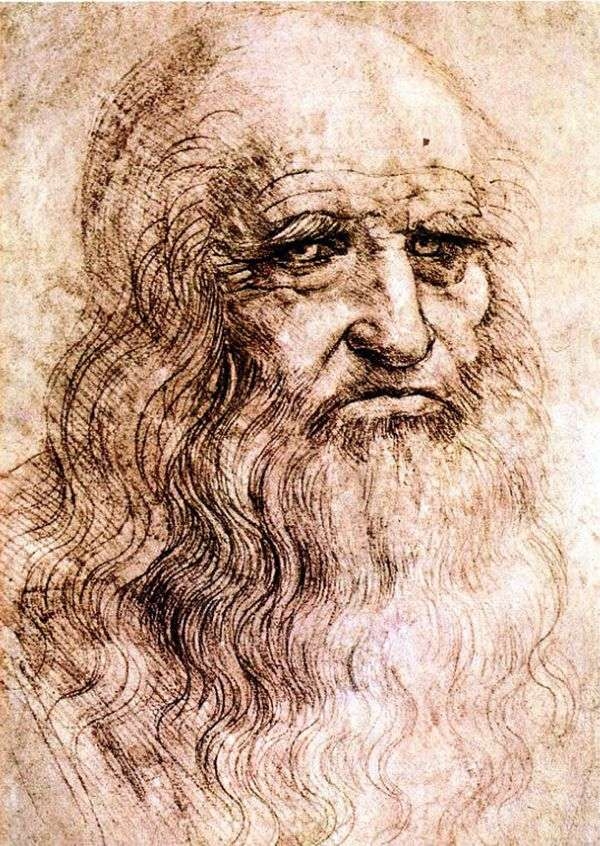
The project began with a family history compiled over three decades. Alessandro Vezzosi and Agnese Sabato of the Associazione Leonardo da Vinci in Vinci, Italy, pieced together fragments scattered across archives and historical documents into a vast genealogical network. Their book, Genìa Da Vinci: Genealogy and Genetics of Leonardo da Vinci, traces the family’s records back to 1331, covering 21 generations and more than 400 individuals, including 219 members of the “da Vinci / Vinci” family — 119 men and 100 women. Through systematic archival research, they not only clarified the known lineage but also uncovered previously unknown family branches — most importantly, 15 living male descendants descended from Leonardo’s father through his half-brother Domenico Benedetto.
For genetic genealogists, the Y chromosome is the most powerful tool for paternal-line research: it passes from father to son with remarkably little change across generations, like a surname written in DNA. Davide Caramelli, head of biology at the University of Florence, and forensic anthropologist Elena Pilli compared DNA samples from six living male descendants. Their Y-chromosome segments matched, confirming a continuous male lineage of at least 15 generations in the da Vinci family. The finding gives the entire project a solid biological foundation — the next step is simply to compare ancient samples with living descendants to close the loop from documents to genes.
At the Church of Santa Croce in Vinci, researchers identified a da Vinci family tomb believed to hold Leonardo’s grandfather Antonio, his uncle Francesco and several half-brothers. Anthropologists from the University of Florence have extracted bone fragments and carried out partial radiocarbon dating; one sample consistent with Leonardo’s relatives has entered ancient-genome analysis, with preliminary results indicating a male. Caramelli stressed that the DNA preservation quality still needs to be verified; if feasible, the Y-chromosome profile can be extracted and compared with living descendants. A match would provide genetic confirmation of the historically documented lineage — and could even allow researchers to reconstruct Leonardo’s own genome from biological traces left on his manuscripts and paintings.
The Leonardo DNA Project was formally launched in 2016, coordinated by Rockefeller University in New York, together with the J. Craig Venter Institute in California and the University of Florence, with support from several foundations. Its core strategy is to use the Y chromosome — a genetic channel that barely changes across generations — to connect the Leonardo of the 15th century with people alive today. Jesse Ausubel, project director at Rockefeller University, said: “Even a microscopic fingerprint on a page may contain cells that can be sequenced. 21st-century biology is pushing the boundary between the ‘unknowable’ and the ‘unknown.’ Soon we may be able to obtain information about Leonardo — and other historical figures — that was once believed lost forever.”
The genealogical research has also produced a series of fascinating discoveries. On the identity of Leonardo’s mother Caterina, new archival analysis suggests she may have been a slave in the household of the wealthy merchant Vanni di Niccolò di Ser Vanni; wills and donation records dating from 1449 reveal the merchant’s close ties with Leonardo’s father, Ser Piero. In addition, researchers found a large charcoal drawing on the hearth of an old house in Vinci depicting a fantastic creature with a spiral horn, elongated snout, hooked teeth and a serpentine tail, which they named the “Unicorn Dragon.” Some features appear to foreshadow Leonardo’s later studies of flight; after comparison with a known drawing from the 1470s, researchers suggested it may be an early work by Leonardo, and the town of Vinci has prepared a detailed scientific and conservation analysis.
Interestingly, Leonardo himself seems to have held strikingly advanced ideas about heredity. Sabato notes that in Leonardo’s studies of the origins of life, “conception was presented as a complex process woven from nature, emotion and destiny” — a view that incorporates the parents’ behavior, diet and bodily states into the formation of offspring, echoing the debates of modern genetics and epigenetics and standing as a remarkably forward-looking conception of heredity in the Renaissance.
If sufficient endogenous DNA can be extracted and sequenced, Leonardo’s genome could yield multiple rewards: revealing biological traits such as his dominant hand, visual perception, diet and health predispositions; providing an unprecedented objective standard for art authentication by comparing biological material left on manuscripts and paintings; and the methodology itself — combining genealogy reconstruction, kinship DNA comparison and ancient DNA extraction — becoming a paradigm for the study of historical figures. As Ausubel concluded: “This is not merely a project about the author of the world’s most famous paintings; it is a redefinition of the boundaries of historical knowledge and cultural heritage.” For the town of Vinci, hearing the “genetic voice” of its genius five centuries later has become a source of profound cultural pride. Leonardo’s story is still unfolding.