

23andMe Launches “Reconstructed Ancestors”: Consumer Genealogy Moves Toward Inferring Untested Ancestors
2026年3月16日
Guangxi Cave-Burial Genomes: Genetic Formation and North–South Disparities Among Kra–Dai and Hmong–Mien Speakers
2026年3月23日[Explainer] How DNA Companies “Reconstruct” Ancestors You Never Met — and Where It Falls Short
This plain-language explainer draws on the 23andMe press release and genealogy-community discussions such as DNAeXplained; it is not an independent evaluation of the product.
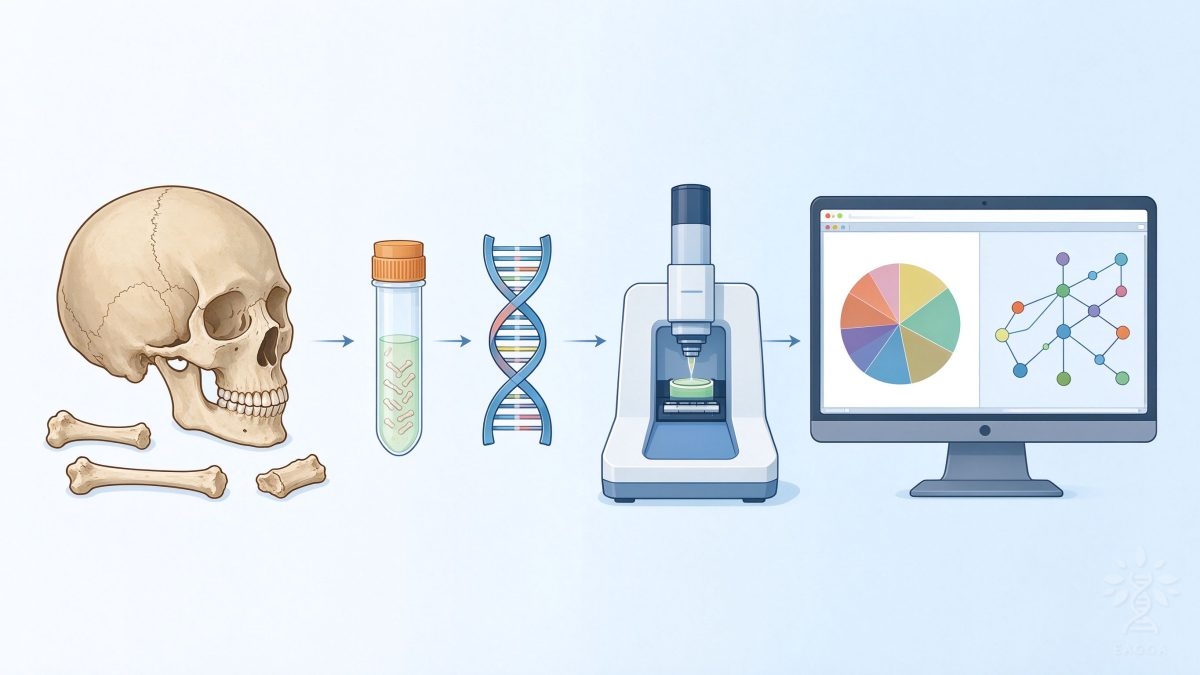
“Reconstructed ancestors” may sound like magic, but the logic is straightforward. A shared ancestor’s chromosome segments are inherited in pieces across generations of descendants. If a database contains enough people who descend from the same ancestor, linkage- and ancestry-inference methods can stitch those scattered segments back onto that specific common ancestor.
This is different from the familiar “ethnicity estimate.” An ethnicity estimate answers: roughly what percentage of your genome comes from which continental region? That is a proportion. Reconstructed ancestors tries to answer something more specific — which historical individual a particular chromosome segment may have come from, and where that person lived. One is statistical averaging; the other is trying to place a segment onto an actual ancestor.
There are clear blind spots, however. Performance scales with database size: the more descendants in the reference pool, the more segments can be reassembled. And existing databases are heavily weighted toward people of European ancestry, so representation of East Asian and other populations is limited — users from those backgrounds will typically get fewer reconstructable ancestors. Treat the results as leads for family research, not as settled conclusions.
Source: 23andMe official / DNAeXplained community discussion. 23andMe Investor Relations.

![[Explainer] How DNA Companies “Reconstruct” Ancestors You Never Met — and Where It Falls Short](https://www.eagga.org/wp-content/themes/betheme/images/cookies.png)