
Genomic Wisdom of a Bitter Winter: Cold Adaptation and Population History in the Amur–Heilong River Basin
2026年10月27日
Why Do Many East Asians Turn Red When They Drink? The Evolution and Health Code of Alcohol-Metabolism Genes
2026年10月29日An Ancient Viral Infection Rewrote the Developmental Script of the Chimpanzee Brain

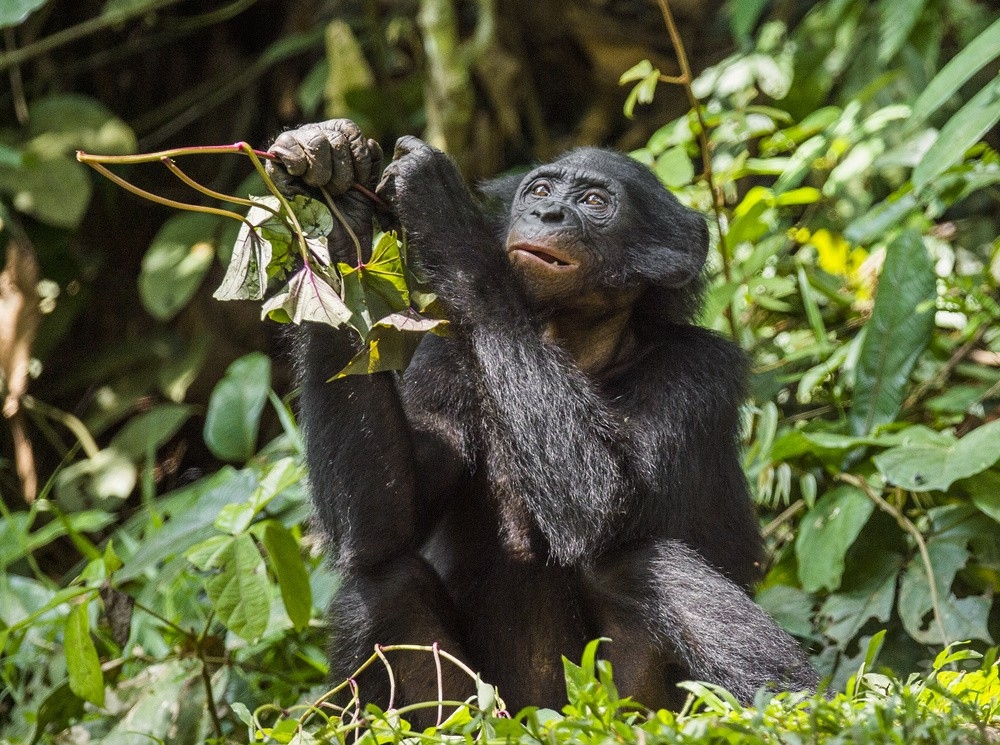
Humans and chimpanzees share highly similar DNA, yet the developmental trajectories of their brains are not the same. A fresh answer to this long-standing puzzle appeared in Science Advances on 23 October 2026, when a team from Lund University reported a tale of \’one gene, two fates\’. A gene involved in early brain development stays active in the human genome, yet it is completely silent in the chimpanzee — and the reason is not a mutation in the sequence itself, but the DNA remnants of a viral infection millions of years ago.
The gene is called LINC00662. It remains active during the early stages of human embryonic brain development, while the corresponding sequence in the chimpanzee genome has lost all activity. The team\’s hypothesis: the divergence in brain development between humans and chimpanzees may hinge precisely on which genes are switched \’on\’ and which are switched \’off\’ — and LINC00662 is a textbook example.
The real culprit is an endogenous retrovirus called PTERV1. This virus specifically infected chimpanzees; in ancient times it integrated its own genetic material into the host genome, was passed down through generations, and remains there to this day. The team observed that PTERV1 replicated at multiple sites in chimpanzee DNA, and these viral sequences were systematically silenced through methylation — a chemical switch that determines gene activity. But what was switched off was not only the viral remnants: in the same genome, the neighbouring LINC00662 lost its activity as well. In the human genome, by contrast, the gene is unaffected and remains active.
To verify the causal link, the team grew brain organoids — three-dimensional structures that recapitulate features of early brain development — from both human and chimpanzee stem cells. LINC00662 was strongly expressed in the human organoids and completely absent in the chimpanzee ones. Crucially, when the team removed the viral DNA from chimpanzee cells using CRISPR-Cas9, the gene started to be expressed again. This is direct evidence that LINC00662 was switched off by the viral insertion.
Whether the gene is active matters. In further experiments, suppressing LINC00662 in human brain organoids reduced the activity of multiple genes involved in neural cell development and synapse formation. This suggests that LINC00662 may contribute to building the early neural networks of the human brain. Its silencing in chimpanzees, in turn, may have opened a different path for the chimpanzee brain — the same starting point, two outcomes.
The significance of the work goes beyond a single gene. The team notes that ancient viral epidemics may have affected not only populations at the time, but also left lasting marks in the genome, altering gene regulation in later generations through epigenetic mechanisms. Their next step is to survey other viral remnants to see whether they too shaped brain evolution.