

Identification of the Harbin Cranium as a Denisovan Named a 2025 Science Top Breakthrough
2025年12月29日
Maternal Genomes of the Qijia Culture: Female Lineages on the Gansu-Qinghai Prehistoric Corridor
2026年1月5日100,000 Years of East Asians: How Molecular Archaeology Reads Prehistory as a Migration Map
“Where did East Asians come from?” Once this question was addressed mainly through scattered fossils and sites. As a year-end feature in People’s Daily describes, the work of Qiaomei Fu’s team is turning this prehistory into a legible “migration map.”
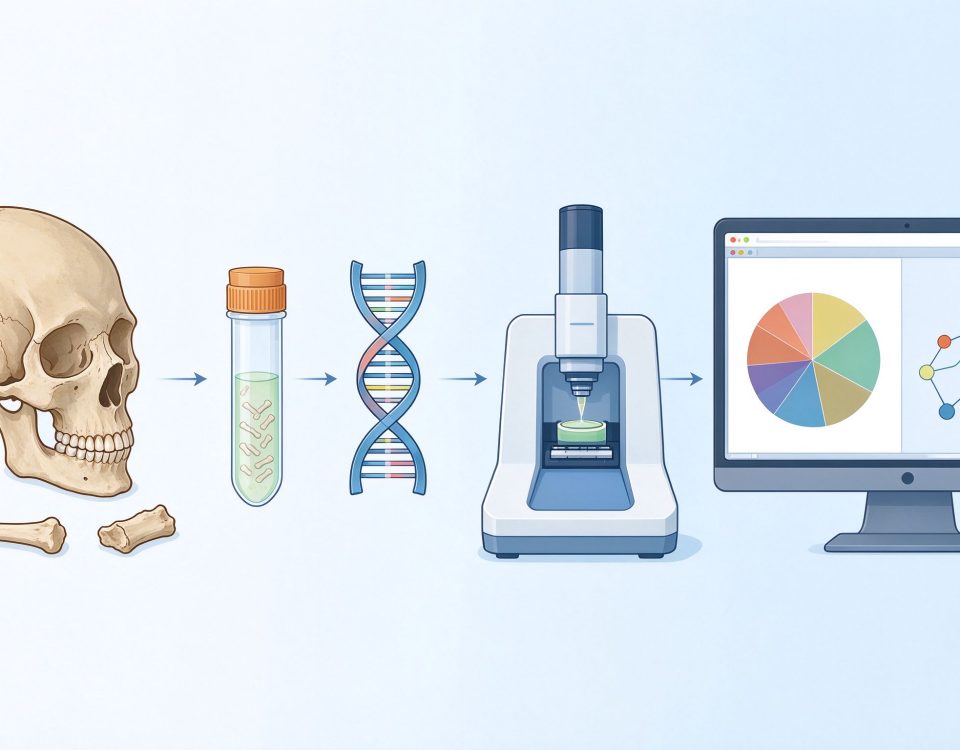
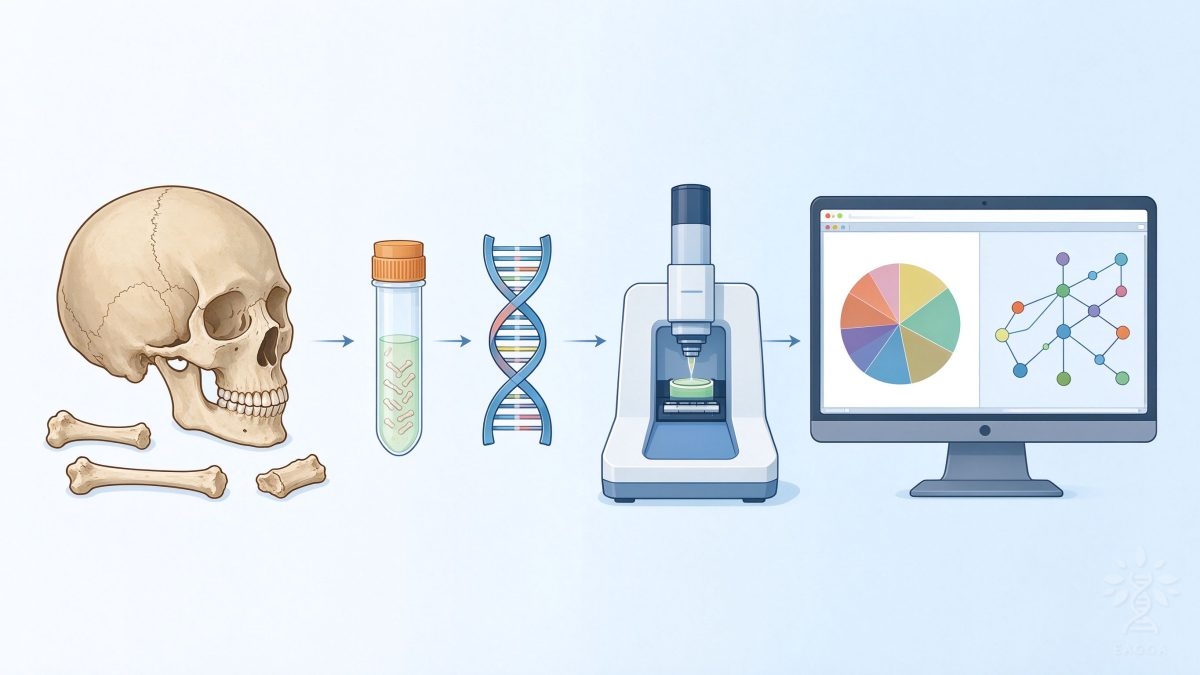
Molecular archaeology extracts ancient DNA from caves, shell mounds, wetlands and early farming sites. Drawing on more than a thousand genome samples, the team has gradually assembled a vast interwoven web of prehistoric East Asian movement—migration waves of different periods and directions, arriving and receding and mixing, rather than a single simple line of progression.
The feature highlights breakthroughs such as the Harbin archaic cranium. That Middle Pleistocene skull, analyzed through paleoproteins and dental-calculus ancient DNA, was identified as an early Denisovan lineage and solved the morphology puzzle of Denisovans. Such finds show East Asia is not a “periphery” of human evolution but a central stage.
Why is the map legible? Because ancient DNA places each ancient person at a specific time and place: who was earlier, who later, who was related to whom, who came from where. As points connect into lines and lines weave into a web, silent fossils begin to speak.
For general readers, this means prehistory is no longer a fog but a migration map that can be traced year by year and place by place. East Asia’s hundred thousand years are, in this way, being retold through genes.
Source: People’s Daily (report on Qiaomei Fu’s work). Molecular archaeology reveals 100,000 years of East Asian humans, 2025-12-27.