
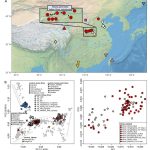
Fudan team reveals 6,000 years of population history in the middle Yellow River: Yangshao ancestry endures for 6,200 years
2026年6月26日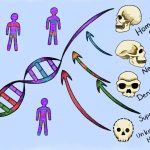
Two mysterious ancestors revealed in modern human DNA: Science technique pinpoints a “ghost ancestor” and a “super-archaic ancestor”
2026年7月30日Interview with Fu Qiaomei: Ancient human evolution research to extend toward “older” and “closer to prehistory” times
On 8 July, the 2025 National Science and Technology Awards ceremony was held in Beijing. The project “Tracing the Evolution of East Asian Populations Since the Last Glacial Period”, led by Qiaomei Fu’s team at the Institute of Vertebrate Paleontology and Paleoanthropology (IVPP), Chinese Academy of Sciences, received the second prize of the National Natural Science Award. In a media interview, Fu outlined the team’s future direction: research on human evolution using ancient DNA and ancient proteins will push forward in two directions at once—toward older materials on the million-year scale, and toward more recent prehistoric periods such as the Neolithic and Bronze Age.
Ice-age adaptation imprinted on East Asian genomes
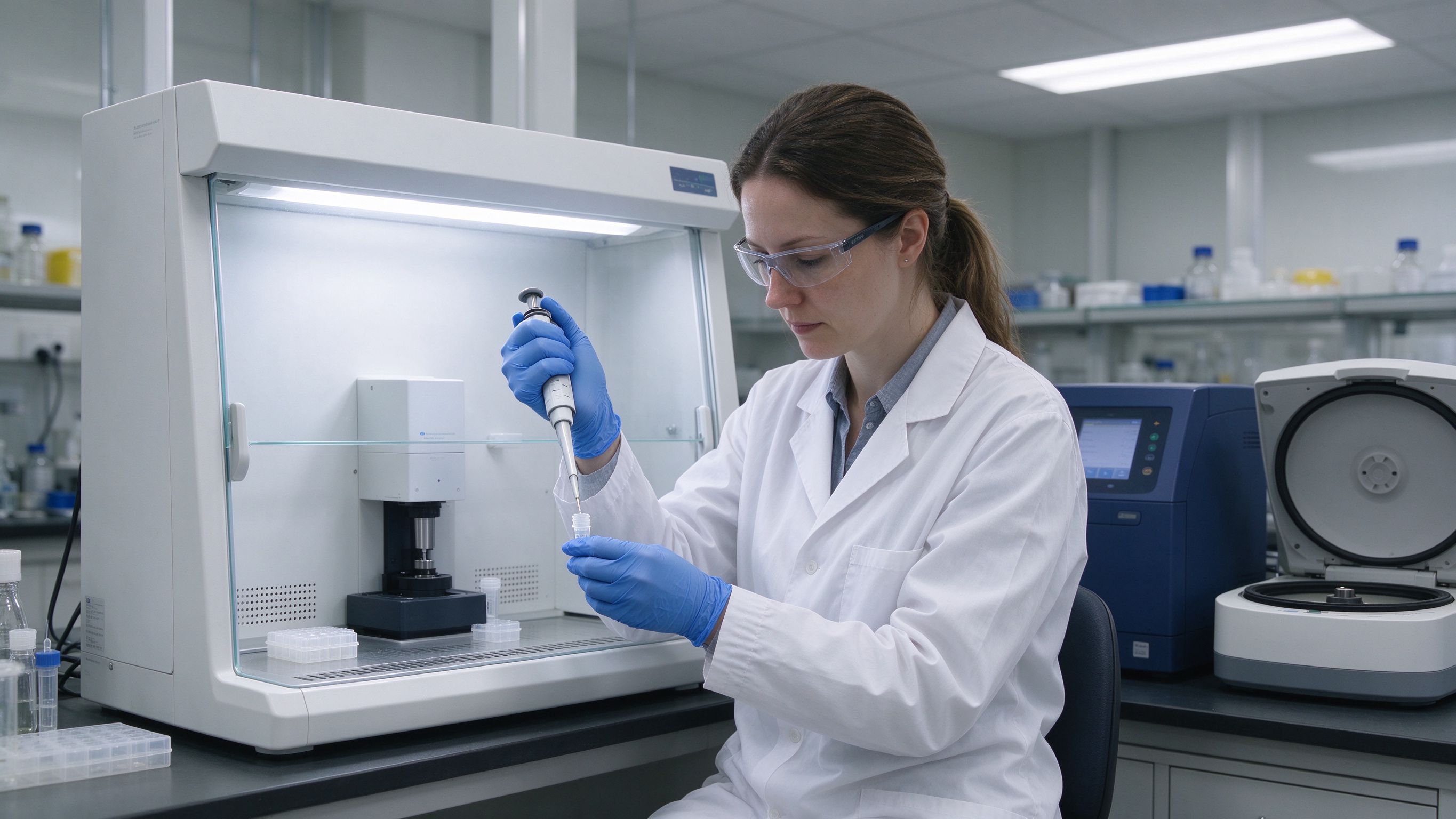
The last glacial period is a pivotal chapter in human evolution, yet key evidence to precisely resolve its history has long been missing. By optimizing key ancient DNA technologies, Fu’s team achieved breakthroughs on the origins of East Asian populations since the last glaciation, especially the genetic landscape of Chinese populations.
The research shows that around 40,000 years ago, an undifferentiated Eurasian population lived across northern Eurasia, while genetically differentiated East Asian modern humans (represented by Tianyuan man) already existed in China. By the end of the Last Glacial Maximum (around 19,000 years ago), Tianyuan-related ancestry had largely disappeared, but distinctive East Asian adaptive alleles—such as EDAR V370A, related to skin, hair and sweat-gland morphology—appeared precisely at this time, providing new evidence for adaptive evolution in modern humans.
Northern and southern roots that shaped Chinese populations
Ancestors with direct genetic contributions to present-day Chinese populations can be traced back to ancient northern populations around 19,000 years ago and ancient southern populations around 8,400 years ago. Since roughly 7,700 years ago, northern and southern Chinese populations have continuously migrated and mixed in both directions, shaping today’s genetic landscape. A particularly important finding: Austronesian speakers on the island of Taiwan share ancestry with populations from Fujian around 8,400 years ago—revealing the main continuity line of Chinese civilization and its ancestral contribution to Austronesian-speaking peoples worldwide.
Frontier interaction and the unity in diversity of Chinese civilization
Through large-scale time-transect ancient genomic studies of Xinjiang, the team reconstructed the spatiotemporal pattern of ancient population movements and cultural interactions in the region. They found that an ancient genetic lineage existed in Xinjiang around 9,000 years ago, remaining highly continuous through long-term interaction and admixture with surrounding populations. This provides important scientific support for understanding the formation of Xinjiang’s populations and the historical unity of the Chinese nation.
East Asia: a “genetic hub” connecting the Americas and Pacific islands
Fu noted that these findings reveal the genetic evolution and adaptation mechanisms of East Asian populations since the last glaciation, identifying East Asia as a “genetic hub” linking the Americas and Pacific islands—offering new theory and understanding of human adaptation to rapid environmental change and the genetic unity-in-diversity of the Chinese nation.
She added that Chinese scientists are now at the world’s scientific frontier in ancient DNA and ancient protein research, with some areas even entering “uncharted territory”. Thanks to the team’s technological advantages, several international research groups have proactively brought local samples to China for collaborative research.
Building on the award-winning results, the team will continue to deepen ancient DNA and ancient protein technologies, advancing research on ancient human migration, community structure and prehistoric cultural and civilizational exchange.
Interview source
This interview is based on a China News Service report of 9 July 2026: “Qiaomei Fu: ancient human evolution research to extend toward both older and more recent times” (reporter Sun Zifa).