
149 ancient genomes reveal how wheat agriculture reached Gansu as technology transfer, not mass migration
2026年9月3日
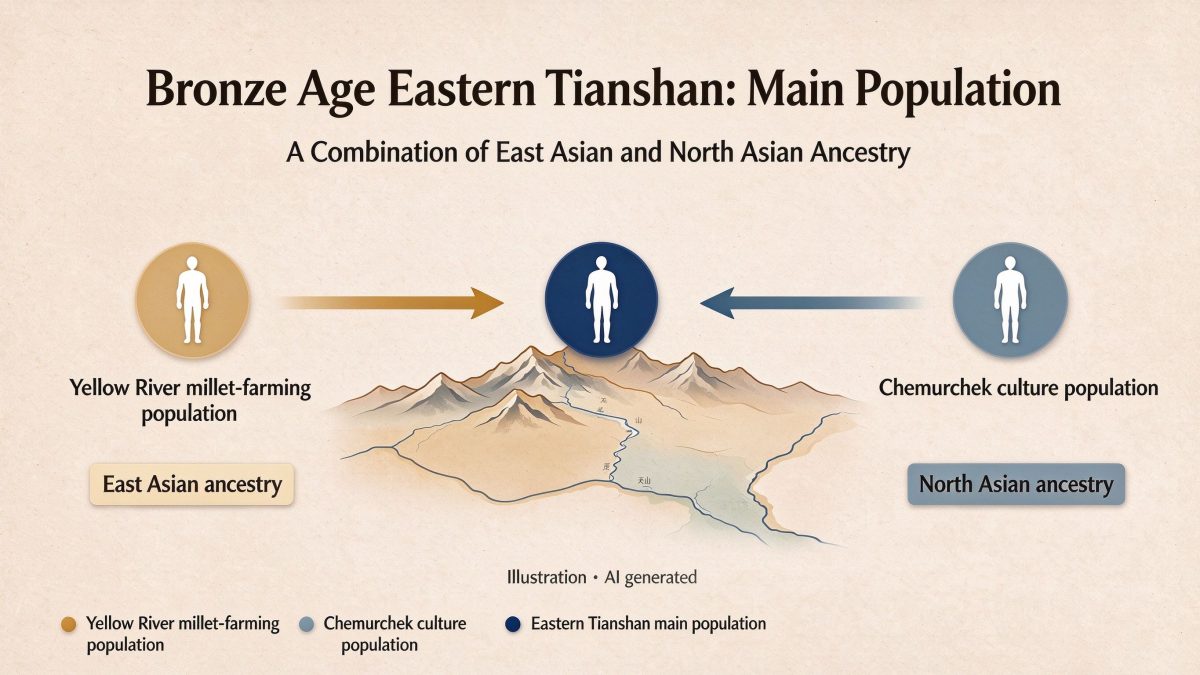
Ancient genomes reveal that the Bronze Age main population of the Eastern Tianshan combined East Asian and North Asian ancestry
2026年9月26日Chinese scientists reveal for the first time the survival landscape of Denisovans in South China: major discovery at Yunnan Bianfu Cave published in Nature
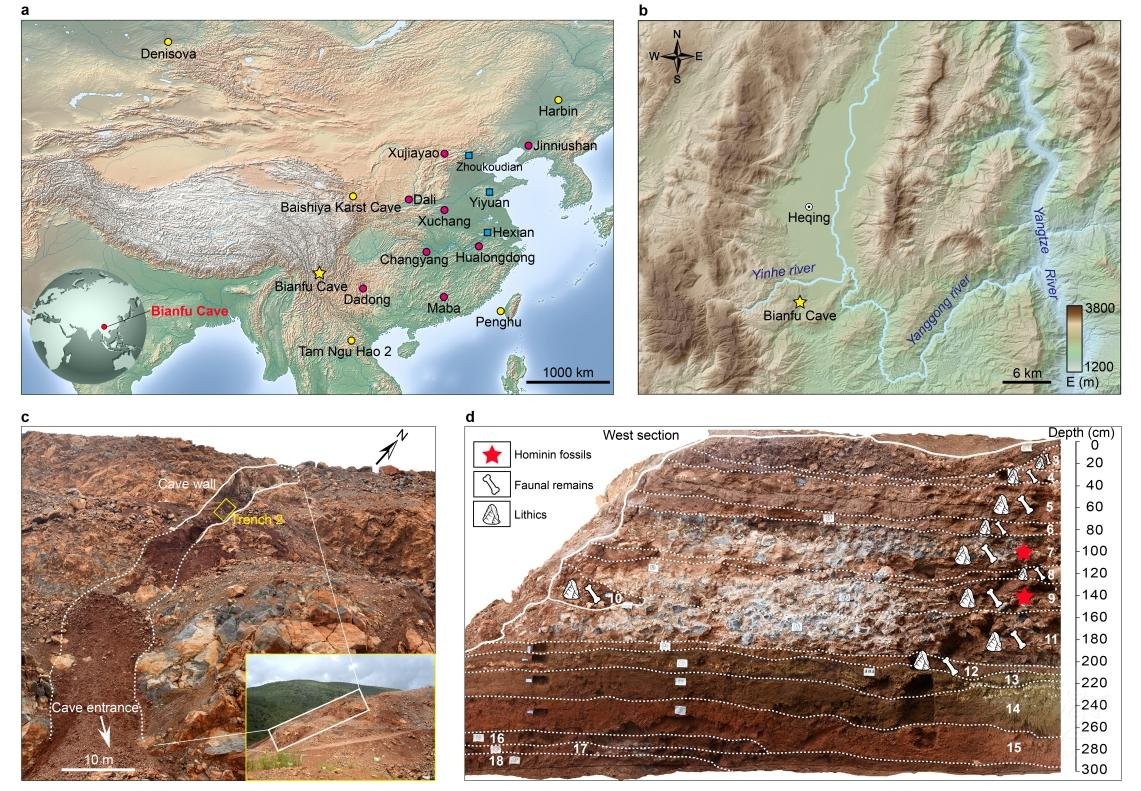
On 9 September 2026 (Beijing time), two research papers on Denisovans by Chinese teams were published online in the journal Nature. In one of them, a multidisciplinary team led by Academician CHEN Fahu of the Institute of Tibetan Plateau Research, Chinese Academy of Sciences, together with the Yunnan Provincial Institute of Cultural Relics and Archaeology, the Institute of Vertebrate Paleontology and Paleoanthropology (CAS), and other institutions, carried out a comprehensive multidisciplinary study of the Bianfu (Bat) Cave site in Heqing, Yunnan Province. The study systematically reveals for the first time the physical morphology, technological behaviour and survival strategies of Denisovans in South China, reconstructing a full picture of how this enigmatic population lived on the southeastern margin of the Tibetan Plateau, and filling a major gap in research on human evolution in East Asia.
Denisovans are an important member of the East Asian “Dragon Man” (Homo longi) lineage, and their discovery has profoundly reshaped our understanding of human evolution in East Asia. However, compared with the rapid accumulation of genetic evidence, human fossils and archaeological remains of Denisovans are scarce, so little has been known about their physical traits, technological behaviour and survival strategies.
The site and fossils: a cultural sequence spanning more than 100,000 years
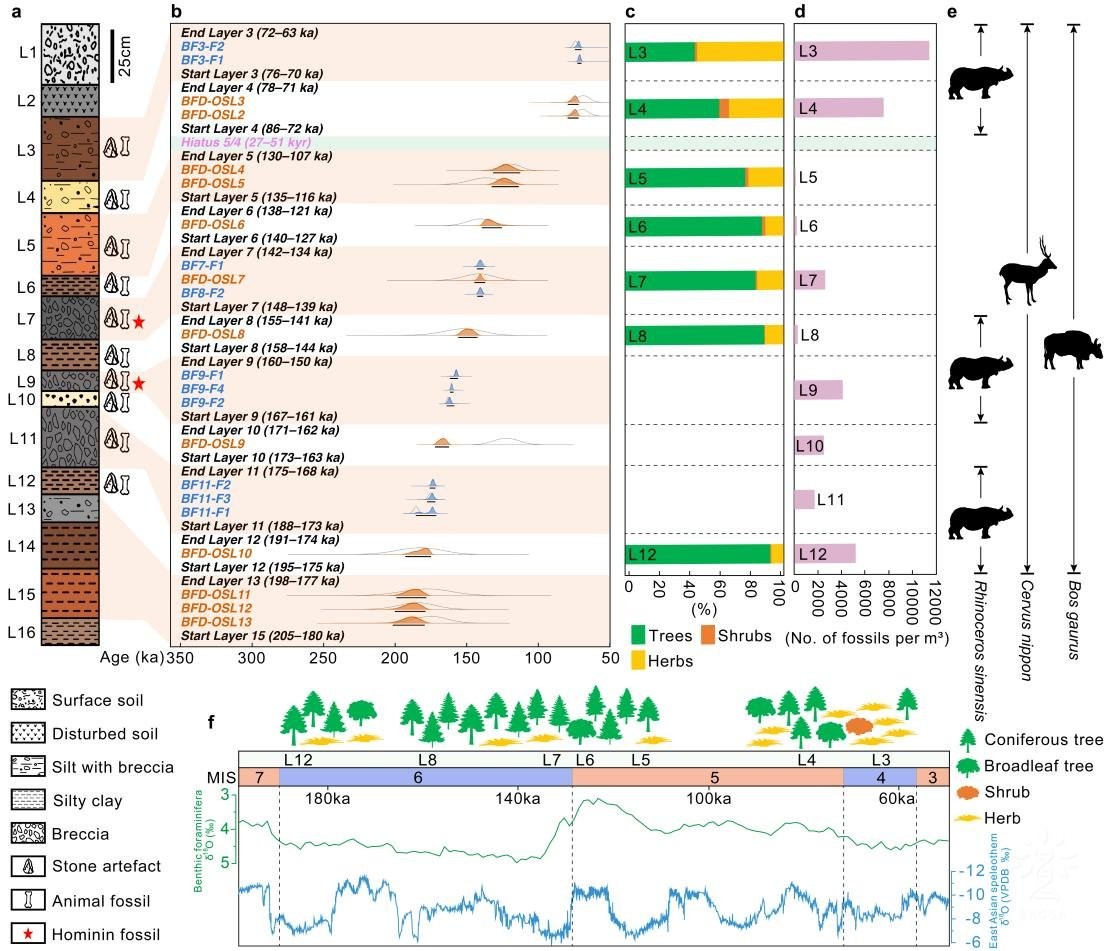
The Bianfu Cave site is located in the Heqing Basin on the southeastern margin of the Tibetan Plateau, at an elevation of 2,370 metres. Excavated since 2019, the site has exposed up to 6.6 metres of deposits, including a cultural layer about 2.3 metres thick comprising 10 horizons, with ages spanning roughly 190,000 to 70,000 years ago. The human-fossil-bearing layers 9 and 7 date to about 167,000-134,000 years ago, corresponding to the cold penultimate glaciation (MIS 6). Pollen analysis indicates that the ancient humans lived in a forest or forest-steppe environment dominated by conifers.
In total, seven human fossils were recovered: four teeth, two parietal fragments and one proximal radius. Palaeoproteomic analysis shows these fossils belong to Denisovans. The teeth display a combination of primitive traits and derived features of late Homo, sharing both similarities with and differences from the specimens from Baishiya Karst Cave in Xiahe, Gansu Province, suggesting morphological diversity within Denisovans that varied with time and geography. The Bianfu Cave Denisovans may represent a new regional type of the Dragon Man lineage distinct from the Baishiya Karst Cave population.
Technological behaviour and survival strategy: a specialised adaptive pattern
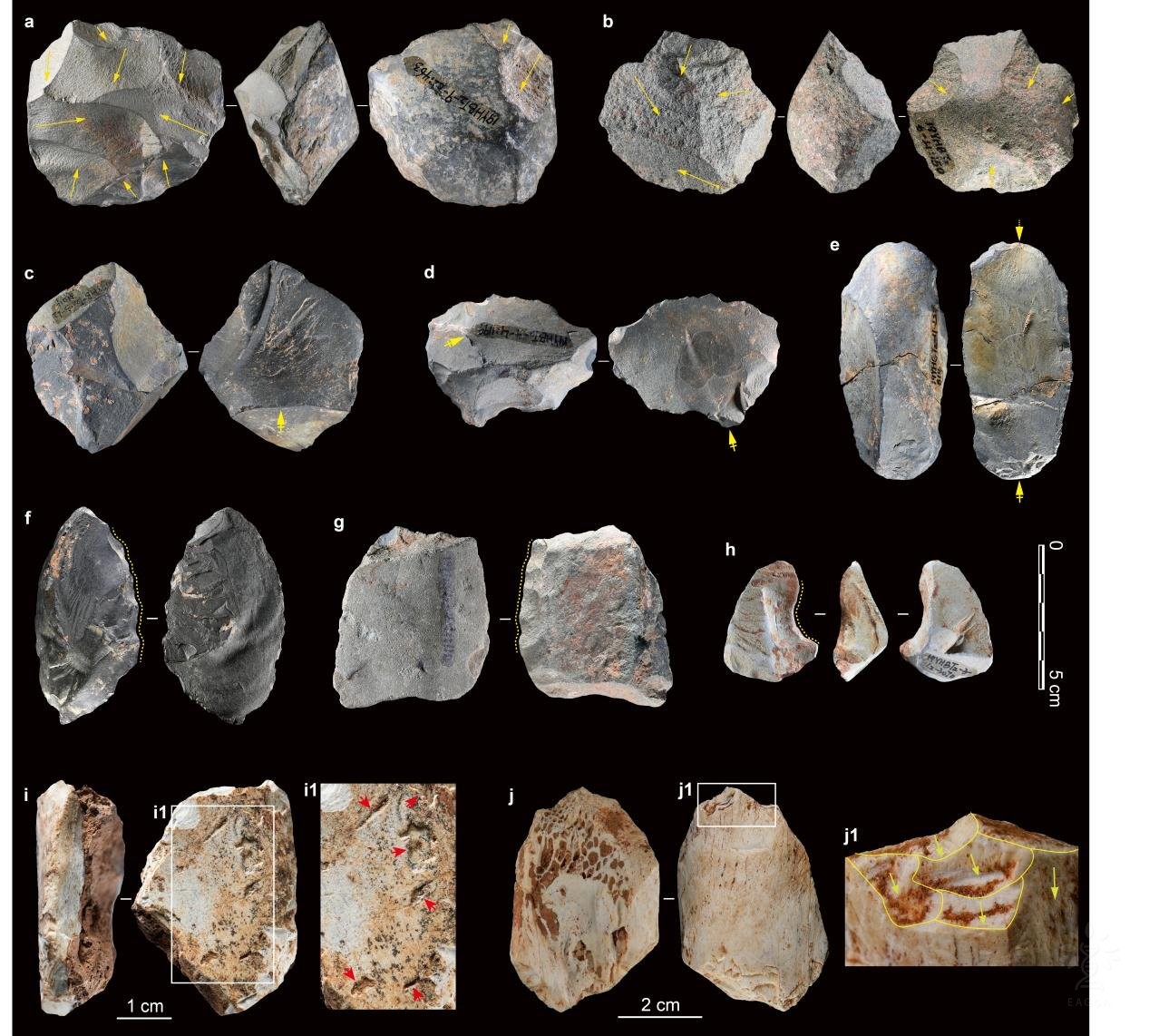
More than 1,300 stone artefacts and abundant faunal remains were recovered from the site. Systematic analysis shows that the lithic technology remained stable throughout the long stratigraphic sequence, dominated by expedient flaking and processing techniques with a minor component of organised centripetal flaking, reflecting a flexible technological behaviour combining expediency and organisation, together with a highly pragmatic adaptive survival strategy. Zooarchaeological analysis also identified diverse bone tools (retouchers, bone wedges, expedient tools and so on), whose technological and typological combinations resemble the Middle Palaeolithic Neanderthal bone-tool industry, indicating that bone-tool production was an important part of the behavioural system of these ancient humans.
The faunal assemblage is dominated by cervids and bovids, with mortality profiles skewed towards prime-age adults, pointing to targeted, specialised hunting of high-quality mid- to large-sized ungulate resources. Cut marks and percussion damage are widespread on bone surfaces, indicating that the rich bone accumulations mainly resulted from hunting, butchering and consumption by ancient humans. Taken together, these humans developed a stable subsistence pattern adapted to local resources through specialised hunting and intensive use of animal resources.
Scientific significance
The Bianfu Cave site establishes, for the first time in southern East Asia, a direct link between Denisovans and archaeological remains, transforming previously isolated fossil records into a survival picture rich in technological, behavioural and ecological information. The site’s exceptionally long cultural sequence spanning more than 100,000 years shows that Denisovans underwent a long-term evolutionary and adaptive process on the southeastern margin of the Tibetan Plateau, with their subsistence remaining stable through glacial-interglacial climatic fluctuations. Together with the Baishiya Karst Cave site on the northeastern Tibetan Plateau, Bianfu Cave provides valuable material for understanding the technological cultures and environmental adaptations of different regional populations of the Dragon Man lineage in East Asia.
From a broader geographic perspective, the Bianfu Cave site lies at a key junction among genetic links across Siberia, the Tibetan Plateau, Southeast Asia and Oceania, serving as an important node connecting Denisovan records of northern and southern East Asia. This major discovery also provides important archaeological evidence for understanding the relatively high proportion of Denisovan genetic contributions in modern Southeast Asian and Oceanian populations.
This article is compiled from public information from the Institute of Tibetan Plateau Research (CAS), Xinhua News Agency and the National Cultural Heritage Administration.