
Fudan-Led Study Reveals the Qiang’s Ancient Yellow River Ancestry and Two Divergent Admixture Histories
2026年5月11日
Ancient genomes give insight into 160,000 years of East Asian population dynamics and biological adaptation
2026年5月11日Re-understanding the Issue of Confucius’ Descendants from the Perspective of Genetic Genealogy
Re-understanding the Issue of Confucius’ Descendants from the Perspective of Genetic Genealogy
——Centering on the Y-Chromosome Lineage Research of the Qufu Kong Clan
Song,Lingxi
EAGGA
Abstract Since the Ming and Qing dynasties, the national sacrificial system for Confucian sages has gradually been institutionalized, and the descendants of Confucius have formed a clan structure integrating blood lineage, ritual system and political recognition. In recent years, the development of genetic anthropology has provided new research tools to re-examine the paternal continuity of the Kong clan. Taking the Y-chromosome data of the Qufu Kong population as the core, this paper systematically sorts out the evolution of Kong clan genealogies and national sacrificial systems throughout dynasties, and conducts an interdisciplinary interpretation of the paternal genetic structure of the Kong surname. The study shows that the Qufu Kong population presents a pattern of multiple coexisting paternal lineages, among which C-MF1920 and Q-MF30796 are the two most representative major branches. This phenomenon does not deny the orthodoxy of the Kong clan; rather, it is a historical result shaped by long-term institutional integration, genealogy revision and ritual identity. This paper holds that the significance of genetic genealogy lies in revealing the complex formation process of clan structure, rather than judging historical orthodoxy. By introducing genetic evidence and reinterpreting it from the perspective of institutional history and intellectual history, this paper attempts to provide a research paradigm that balances scientific rationality and Confucian tradition for the issue of Confucius’ descendants.
Keywords Descendants of Confucius; Qufu Kong Clan; Y-Chromosome; Genetic Genealogy; Sacrificial System
Ⅰ. Raising the Question: From Sacrificial Institution to Genetic Evidence
Confucius occupies a compound position in the ideological and political cultural history of China. On the one hand, as the representative of the Pre-Qin Confucian School, his ideological system has been continuously interpreted, reconstructed and institutionalized in the course of history. On the other hand, the sacrificial system, title system and descendant identification mechanism formed around Confucius are deeply embedded in the traditional Chinese national ritual and political order. It is under the interaction of these two dimensions that “descendants of Confucius” have gradually evolved into a special concept with compound connotations of blood imagination, institutional recognition and cultural symbolism.
From the perspective of literature, Records of the Grand Historian · House of Confucius provides a basic narrative framework for understanding Confucius’ family background and early descendants. This chapter systematically combs Confucius’ lineage origin, family background and the status of his descendants. Its narrative not only has historical documentary value, but also undertakes important ideological and cultural functions in the political and cultural context of the Han Dynasty. It should be pointed out that House of Confucius is not merely a simple family history; its narrative logic itself serves the practical needs of “honoring Confucius” and “establishing Confucian education”. Therefore, it is necessary to maintain necessary historical self-consciousness when interpreting the genealogical information it provides.
After the Tang and Song dynasties, Confucius gradually completed the transformation from an ancient sage to the Supreme Sage and Foremost Master. The sanctification of his status directly promoted the institutional attention of the state to Confucius and his descendants. The establishment of enfeoffment system, the upgrading of sacrificial specifications, and the repeated confirmation of the Kong clan lineage formally incorporated the descendants of Confucius into the core structure of the national ritual system. This trend was further strengthened in the Ming and Qing dynasties. The imperial court not only ensured the continuous operation of Confucius sacrifices by conferring the hereditary title of Duke of Yansheng, setting up Five Classics Doctors and sacrificial scholars, but also institutionally defined the scope and orthodoxy of “descendants of Confucius” through official genealogy compilation, lineage verification and inheritance qualification examination.[1]
In this process, the identity of “descendants of Confucius” gradually broke away from the category of a single bloodline concept and evolved into a highly institutionalized identity type. Judging whether a branch of the Kong clan possesses “orthodoxy” does not entirely depend on proving direct paternal continuity with Confucius in a biological sense, but more on being included in the national ritual system and obtaining continuous recognition. In other words, the legitimacy of the identity as descendants of Confucius is largely realized through institutional practice rather than bloodline verification.
It is precisely this institutional feature that makes the historical formation of the Kong clan highly complex. On the one hand, the long-term stable sacrificial system requires the continuity and traceability of genealogy; on the other hand, social phenomena such as population changes, wars and migrations, adoption and heirship inevitably exert influence on clan structure. Over an ultra-long historical period, the revision, supplementation and reconstruction of genealogies are both the result of clan self-narration and the product of state power intervention.
In modern times, with the establishment of modern historical research methods and the growing awareness of genealogy criticism, academic circles have gradually realized that traditional genealogy materials may have embellishment, lineage fracture and artificial reconstruction in long-term inheritance. However, limited by research methods, such discussions are mostly confined to literature comparison, institutional analysis and reconstruction of historical context, unable to touch the more fundamental issue of clan formation mechanism.
Since the 21st century, the development of molecular anthropology and genetic genealogy has provided new research tools for this issue. Research methods based on Y-chromosome paternal genetic markers can reveal the differentiation structure and diffusion path of male lineages in a statistical sense. The introduction of this method has enabled some long-debated issues including the descendants of Confucius to be placed once again in the vision of interdisciplinary discussion.
It needs to be emphasized that the significance of genetic genealogy is not to simply “confirm” or “falsify” traditional historical conclusions, but to provide a new observation dimension for understanding the complexity of clan history. Precisely in this sense, this paper attempts to introduce genetic genealogical evidence into the discussion of the descendants of Confucius and systematically reflect on its interpretive boundary.
Ⅱ. Academic Review and Problem Awareness of Research on Confucius’ Descendants
(1) Research on Confucius’ Descendants from the Perspective of Traditional Historiography and Institutional History
Research on Confucius and his descendants has a long tradition in Chinese academia. Since the Tang and Song dynasties, discussions on the compilation of Kong clan genealogies, textual research of lineage and sacrificial systems have always been closely related to national political and cultural needs. Especially after the Song and Yuan dynasties, with the establishment of Neo-Confucianism and the orthodox status of Confucian classics, the identity of Confucius’ descendants was further institutionalized and became an important prerequisite for the stable operation of the national ritual system.
During the Ming and Qing dynasties, the imperial court presided over or recognized the official genealogies of the Kong clan many times. Its purpose was not only to preserve clan memory, but also to maintain the legitimacy of national sacrificial order through the stability of genealogy. The establishment and continuation of the Duke of Yansheng system enabled specific branches of the Kong clan to obtain long-term and stable advantages in political and ritual dimensions. Relevant studies show that the core of this system is not to trace a “real ancestral origin”, but to ensure the continuity and authority of the sacrificial system.
In modern times, with the deepening of research on institutional history and political cultural history, academic circles have gradually shifted their focus from “whether the Kong lineage is true” to “how the Kong lineage is constructed”. Researchers generally point out that the formation of the identity of orthodox descendants of Confucius is the result of the interaction between state power, local social structure and clan self-strategy.[2] The so-called “orthodox descendants” are more embodied as institutional and symbolic historical facts, rather than objective existence that can be simply reduced to biological continuity.
(2) Genealogy Criticism and Methodological Reflection in Modern Research
Since the 20th century, with the introduction of modern historical research methods, academic circles have launched systematic criticism on traditional family genealogies and official clan records. On the one hand, researchers have noticed errors and embellishments in the long-term copying and inheritance of genealogies; on the other hand, they have gradually realized that as a kind of social text, the value of genealogies does not entirely depend on its “authenticity”, but on the historical cognition and institutional logic it reflects.
This methodological turn is particularly obvious in the research on Confucius’ descendants. Some studies point out that the repeated revision of the Kong lineage in the Ming and Qing dynasties was closely related to specific political needs. For example, during regime changes or institutional adjustments, confirming or reaffirming the orthodoxy of Confucius’ descendants can effectively strengthen the cultural legitimacy of the new regime. In this context, the “continuity” of genealogy itself has become a political resource.
However, relying only on literature and institutional analysis still cannot answer some more fundamental questions: For example, has the Kong clan maintained a single paternal lineage continuity for more than two thousand years? If multiple paternal lineages coexist, what is its formation mechanism? The raising of these questions is exactly the practical opportunity for the intervention of genetic genealogy.
Ⅲ. Genetic Genealogy Methods and Its Interpretive Boundaries in Humanities Research
If the discussions in the previous two chapters aim to clarify the generative logic of the concept “descendants of Confucius” from the perspective of historical system and academic history, the task of this chapter is to clarify the interpretive ability and boundary conditions of genetic genealogy as a natural science method when intervening in such humanistic topics. Only on the basis of fully understanding its methodological premises can relevant genetic evidence be reasonably incorporated into the interpretive framework of historical research.
(1) Basic Principles of Y-Chromosome Genetic Markers and Paternal Lineage Research
In molecular anthropology research, the Y-chromosome is widely used for paternal lineage reconstruction due to its genetic characteristics of being only passed down among males and almost no recombination between generations. By detecting different genetic markers on the Y-chromosome, researchers can statistically infer the genetic relationship between different male individuals and the possible time interval of their common ancestors.
At present, the most widely used Y-chromosome genetic markers mainly include two categories: STR (Short Tandem Repeat) and SNP (Single Nucleotide Polymorphism). The former has a high mutation rate and is more suitable for kinship analysis within modern clans or small-scale crowds; the latter has a low mutation rate and strong stability, suitable for constructing phylogenetic trees of paternal lineages spanning thousands of years.
In specific research, the combined method of “STR + SNP” is usually used for hierarchical analysis of samples: first, STR data is used to judge the relative genetic distance between samples, and then SNP loci are used to accurately classify them into the established phylogenetic branches. The formed paternal lineage structure is not a direct reappearance of historical facts, but a probability inference based on mutation rate models.
It should be specially pointed out that the “differentiation time” calculated based on genetic markers is essentially a statistical interval rather than a specific chronological age. The estimation result of this time is affected by many factors such as mutation rate hypothesis, sample size, sampling range and calculation model. Therefore, simply aligning genetic differentiation time with historical figures or specific historical events is not rigorous in methodology.
(2) Limits of Statistical Correlation among Surname, Paternal Lineage and Identity
In genetic genealogy research, a frequently discussed issue is the relationship between surname and paternal genetic structure. Since surnames were mostly passed down along the paternal line in traditional Chinese society, academic circles once tried to infer the origin and evolution path of surnames through Y-chromosome data. However, a large number of empirical studies show that there is only statistical correlation rather than one-to-one definite correspondence between surname and paternal genetic structure.
The reasons for this phenomenon are various. In history, adoption, heirship, uxorilocal marriage, surname change and taboo name change were common; in addition, political factors, social mobility and institutional arrangements may also have a significant impact on the corresponding relationship between surname and paternal lineage in a specific period. Especially in sacrificial clans with clear institutional functions, the stability of surname is often prior to the pure continuity of biological paternal lineage.
Therefore, when analyzing the genetic structure of people with the surname Kong, we must avoid simply equating “consistent surname” with “paternal homology”. What genetic genealogy can provide is the statistical description of the distribution of paternal structure, rather than directly judging the truth or falsehood of historical narrative.
(3) Historical Tension between Genetic Continuity and Patriarchal Identity
From the perspective of historical sociology, the continuation of clans and families does not entirely depend on biological genetic continuity. In traditional Chinese society, the patriarchal system emphasizes “incense continuity” and “title inheritance”, rather than genetic purity in the modern sense. The legitimacy of the adoption system is the concentrated embodiment of this logic.
This feature is particularly prominent in sacrificial clans. Since sacrificial activities themselves have high publicity and symbolism, their core goal is to ensure the continuous operation of ritual practice, rather than verifying the biological origin of each successor. Therefore, in the course of historical operation, institutional absorption of new clan members is not only a practical need, but also a natural result of institutional logic.
From this perspective, the paternal diversity revealed by genetic genealogy precisely reflects the operation mode of traditional patriarchal system at the realistic level. Regarding this diversity as “genealogy distortion” or “refutation of traditional narrative” not only ignores the complexity of historical system, but also misunderstands the interpretive boundary of genetic evidence itself.
(4) Normative Path of Genetic genealogy in Humanities Research
Based on the above discussion, it can be clarified that genetic genealogy should follow several basic principles when intervening in the issue of Confucius’ descendants. Firstly, the interpretation of genetic data must strictly distinguish “statistical inference” from “historical facts”, avoiding converting probabilistic conclusions into definite judgments. Secondly, the interpretation of genetic results should be placed in a specific historical context and form mutual verification with institutional history, genealogy research and social history analysis.
More importantly, researchers need to reflect on the concept of “descendants” itself. In the traditional Chinese context, “descendants” are not a simple biological category, but a compound concept including bloodline, system and cultural identity. Genetic genealogy can only touch its biological dimension, and cannot replace the role of institutional recognition and cultural symbolism.
Precisely in this sense, this paper does not attempt to “rule on” the authenticity of Confucius’ descendants through genetic evidence, but hopes to reveal the complex mechanism behind the formation of the Kong clan’s history with the help of this method. The value of genetic genealogy lies not in providing the final answer, but in forcing researchers to re-examine the neglected historical layers in the existing narrative.
Ⅳ. Structural Analysis and Historical Interpretation of Y-Chromosome Lineages of the Qufu Kong Clan
After clarifying the methodological boundary of genetic genealogy, this paper further returns to the specific material level and systematically analyzes the research achievements of Y-chromosome of the Qufu Kong population. This chapter does not aim to “distinguish true and false”, but attempts to take genetic data as a historical clue, compare and interpret it with the institutional history, genealogy tradition and sacrificial practice of the Kong clan, so as to reveal the structural complexity of the issue of Confucius’ descendants in an ultra-long historical period.
(1) Data Basis of Y-STR and Y-SNP Research on the Qufu Kong Clan
The currently available systematic genetic research on the Kong surname mainly comes from the Y-STR genetic polymorphism analysis of male samples with the surname Kong in Qufu and surrounding areas conducted by scholars such as Hou Weiguang and Wang Chuanchao. The study selected male samples with clear Kong identity in Qufu and surrounding areas, detected 17 Y-STR loci, and analyzed their paternal genetic structure accordingly.[3]
The research results show that the Qufu Kong population presents significant polymorphism characteristics at the paternal genetic level, and its STR haplotypes are not concentrated under a single lineage. This finding itself is of great significance: inside the Kong clan, known as “descendants of the Supreme Sage” and long regarded as highly stable in blood continuity, the paternal structure does not have a single source, but contains many different genetic types.
In the subsequent analysis combined with high-resolution Y-SNP data, these different STR haplotypes are further classified into several clear phylogenetic branches. Among them, those with high frequency and the most interpretive potential in academic discussion are mainly concentrated in the two major paternal lineages C-MF1920 and Q-MF30796.[4] Their positions in the phylogenetic tree, differentiation time and downstream structure show highly differentiated characteristics, providing different possible directions for historical interpretation. For the convenience of understanding the positional relationship of the main paternal types of the Qufu Kong clan in the overall Y-chromosome system, a schematic diagram is drawn in this paper (see Figure 1).
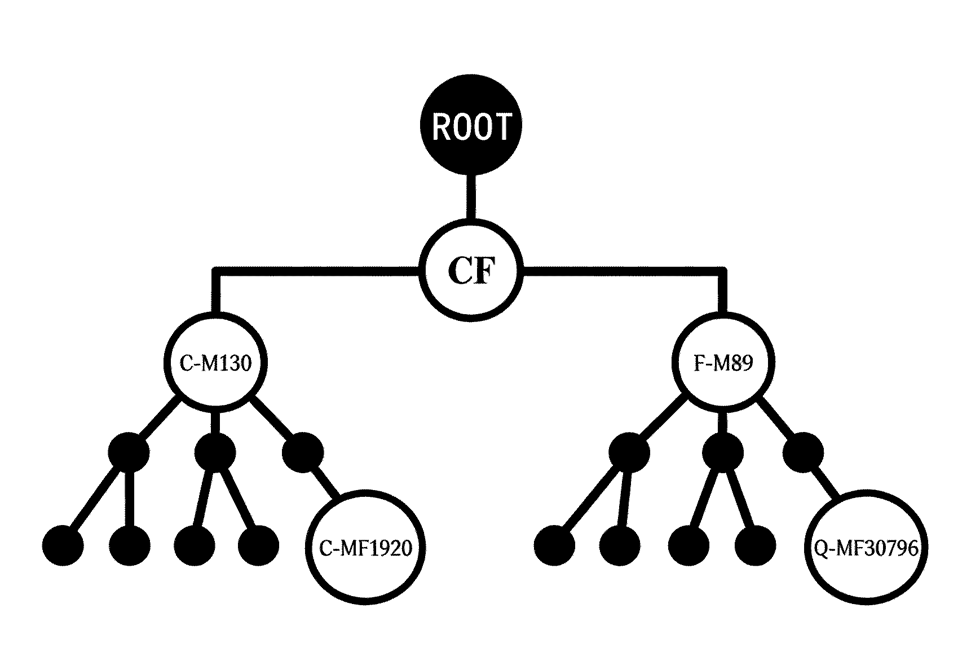
(Figure 1: Schematic Phylogenetic Tree of Major Y-Chromosome Paternal Lineages of the Qufu Kong Clan)
(2) Phylogenetic Position and Historical Interpretation Space of C-MF1920 Lineage
From the perspective of phylogenetic tree structure, the C-MF1920 lineage belongs to the common C-type paternal lineage in East Asian populations, and the formation time of its upstream nodes is generally estimated to be more than 3,000 years ago. This time scale roughly corresponds to the late Neolithic to early Bronze Age, an important stage when the paternal structure of northern East Asian populations gradually took shape.
In the downstream differentiation of the C-MF1920 lineage, several branches with obvious expansion signs from the Pre-Qin to the Qin and Han dynasties can be observed. In terms of time scale, this phenomenon is comparable to the records in literature about the descendants of Yin nobles, the Song state clan and the diffusion of related crowds. It is particularly worth noting that some downstream branches continued to expand after the Qin and Han dynasties, and their geographical distribution is highly consistent with the multiple migration paths of the Kong clan in history — such as Kuaiji Kong, Lingnan Kong, Southern Kong and Northern Kong.
It should be emphasized that this “consistency” does not mean that the C-MF1920 lineage can be directly equated with the paternal genetic type of “Confucius himself”. What genetic genealogy can reveal is only the population expansion status of a certain paternal lineage within a specific period and its distribution characteristics in space. However, when these characteristics highly overlap with the clan migration paths recorded in historical literature, its interpretive value should not be ignored.
From the perspective of historical research, what the C-MF1920 lineage reflects is more likely the statistical projection of the “early core paternal structure of the Kong clan”. It does not prove the genetic identity of Confucius as an individual, but reveals that in the early formation stage of the Kong clan, a certain paternal type maintained relatively stable continuity for a long time and was continuously institutionally recognized as the “authentic Kong branch” in subsequent history.
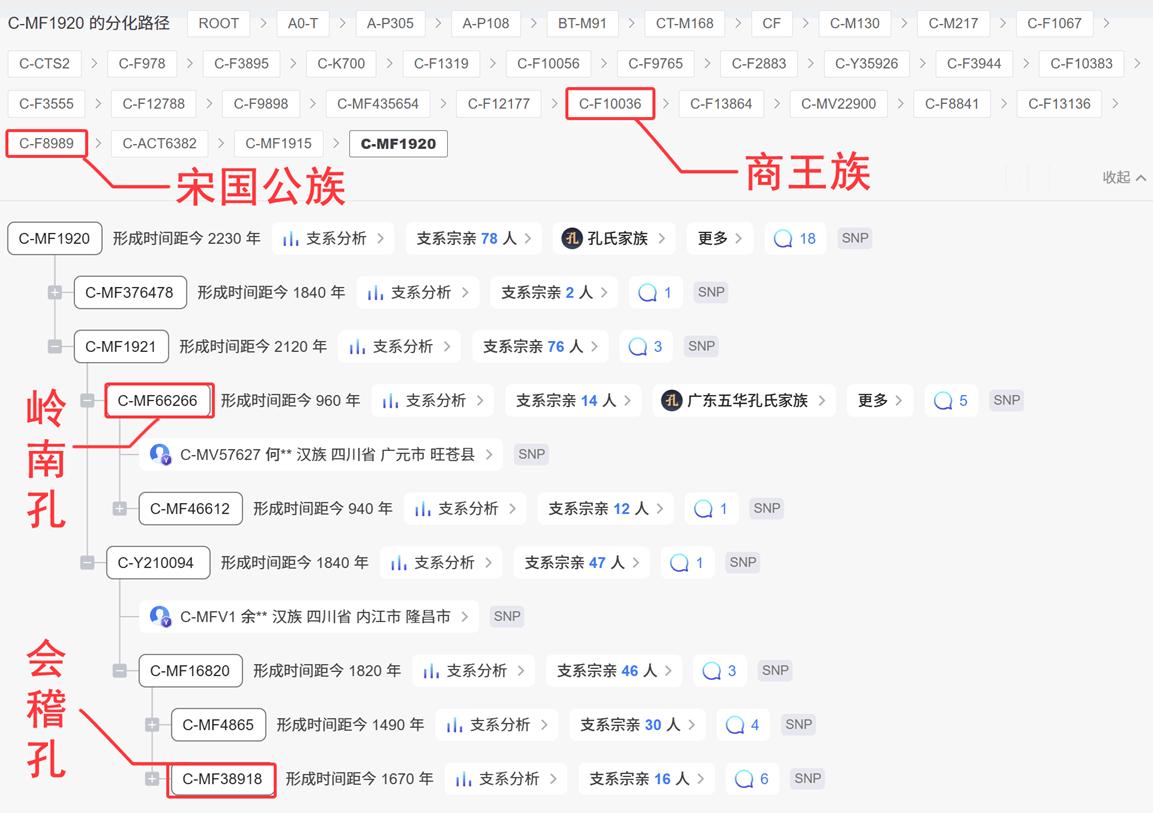
(Figure 2: Position and Differentiation of C-MF1920 in Y-Genetic Marker Tree Based on 23andMe Ancestry Database Statistics)
(3) Formation Characteristics and Temporal Structure of Q-MF30796 Lineage
In sharp contrast to C-MF1920 is the performance of the Q-MF30796 lineage in the phylogenetic tree. From the perspective of differentiation time, the upstream nodes of Q-MF30796 are relatively late, and the concentrated expansion of its downstream branches mainly occurred after the Yuan and Ming dynasties. This temporal structure is not common in genetic genealogy research, but it is particularly thought-provoking from the perspective of historical institutional history.
Observed from the phylogenetic tree structure, the Q-MF30796 lineage remained relatively “gentle” for a long time, lacking the obvious population growth of C-MF1920 in the Pre-Qin or Qin and Han periods. It was not until the middle and late stages that the lineage showed obvious differentiation and expansion. This “delayed expansion” characteristic is not completely consistent with the logic of natural clan reproduction from generation to generation.
If this genetic structure is compared with the development process of the Kong clan sacrificial system in the Yuan, Ming and Qing dynasties, its historical interpretation space gradually emerges. After the Yuan Dynasty, with the further consolidation of the Duke of Yansheng system and the high attention paid by the state to Confucius sacrifices, the institutional integration of the Kong clan was significantly strengthened. In this process, it is feasible in operation to incorporate new clan members into the Kong system and endow them with clear ritual identity through adoption, heirship or institutional confirmation.[5]
In this sense, the expansion of Q-MF30796 lineage is more likely the result of institutional forces shaping the clan structure, rather than the continuation of natural reproduction of early paternal lineages. Its concentrated expansion at the genetic level is highly temporally corresponding to the institutional advantages obtained by the Kong clan in political, economic and social resources during the Yuan, Ming and Qing dynasties.
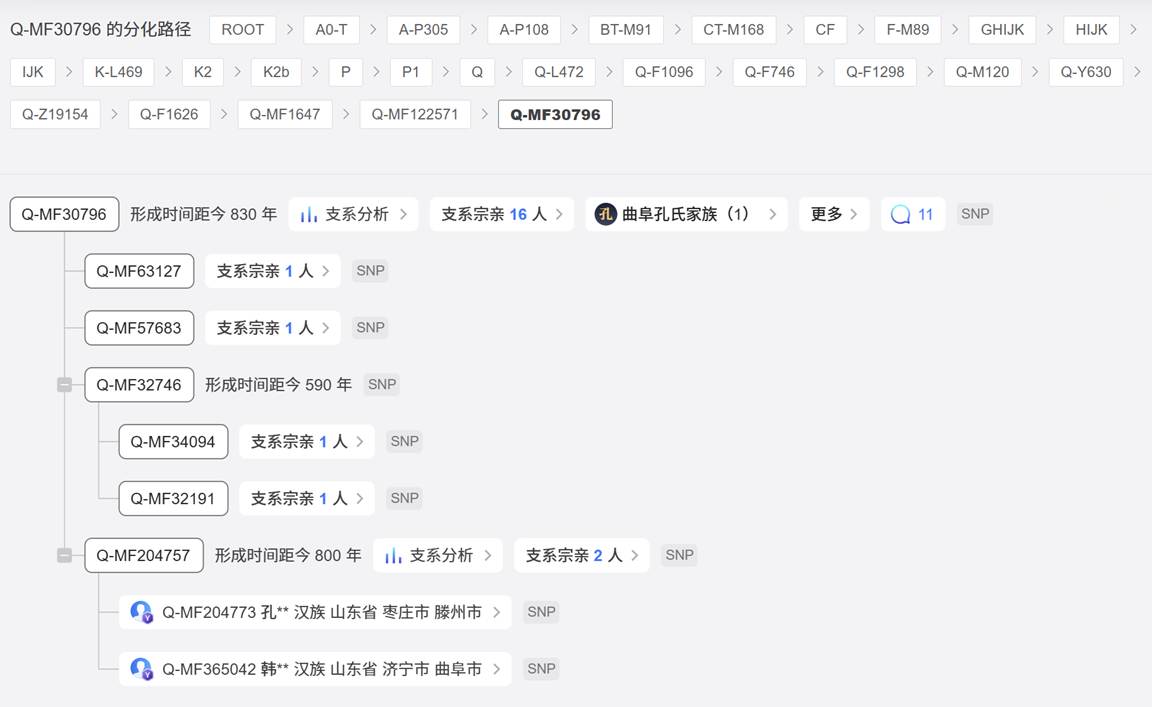
(Figure 3: Performance of Q-MF30796 in Y-Genetic Marker Tree Based on 23andMe Ancestry Database Statistics)
(4) Re-examination of Genetic Polymorphism and Orthodoxy Issue
Synthesizing the structural characteristics of the two representative major lineages C-MF1920 and Q-MF30796, it can be seen that the paternal diversity within the Qufu Kong population is not an accidental phenomenon, but the result of the Kong clan continuously absorbing and integrating different paternal resources in the ultra-long historical process. This phenomenon does not necessarily constitute a negation of the traditional Kong narrative; on the contrary, it reveals the practical logic of its institutional operation.
In the traditional context, “orthodoxy” is not solely based on biological continuity, but constantly reaffirmed through ritual practice, genealogy confirmation and imperial conferment. The coexistence of multiple paternal lineages revealed by genetic genealogy precisely shows that the stability of the Kong clan is not built on the absolute continuity of a single paternal lineage, but relies on the institutional identity recognition mechanism.
Therefore, simply understanding genetic evidence as “confirming” or “denying” the orthodox status of a certain Kong branch not only exceeds the interpretive ability of genetic genealogy, but also ignores the institutional wisdom of traditional Chinese society in dealing with clan continuation issues. Genetic polymorphism is not evidence of genealogy collapse, but a direct reflection of historical complexity.
Ⅴ. Genetic Evidence, Ritual Orthodoxy and Re-understanding of the Issue of Confucius’ Descendants
Through systematic analysis of the Y-chromosome genetic structure of the Qufu Kong population and placing it in the historical context of traditional Chinese clan system and Kong sacrificial system, this paper attempts to propose a new interpretive path for the “issue of Confucius’ descendants”. This path does not replace literary tradition with genetic data, but regards genetic genealogy as a supplementary evidence system to reveal the historical complexity long obscured by genealogy and ritual narrative.
(1) Genetic Genealogy Is Not a Falsification Tool, But a Developing Technique of Historical Structure
The research results show that the Qufu Kong population presents an obvious multi-lineage structure at the paternal genetic level, among which C-MF1920 and Q-MF30796 are the two most representative major lineages. This fact itself cannot and should not be understood as a simple negation of Confucius’ blood continuity. On the contrary, it reveals that in the course of more than two thousand years of history, the Kong clan is not a biologically closed group centered on a single paternal lineage, but an overall clan reorganized and continued under the influence of system, ritual and political forces.
The real value of genetic genealogy is not to answer the question “Who are the real descendants of Confucius”, but to reveal in what historical stages and in what ways different paternal lineages were incorporated into the Kong system and finally obtained the legitimacy of “Kong identity”. In other words, genetic data is not the judge of orthodoxy, but the biological projection of institutional operation trajectory.
(2) Paternal Diversity and Historical Rationality of Kong Clan Patriarchal System
From the perspective of historical system, the reason why the Kong clan can maintain a stable status for a long time in Chinese history precisely depends on its highly flexible structure formed between bloodline, ritual system and politics. Through genealogy revision, adoption system, ritual confirmation and imperial conferment, the Kong clan was able to absorb new members in different historical stages and integrate them into the existing sacrificial and identity system.
In this context, the “delayed expansion” characteristic presented by the Q-MF30796 lineage has a clear space for historical interpretation. It is not an anomaly of natural reproduction logic, but more likely reflects the biological result of institutional integration mechanism after state forces deeply intervened in Kong clan affairs in the Yuan, Ming and Qing dynasties. This integration did not weaken the symbolic authority of the Kong clan, but strengthened its stability at the political and cultural levels.
(3) Redefinition of Orthodoxy: From Bloodline Uniqueness to Institutional Continuity
Traditional discussions on the descendants of Confucius often imply a premise that orthodoxy must be built on strict biological paternal continuity. However, this premise is not valid either from the perspective of traditional Chinese patriarchal system or actual historical operation.
The “orthodoxy” emphasized by traditional Chinese society is not a simple bloodline fact, but a social fact constantly confirmed through ritual practice. The legitimacy of the Kong clan originates from its long-term commitment to national Confucius sacrificial duties and maintaining the symbolic order of Confucianism, rather than the exclusive preservation of a certain paternal genotype. The diversity revealed by genetic genealogy precisely shows that Kong orthodoxy is not built on biological vulnerability, but on institutional continuity and cultural identity.
(4) Methodological Significance and Boundaries of Interdisciplinary Research
The attempt of this paper shows that when dealing with historical objects with high symbolic significance such as the Kong clan, genetic genealogy can exert its due interpretive value only through in-depth dialogue with historiography, genealogy and institutional history. Breaking away from the literary context and making historical judgments solely based on genetic data is not only untenable in methodology, but also easy to trigger unnecessary academic and social disputes.
Therefore, the reasonable position of genetic genealogy in Confucian studies should be understood as a “structure revealing tool” rather than a “truth judging tool”. It can help researchers see the complex process behind traditional narratives, but cannot and should not assume the role of ultimate judgment.
(5) Conclusion
In summary, the issue of Confucius’ descendants cannot be completely solved by a single discipline. Genetic genealogy provides a new observation dimension for this issue, but does not shake the orthodox status of the Kong clan in Chinese cultural history. On the contrary, by revealing the diversity of paternal structure and the historical logic of institutional integration, this paper attempts to illustrate that the real foundation of Kong orthodoxy lies not in the uniqueness of genes, but in the continuity of system and permanence of culture.
This understanding not only helps to re-understand the Kong clan itself, but also provides a more robust and prudent paradigm for the intervention of genetic anthropology in the research of Chinese ideological history.
[1] He Yanran: The Generation and Expansion of Sacrificial Clans of Confucian Sages in the Qing Dynasty, Confucius Studies, Issue 3, 2024, pp. 118–130.
[2] He Yanran: The Generation and Expansion of Sacrificial Clans of Confucian Sages in the Qing Dynasty, p. 122.
[3] Hou Weiguang, Wang Chuanchao, Jiang Shihong et al.: Genetic Polymorphism Analysis of 17 Y-STR Loci of the Qufu Kong Population, Acta Anthropologica Sinica, Issue 1, 2016, pp. 125–131.
[4] C-MF1920 and Q-MF30796 are terminal SNP markers in the current Y-SNP phylogenetic tree system. Their naming and hierarchical structure refer to the international Y-chromosome haplogroup tree system, combined with the paternal lineage positioning information based on Y-SNP test results displayed in the 23andMe ancestry database.
[5] See Hou Weiguang et al. supra; relevant historical interpretation is the analysis of this paper combined with institutional historical materials.
Other References
Hou Weiguang, Wang Chuanchao: Study on Y-STR Polymorphism of the Qufu Kong Population, Acta Anthropologica Sinica, Vol.31, Issue 4, 2012.
Wang Chuanchao: Genetic Structure Research of Chinese Surnames, Beijing: Science Press, 2014.
Yan S., Wang C.C., et al. Y Chromosome Genetic Variation in East Asia, Molecular Biology and Evolution, 2014.
Jobling M.A., Tyler-Smith C. The Human Y Chromosome: An Evolutionary Marker Comes of Age, Nature Reviews Genetics, 2003.
Li Xueqin: Cultural History of Chinese Genealogy, Shanghai: Shanghai People’s Publishing House, 2009.
Chen Zhiping: History of Chinese Clan System, Beijing: People’s Publishing House, 2008.
Chang Jianhua: Clan and Society in the Ming and Qing Dynasties, Tianjin: Tianjin Ancient Books Publishing House, 2011.
Yang Chaoming: History of the Kong Clan, Jinan: Qilu Press, 2010.
Frederick W. Mote: Intellectual Foundations of China, Beijing: Peking University Press, 2016.
Zhang Dainian: Spirit of Chinese Culture, Beijing: Peking University Press, 2005.